Last updated: November 20, 2026
Key Takeaways
- A short pantry list built around plain grains, simple spreads, and single-ingredient add-ons.
- The easiest shelf-stable breakfasts can be eaten dry, soaked, or topped with one spread.
- Build a no-fridge breakfast from one base, one topping, and one pantry flavor.
- Avoid long labels, strong flavoring, and mixed add-ins when choosing shelf-stable breakfast foods.
Low histamine shelf-stable breakfast foods are the pantry items you can eat in the morning without opening the fridge. This guide to Low Histamine Shelf-Stable Breakfast Foods to Keep in the Pantry starts with a simple answer: 5 core foods are enough for many people. Oats, rice cakes, plain cereal, seed butter, and syrup are common starting points, but tolerance varies, so it is best to individualize choices with a clinician if you are unsure. The list below shows what to keep, what to pair, and what to skip when you need breakfast that stays on the shelf.
What belongs in a low histamine pantry for breakfast
Picture this: you’re hungry at 7 a.m., the fridge is empty, and you need something that won’t take 15 minutes or a blender. The answer is a short pantry list built around plain grains, simple spreads, and single-ingredient add-ons. That keeps breakfast fast, cheap, and easier to judge if your symptoms are flaring.
A starter pantry does not need to be fancy. It works best when it stays plain and predictable. Here are the shelf-stable breakfast foods that many people keep on hand:
- Rolled or quick oats
- Plain rice cakes
- Plain cereal with a short ingredient list
- Seed butter such as sunflower seed butter, if tolerated
- Syrup for sweetness
- Plain salt
- Dried fruit only if you already know it sits well with you
- Shelf-stable milk alternative, if you use one and tolerate it
These foods all work in 1- or 2-item breakfasts, which is helpful when you want fewer variables. The shorter the ingredient list, the easier it is to spot the food that causes trouble. If you’re building a pantry from scratch, start with 3 to 5 items, not a cart full of packaged bars and flavored mixes.
For a broader pantry system, the hub guide to Low Histamine Pantry Staples and Ingredient Substitutions — The Complete Guide fills in the rest of the shelf.
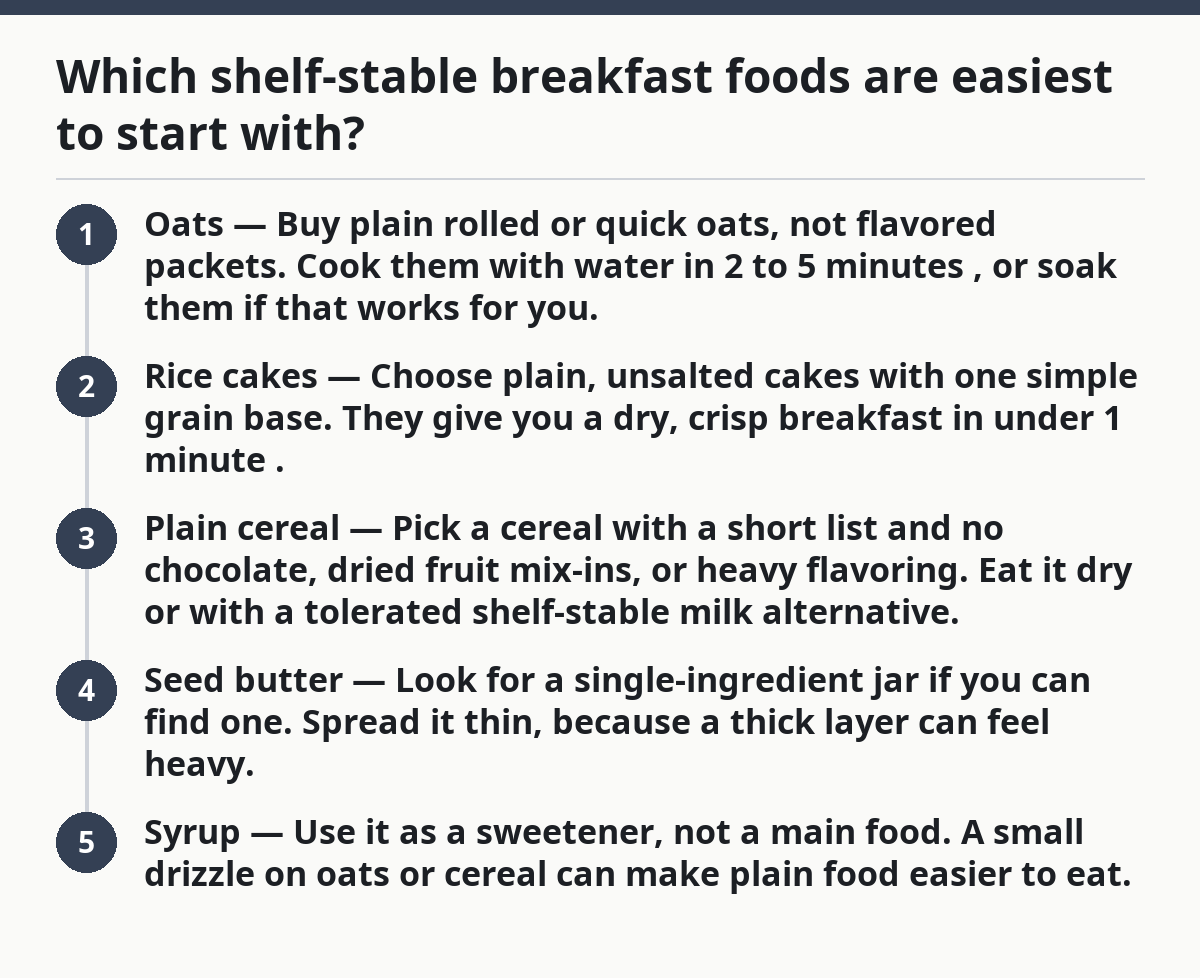
Which shelf-stable breakfast foods are easiest to start with?
The easiest shelf-stable breakfast foods are the ones that can be eaten dry, soaked briefly, or topped with a single spread. That usually means oats, rice cakes, and plain cereal first, because they need almost no prep and no refrigeration.
Here’s the catch: “low histamine” is not a printed guarantee on a box. A food can be simple and still bother you if it has additives, flavoring, or a personal trigger. Keep the label short and plain. If the ingredient panel looks like a chemistry set, leave it.
Use this quick starter set, and compare it with the guidance in What Is Low Histamine Eating? and Histamine Intolerance Diet Basics if you need more context:
- Oats — Buy plain rolled or quick oats, not flavored packets. Cook them with water in 2 to 5 minutes, or soak them if that works for you.
- Rice cakes — Choose plain, unsalted cakes with one simple grain base. They give you a dry, crisp breakfast in under 1 minute.
- Plain cereal — Pick a cereal with a short list and no chocolate, dried fruit mix-ins, or heavy flavoring. Eat it dry or with a tolerated shelf-stable milk alternative.
- Seed butter — Look for a single-ingredient jar if you can find one. Spread it thin, because a thick layer can feel heavy.
- Syrup — Use it as a sweetener, not a main food. A small drizzle on oats or cereal can make plain food easier to eat.
What this section leaves out on purpose is the “healthy breakfast” marketing noise. Granola clusters, protein bars, and fruit-heavy cereal often bring in nuts, cocoa, or additives. Those are common reasons a pantry breakfast stops being low histamine in real life.
How do you build a no-fridge breakfast from pantry foods?
You build a no-fridge breakfast by combining one base, one topping, and one flavor from the pantry. That gives you enough variety without turning breakfast into a kitchen project.
A simple method works better than chasing recipes. Keep the parts separate, then mix only what you already trust. Use this order:
- Pick a base: oats, rice cakes, or plain cereal.
- Add one spread or topping: seed butter if you tolerate it.
- Add sweetness only if needed: a small amount of syrup.
- Keep the portion modest the first time you try it.
- Repeat the same combo for a few days before changing anything else.
That last step saves time, because changing three foods at once makes it hard to know what helped or hurt. A 2-ingredient breakfast is enough to start.
Here are a few plain pantry pairings that fit the brief; if you are managing symptoms closely, check with a registered dietitian or clinician and use trusted sources such as Cleveland Clinic or NHS for general food-intolerance guidance:
- Oatmeal made with water and a drizzle of syrup
- Rice cakes topped with sunflower seed butter
- Plain cereal eaten dry as a quick grab-and-go bowl
- Oats stirred with a little seed butter for more staying power
- Rice cakes with syrup only, if you need something very light
On the flip side, don’t treat every shelf-stable food as fair game just because it’s not perishable. Flavored instant oats, cereal bars, and nut-heavy trail mixes often add ingredients that make the food harder to read. The pantry should make breakfast simpler, not more confusing.
What should you avoid in shelf-stable breakfast foods?
You should avoid shelf-stable breakfast foods with long ingredient lists, strong flavoring, or mixed add-ins. Those are the ones most likely to hide a trigger or make symptoms harder to trace.
The usual problems are easy to spot once you know them:
- Fruit-heavy mixes with several dried fruits, because some people do better with less concentrated fruit
- Chocolate or cocoa, which often shows up in cereal and bars
- Nut blends and mixed nut butters, especially when they include several ingredients
- Cinnamon or spice-heavy packets if spices bother you
- Preservatives, flavorings, and emulsifiers when the label gets long
- “Breakfast” bars that look convenient but act more like candy
The cost of guessing is simple: you may end up blaming breakfast itself when the problem was one add-in. That can shrink your food list fast and make mornings harder than they need to be.
A better move is to shop the plainest version of each food. Buy unsweetened oats, plain rice cakes, and plain cereal before anything with a flavor packet. If a seed butter is your only spread, check that it is as close to a single ingredient as possible. A shorter label is not magic, but it gives you a cleaner baseline.
How do you shop for pantry breakfast foods without overbuying?
You shop for pantry breakfast foods by buying one base, one spread, and one sweetener first. That keeps the pantry usable without filling it with things you may never eat.
The easy mistake is stocking five versions of the same food. That creates waste, not options. Start small, then add only after you know what works.
A practical first cart might look like this:
- 1 box of plain oats
- 1 pack of plain rice cakes
- 1 box of plain cereal
- 1 jar of seed butter
- 1 bottle of syrup
That is enough for several breakfast patterns. It also keeps the budget in check without forcing you into the same meal every day. If you already know you tolerate a shelf-stable milk alternative, add one carton or shelf-stable container after the basics are in place.
What to skip at first:
- Multi-grain blends with a long label
- Flavored instant oatmeal packets
- Granola with dried fruit, nuts, and sweet coatings
- Variety packs that look useful but hide ingredient surprises
There’s a reason this matters. Pantry breakfasts are supposed to reduce morning friction. A crowded shelf can do the opposite, because you spend more time reading labels than eating.
Can you eat the same shelf-stable breakfast every morning?
Yes, you can eat the same shelf-stable breakfast every morning if it keeps your routine calm and your symptoms steady. Repetition is often a feature, not a flaw, when you’re trying to keep breakfast predictable.
That said, eating the same thing every day works best when the base is simple and plain. Oats with syrup, rice cakes with seed butter, or dry plain cereal can all become a dependable default. A routine breakfast also helps you notice whether a problem is food-related or just random timing.
The trade-off is boredom, so a second or third pantry option can help if the routine starts to slip. Keep the structure the same, and swap only one part:
- Oats one day, rice cakes the next
- Seed butter on some days, syrup on others
- Plain cereal as the fallback when you have no energy to cook
A good rule is to keep 2 or 3 repeatable breakfasts in rotation. More than that can get messy. Less than that can make mornings feel fragile.
What if you need breakfast in under 5 minutes?
You can get a low histamine breakfast in under 5 minutes if the food needs no cooking or only a quick water-based prep. That is where shelf-stable pantry foods shine.
The fastest options are the least dramatic:
- Rice cakes with seed butter
- Plain cereal in a bowl
- Oats mixed with hot water
- Oats with syrup and nothing else
- Rice cakes with a thin spread of seed butter
If you are using oats, quick oats are the easiest choice. Rolled oats take a little longer, but they still stay simple. Use water from the kettle, microwave, or stovetop—whatever is already part of your morning. The goal is speed plus predictability, not culinary range.
The truth is, many “fast breakfast” ideas are not actually pantry ideas. They depend on fruit, yogurt, or leftovers that live in the fridge. This page is for the mornings when you want to stay in the pantry aisle and still eat something reasonable.
Common mistakes with low histamine pantry breakfasts
The biggest mistake is assuming “shelf-stable” means “safe for low histamine eating.” That shortcut leads to flavored cereals, snack bars, and mix-ins that look harmless but make the ingredient list hard to trust.
A few other mistakes show up again and again:
- Buying too many new foods at once — this makes symptom tracking almost impossible.
- Choosing family-size novelty boxes — they tempt you into using food you haven’t checked carefully.
- Skipping plain foods in favor of “healthy” blends — these often contain more extras, not fewer.
- Treating seed butter like a free-for-all — a heavy spread can overwhelm a simple breakfast, so it helps to keep portions modest and adjust with a clinician if you are not sure.
- Using syrup as the main meal — it works as a topping, not a breakfast plan.
What each mistake costs is different, but the result is usually the same: wasted money, a cluttered pantry, and no clear idea what to eat next. The fix is plain and slightly dull, which is exactly what this topic needs.
For a beginner, the safest rhythm is: choose one base, one spread, one sweetener, and keep the rest of the pantry quiet. That keeps the low histamine shelf-stable breakfast foods simple and easier to sort out over time.
What shelf-stable breakfasts are easiest for low histamine eating?
The easiest shelf-stable breakfasts are plain oats, rice cakes, and plain cereal. They are simple to store, quick to prepare, and easy to pair with a single topping like seed butter or syrup. The shorter the ingredient list, the easier it is to keep breakfast predictable.
Can I keep breakfast foods in the pantry only?
Yes, you can keep breakfast foods in the pantry only if you choose foods that do not need refrigeration after opening. Oats, rice cakes, many plain cereals, seed butter, and syrup fit that pattern. Once you open a product, still check the label for storage directions so you do not guess.
What are fast pantry breakfasts?
Fast pantry breakfasts are meals you can make in a few minutes with no fridge trip. Plain cereal, rice cakes with seed butter, and oats with hot water are the most practical options. They work best when you keep the pantry focused on a few plain foods instead of a lot of flavored products.
If you want, I can also turn this into a printable pantry checklist or a simpler “what to buy first” version.
Drafted with AI; not yet reviewed by a person.