Last updated: November 20, 2026
Low histamine canned and jarred foods can work when you choose simple, water-packed, single-ingredient items and skip long ingredient lists. This guide to Low Histamine Canned and Jarred Foods That Are Easier to Use Safely shows which shelf-stable foods are usually easier to handle safely, what to check on the label, and how to use opened cans and jars without making the food harder on you. Quick answer: the easiest starting point is usually a plain, single-ingredient can or jar with 2 to 3 ingredients at most.
Key Takeaways
- The safest shelf-stable picks are often the ones with the shortest ingredient list, but that is not a guarantee.
- Water-packed vegetables are usually easier to evaluate than sauces, brines, or seasoned blends.
- Jarred pumpkin, coconut milk, and plain canned vegetables are often more practical than mixed soups or meal kits.
- Acids and preservatives matter as much as the main food, so the label deserves a slow read.
- Opened cans and jars are not the place to improvise; move leftovers out quickly and chill them in a clean container.
- This page helps with the shelf-stable side of the pantry, not the bigger storage rules or full packaged-food shopping list.
Which canned and jarred foods are easiest to start with?

The easiest shelf-stable choices are single-ingredient canned or jarred foods with water, no spice blend, and no added sauces. Specifically, you want a quick side at 6 p.m. that does not force you to decode six lines of ingredients. Plain canned vegetables, jarred pumpkin, and unsweetened coconut milk are the cleanest places to start.
That does not make them automatically safe for everyone on a low histamine diet. It means they are easier to inspect and easier to use without piling on extra variables. A can of green beans in water is simpler than a vegetable medley in sauce, and a jar of pumpkin is simpler than a pie filling.
Common starting points:
- Plain canned vegetables in water
- Jarred pumpkin with pumpkin as the only ingredient
- Coconut milk with a short ingredient list
- Plain water-packed artichokes or carrots
- Simple broth alternatives made from water and a known vegetable base
The best part is that fewer ingredients usually means fewer hidden triggers to check. A jar with tomatoes, vinegar, sugar, garlic, and preservatives asks you to evaluate too much at once. That’s the wrong first step.
If you want the bigger pantry picture, the hub on [Low Histamine Pantry Staples and Ingredient Substitutions] can sit beside this page without repeating the same details, and the related [Low Histamine Foods to Keep in the Pantry] page gives a broader shopping context.
How do I read the label without missing the problem ingredients?
Read the label in three passes: food, acid, then preservatives. Because of that, you can sort most shelf-stable foods quickly if you know what to scan for first. Picture this: you’re in the store with one label in your hand and no time to guess. The front says “vegetables,” but the back may tell a different story.
Start with the main food. If the item is a plain vegetable, pumpkin, or coconut milk, that’s already easier than a mixed dish. Then scan for acids such as citric acid, vinegar, lemon juice, or tomato-based ingredients, because those often show up in shelf-stable foods to sharpen flavor or extend shelf life. Last, check preservatives.
Preservatives and additives that often deserve a careful look include:
- Citric acid
- Acetic acid or vinegar
- Sodium benzoate
- Potassium sorbate
- Sulfites in some jarred or brined foods
- Mixed seasoning blends that hide several extras
Here’s the catch: a short label is not the same as a safe label. Some foods look plain until you reach the last line and find acidifiers or flavor systems. If you already know a specific acid bothers you, that ingredient matters more than the brand name on the front.
For a plain canned item, a label that says “vegetables, water, salt” is much easier to work with than one that adds lemon juice, calcium chloride, natural flavors, and preservatives. Not even close.
Which canned vegetables fit this approach best?
Plain water-packed items are the easiest canned vegetables to work with because they keep the ingredient list short and the flavor profile simple. Since the label is simpler, you can usually tell faster whether a product fits your low histamine Canned and Jarred Foods plan. You want a fast side dish, and the can is supposed to save time, not create a chemistry project. The best candidates are usually the vegetables sold in water or their own juice, with minimal seasoning.
Good candidates often include:
- Green beans
- Carrots
- Peas
- Pumpkin
- Sweet potatoes in plain packs, if the ingredient list stays simple
A practical rule: if the can has a sauce, spice blend, or “seasoned” label, it takes more checking than a plain vegetable can. Some mixed vegetables are fine for many shoppers, but they are not the easiest place to start when you want lower risk and less label work.
The trade-off is taste and texture. Plain canned vegetables can be softer than fresh or frozen versions, and that makes them better for mashing, soups, or quick reheating than for crisp salads. If you need a firmer bite, this may not be your best shelf-stable option.
One more caution: canned tomatoes and tomato-heavy products often belong in a separate conversation because acids and histamine concerns can stack up fast. That is exactly why plain vegetables are the cleaner first choice.
What about jarred pumpkin, coconut milk, and broth alternatives?
Jarred pumpkin and plain coconut milk are useful because they can stand in for harder-to-find fresh ingredients without a long list of extras. Meanwhile, if you need something creamy for soup, mash, or a sauce, you want a shelf-stable option that does not come with onions, garlic, or broth powders attached. These two are often the most practical.
Jarred pumpkin should be pumpkin, not pie filling. That sounds obvious, but the label matters. Pie filling brings sugar and spices into the mix, which makes the food less predictable. Coconut milk is similar: look for a short ingredient list and watch for gums, sweeteners, and added flavors if you know they cause trouble for you.
For broth alternatives, think in terms of simple building blocks:
- Water plus a tolerated vegetable base
- Plain coconut milk for creaminess
- Mild canned vegetables blended into soup
- Salt only, if you already know salt is fine for you
This is where shelf-stable food can save time without forcing a compromise on every meal. A spoonful of pumpkin can thicken a sauce in minutes. Coconut milk can turn a basic bowl of rice into something fuller without reaching for a jarred sauce.
The downside is that these foods are not one-size-fits-all. Coconut milk is still a fat-rich product, so it can feel heavy for some people. Pumpkin can be gentle, but only if the jar stays plain. If a product comes flavored, sweetened, or spiced, it stops being a simple pantry shortcut.
What acids and preservatives should I check first?
You should check acids and preservatives before you check the brand name, because those are the ingredients most likely to change how a canned or jarred food behaves for you. Because the acid and preservative lines can matter more than the front label, a quick scan of those two sections usually saves time. Picture this: the food looks harmless, the can is small, and the ingredient list is short—but one line at the end can still be the dealbreaker.
The main acids to watch are vinegar, citric acid, lemon juice, and tomato-based acids in mixed foods. These are common in jarred vegetables, relishes, sauces, and some shelf-stable soups. For preservatives, the usual names to watch are sodium benzoate, potassium sorbate, and sulfites.
What to do with that information:
- Read the full ingredient list, not just the first three items.
- Compare plain versions against seasoned versions.
- Choose the shortest list that still gives you the food you actually need.
- If a preservative has bothered you before, skip that product class for now.
- Keep notes on the exact ingredient, not just the brand.
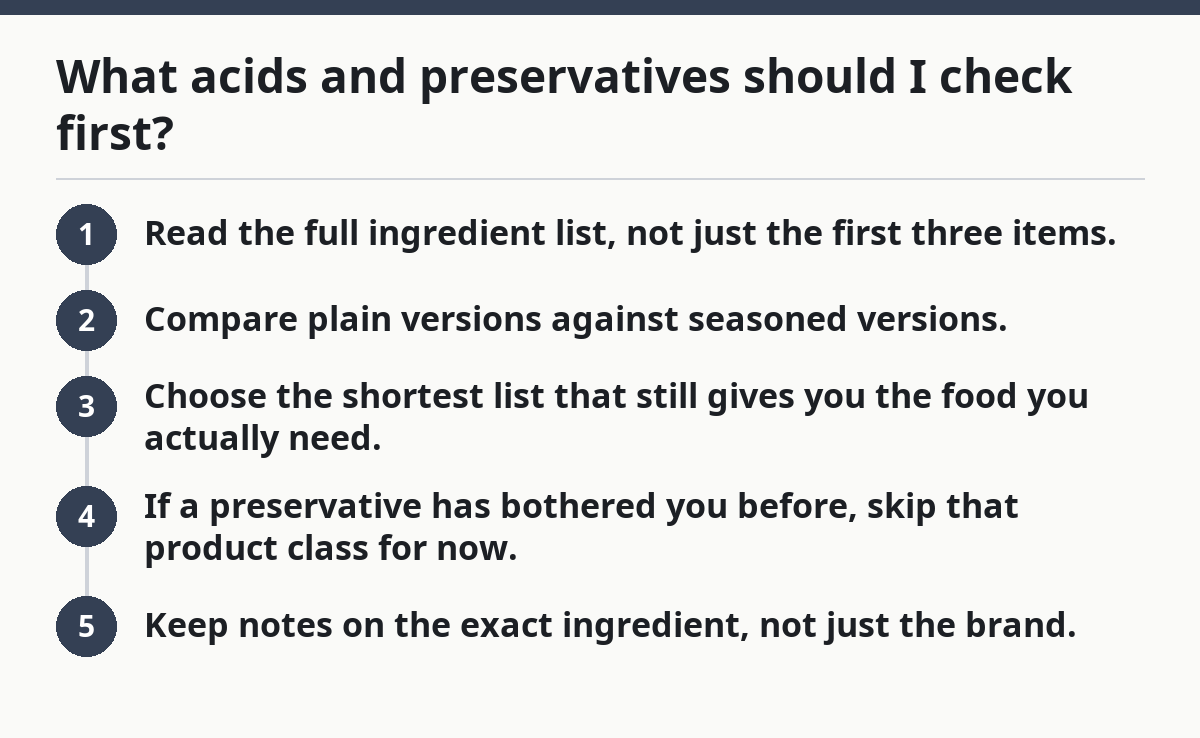
That last step matters. Two jars from the same company can behave very differently if one uses vinegar and the other uses only water and salt. A vague memory of “that brand didn’t work” can send you in circles.
The truth is, there is no universal low histamine label rule here. You have to work from the ingredient list, and you have to stay honest about what you know your body does with acids and preservatives.
How should I handle opened cans and jars?
Opened cans and jars should be moved into a clean container right away and used quickly, because the original metal can or open jar is no place to leave food sitting around. After you open it, treat it like fresh food. Picture this: you only need half the can tonight, and the rest is sitting in the kitchen. The safest move is to transfer it, cover it, and refrigerate it promptly.
A simple procedure works best:
- Open the can or jar and check the smell, color, and liquid before using it.
- Move leftovers into a clean glass or food-safe container, rather than storing them in the opened can.
- Cover the container tightly and refrigerate it as soon as you can.
- Use the food promptly instead of letting it sit through several meals.
- If you are unsure about leftover safety, consult a registered dietitian or food safety professional.
That process is boring on purpose. Boring is safer than improvising with a half-used jar of food you opened three days ago. It also helps you notice what is happening with the food before you eat it again.
A common mistake is leaving leftovers in the opened can because it seems easier. That shortcut can cost you freshness and make the food less predictable. Another mistake is using a dirty spoon twice; that adds contamination risk. Use a clean utensil each time. According to USDA guidance, perishable foods should not sit out for more than 2 hours, or 1 hour if the temperature is above 90°F.
If you already know you are sensitive to leftovers, this is the section to be strict with. Opened shelf-stable food is only convenient if you treat the leftovers like fresh food, not like something that can live in the pantry, and if a reaction history is unclear, a clinician can help you sort out what is specific to your diet.
What should I skip, even if it is shelf-stable?
You should skip shelf-stable foods that hide a lot of extras behind a simple front label, because the can or jar is only helpful when the contents stay plain. Since acids and preservatives can stack up in the same product, the simplest jars are usually the easiest to manage. Picture this: the jar says vegetables, but the back panel reads like a condiment shelf. That is not the easy option.
The main things to pass over are:
- Sauced vegetables
- Pickled vegetables
- Soups with many seasonings
- Tomato-heavy jarred sauces
- Products with vinegar, lemon, or multiple preservatives when you already know those ingredients are trouble
This is also the wrong place for “just try a little” thinking if a food usually bothers you. A small amount of a trigger ingredient is still the same ingredient. A 12-ounce jar of something you can’t tolerate is not a bargain.
Another thing to skip is assuming all canned vegetables behave the same. A plain can of carrots and a seasoned can of mixed vegetables are not equivalent. One may be easy to fit into your meals; the other may need to stay on the shelf.
The best shelf-stable choice is not the one with the most claims on the front. It is the one with the fewest surprises on the back. That’s the part that matters in real life, especially on busy days.
For broader pantry planning, the [Low Histamine Pantry Staples and Ingredient Substitutions] guide gives the larger framework this page builds on, and the [Low Histamine Foods to Keep in the Pantry] page can help you compare options across the whole shelf.
Which canned foods are easiest to fit a low histamine diet?
The easiest ones are usually the plain, single-ingredient versions with water and a short label. Think canned vegetables, plain pumpkin, and unsweetened coconut milk before you reach for soups, sauces, or pickled jars. The shorter the ingredient list, the easier it is to spot acids and preservatives that may be a problem.
What should I look for in jarred foods?
Look for a short ingredient list, a plain base, and no extra acidifiers or spice blends if you already know those bother you. A jar of pumpkin or vegetables is easier to screen than a jar of relish, sauce, or seasoned mix. The label should tell you exactly what is in the jar without making you guess.
Are canned vegetables always a problem?
No, canned vegetables are not always a problem, but they are not all equal. Water-packed vegetables with few ingredients are usually easier to evaluate than seasoned or sauced versions. If acids, preservatives, or tomato-based ingredients are an issue for you, check those lines first before you buy.
Drafted with AI; not yet reviewed by a person.