Last updated: November 20, 2026
Quick Answer: A practical histamine-friendly shopping and label strategy usually starts with the 1–3 ingredient rule: buy plain foods, check for fermentation, and skip anything aged, cured, or “natural flavor”-heavy. In this guide to Histamine-Friendly Shopping and Label Strategy — The Complete Guide, you’ll see what to look for, what to ignore, and where shoppers usually get tripped up. The sections below show how the guide works in a store aisle, not just on paper.
Key Takeaways
- Short ingredient lists beat flashy front labels.
- “Fermented,” “aged,” “cured,” and “smoked” are common warning signs; when in doubt, consult a clinician or pharmacist for your own situation.
- Fresh, plain, and frozen foods are usually easier to shop for than prepared items.
- The front of the package can say “clean” while the back still hides problem ingredients.
- Store brands can be useful because the ingredient panel is often simpler.
- For medicine and supplements, read the inactive ingredients too, not just the main label.
What counts as the safest store-bought choice in Histamine-Friendly Shopping and Label Strategy?
A cautious store-bought choice is usually a plain food with 1–3 ingredients and no fermentation, curing, or long shelf life tricks. That means fresh meat, plain rice, some frozen vegetables, and basic pantry starches often beat “healthy” snacks with a long label. USDA food labeling guidance and FDA ingredient labeling rules both make the back panel the key place to check. USDA, FDA
Picture this: you’re standing in the aisle, holding two nearly identical boxes. One has a tidy front label and a 14-line ingredient list; the other looks boring and plain. The boring one usually wins. Bland beats branded when histamine is the issue.
Here’s the catch: the front of the package often tells you what the marketer wants, not what your body may react to. “High protein,” “gut friendly,” and “natural” are not histamine checks. The back panel is the real screen. According to the FDA, ingredients are listed by weight, so the first few items matter most. FDA ingredient labeling
A practical shopping order helps:
- Start with foods that are naturally simple: rice, oats, plain potatoes, fresh or frozen vegetables, and unseasoned meats.
- Move to single-ingredient canned or jarred items only if you already know you tolerate them.
- Treat sauces, deli foods, and “ready to eat” meals as higher risk, and if you have a medical diet plan, confirm those choices with a clinician or dietitian.
- If the label says aged, fermented, smoked, cultured, cured, pickled, or marinated, pause and check the full ingredient panel or ask a professional if you are unsure.
One more thing: histamine tolerance is personal, but shopping rules still matter. The tighter the label, the fewer surprises.
Which label words should make me stop and check twice in Histamine-Friendly Shopping and Label Strategy?
The words that should make you stop are the ones that suggest time, bacteria, or heavy processing. Those are the conditions that often raise histamine or bring in ingredients that irritate sensitive people, so it is reasonable to slow down and check more carefully.
Picture this: you’re reading a label in bad store lighting and trying to decide fast. You don’t need a nutrition degree. You need a red-flag list. Fermented and cured are your loudest warning words.
Watch for these terms:
- Fermented
- Aged
- Cured
- Smoked
- Cultured
- Pickled
- Marinated
- Yeast extract
- Vinegar
- Natural flavors
Not every item with one of these words is a problem for every person. Still, they deserve extra caution because they often show up in foods that sit longer before eating, and if you are trying to manage a medical sensitivity, it can help to review them with a pharmacist, clinician, or dietitian.
A few examples make this easier:
- Yogurt may be tolerated by some people, but it is fermented dairy, so it is not a default safe pick.
- Aged cheese is a classic trouble spot.
- Broth, stock, and bone broth can be an issue because they are cooked and stored in ways that may concentrate histamine.
- Deli meats and smoked fish often combine curing, storage time, and additives.
The phrase “natural flavors” deserves special attention because it hides detail. It may be harmless in a given product, or it may contain a blend that does not work for you. If you are in a flare, it is smarter to choose a product with no flavor system at all.
A useful rule: the more the label describes a process, the less histamine-friendly it tends to be.
How do I read an ingredient list without getting fooled?
Read the ingredient list from top to bottom and assume the first few items matter most. If the list contains a problem ingredient near the top, the food is usually a poor bet even if the front of the box looks clean.
Picture this: you’ve got three seconds before the checkout line moves. The ingredient list is not there to impress you; it is there to expose the formula. Shorter is safer because it leaves less room for hidden triggers.
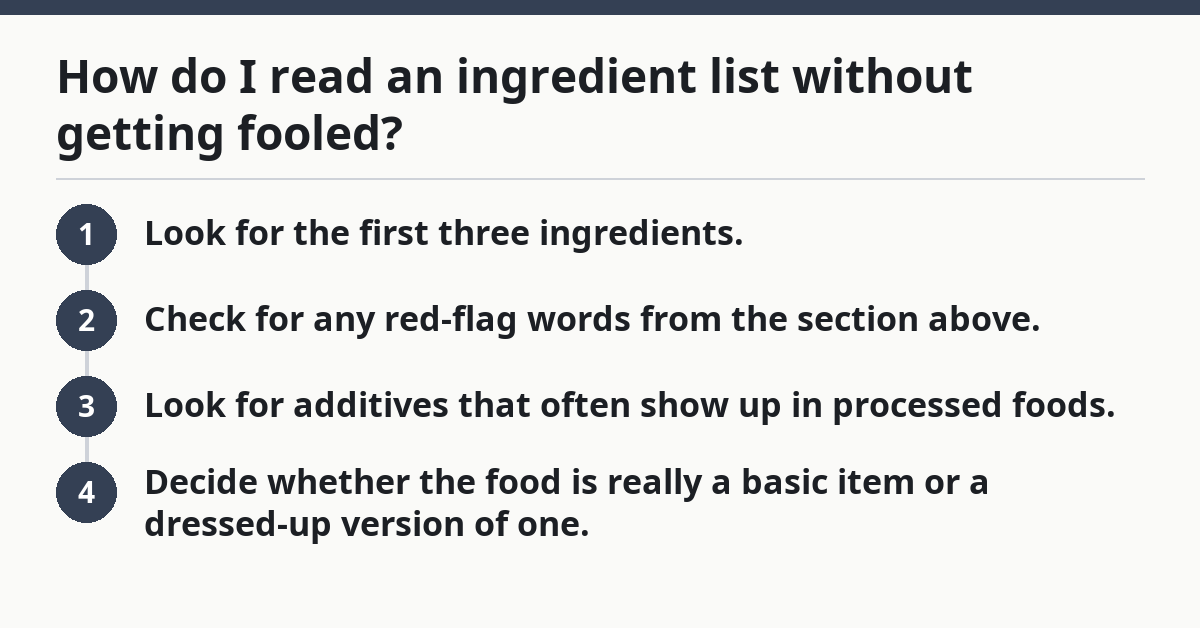
Use this quick scan:
- Look for the first three ingredients.
- Check for any red-flag words from the section above.
- Look for additives that often show up in processed foods.
- Decide whether the food is really a basic item or a dressed-up version of one.
The trap is that “simple” foods sometimes aren’t simple at all. Crackers, granola, sauces, flavored nuts, and boxed soups often hide one or more of these:
- citric acid
- vinegar
- yeast extract
- soy sauce
- tomato powder
- spices listed as a blend
- preservatives
Not every additive is a histamine issue for everyone, but some shoppers find that long labels bring more reactions than plain ones. That’s the kind of trade-off a label strategy is supposed to prevent.
A second trap is ingredient order. Manufacturers list ingredients by weight. If vinegar or yeast extract appears high on the list, that tells you it is not just a tiny finishing note. The FDA explains that this order is weight-based, which is why the first items deserve the most attention. FDA food labeling
The best habit is simple: if you need a magnifying glass and a chemistry degree to feel safe, the product is probably not worth it.
What foods are easiest to shop for first?
The easiest foods to shop for first are the ones that stay plain all the way from shelf to plate. That means fresh or frozen single-ingredient foods usually beat anything seasoned, marinated, fermented, or slow-cooked.
Picture this: you’re building a basket from scratch and you want the least drama possible. Start where labels are boring. Plain foods are the cleanest win because there is less processing between the farm and your kitchen.
- fresh meat or poultry, unseasoned
- fresh or frozen vegetables with no sauce
- plain rice
- oats with no flavoring
- potatoes
- fresh fruit you already tolerate
- oils with a single ingredient, like olive oil or avocado oil, if you tolerate them
Frozen foods can be a strong choice because they are often processed soon after harvest. That does not make every frozen item safe, but it often keeps the ingredient list short. Frozen vegetables are usually easier than canned soups. Plain frozen fruit is often easier than fruit blends with syrup.
Here’s the catch: “fresh” does not always mean low histamine if the food has sat too long in storage, at the butcher counter, or in your fridge after purchase. Histamine can build over time. Buying fresh only helps if you also handle it well at home.
A few practical shopping habits help:
- Buy smaller amounts more often.
- Freeze what you won’t use quickly.
- Choose plain cuts over pre-seasoned ones.
- Skip buffet-style or deli-counter items if you are very sensitive.
This is where many people go wrong. They focus on the label and ignore time. For histamine-sensitive shoppers, time is part of the label story.
What should I skip in the deli, dairy, and canned aisles?
Skip the deli, dairy, and canned aisles as first-choice zones because they are packed with aged, cured, cultured, or long-stored foods. Those categories are where histamine-friendly shopping gets hardest.
Picture this: you walk into the store planning to buy “easy” food and end up facing a wall of sliced meats, cheese, tubs, and tins. This is the danger zone. Processed convenience is the usual trap because convenience often comes with storage time and extra ingredients.
The deli aisle is the clearest no-go for many shoppers:
- sliced ham, salami, pepperoni, and other cured meats
- smoked turkey or smoked chicken
- marinated meats
- prepared salads with mayonnaise or vinegar-heavy dressing
Dairy can be tricky too:
- aged cheeses are common triggers
- flavored yogurts can hide multiple additives
- sour cream and cultured dairy may bother some people
- milk alternatives may include gums, flavors, or added acids
Canned and jarred foods need extra caution:
- canned fish can be tolerated by some people, but freshness and processing matter
- soups and stews often contain broth, yeast extract, tomato, or spice blends
- pickles and relishes are often vinegar-heavy
- canned tomatoes are a common issue for some shoppers
The truth is, these aisles are not universally forbidden. Some people tolerate certain canned or dairy items just fine. But if you are building a low-drama shopping list, these are the aisles to limit first, not expand.
A better move is to buy the base ingredient and season it yourself with foods you know you tolerate. That gives you control over both the ingredient list and the storage time.
How do I shop for supplements, medicine, and “natural” products?
Shop for supplements, medicine, and “natural” products by reading the inactive ingredients as carefully as the active ones. A capsule can be a problem even when the active ingredient is fine.
Picture this: you need a simple vitamin or an over-the-counter product, and the label looks harmless. Then you see dyes, flavoring, gelatin, or plant extracts you didn’t plan on. Inactive ingredients matter because they are still ingredients.
What to check:
- capsules or tablets with dyes
- flavor systems in chewables
- gelatin, if that matters for your diet
- herbal blends with many plant extracts
- preservatives and sweeteners
- liquid formulas with acids, flavors, or alcohol
The label on supplements can be less transparent than food packaging. A chewable tablet may look friendly and taste good, but that often means more flavoring, sweeteners, and processing aids. A simple capsule may be easier.
For medicine, the package insert or Drug Facts panel matters more than the front label. Look for:
- flavoring in syrups
- coloring in liquids and gummies
- sugar alcohols if you react to them
- combination products with unnecessary extras
If you are sensitive enough that pills cause problems, bring the exact inactive ingredient list to a pharmacist or clinician. This is especially wise when you need a medicine regularly or have other conditions to manage. A professional can help you compare formulations without guessing.
On the flip side, “natural” is not a synonym for gentle. Herbal does not mean histamine-friendly. Some botanicals and fermentation-derived ingredients can be just as troublesome as mainstream additives.
What is the best at-home label strategy after I buy the food?
The best at-home label strategy is to keep a short personal list of safe brands, tolerated ingredients, and repeat problem words. That turns shopping into a routine instead of a weekly re-test.
Picture this: you get home with two bags and want the next trip to be easier. The goal is not to memorize every label in the store. The goal is to build a filter you can reuse. Your own list beats memory because memory fails when you’re tired or hungry.
A strong at-home system looks like this:
- Keep a notes app list of products you tolerate.
- Save photos of labels that worked.
- Write down ingredients that caused trouble.
- Mark “maybe” items separately from proven safe items.
- Recheck labels every time, because formulas change.
That last point matters. Manufacturers change recipes, package sizes, and suppliers. A food that was fine six months ago may not be the same now. If the label looks different, treat it like a new product.
A small shopping record can save a lot of frustration. Include:
- brand name
- exact product name
- ingredient list photo
- store where you found it
- date bought
- how it went
This is not about perfection. It is about pattern recognition. Over time, you will notice that certain formats are safer: plain frozen foods, simple oils, bare grains, and products with no flavor system. You will also spot repeat offenders faster than the average shopper.
Once you have a personal list, the store stops feeling like a test. It becomes a set of known choices.
When do the usual rules stop working?
The usual rules stop working when your symptoms react to tiny amounts, your reactions are delayed, or you’re dealing with a food that is “plain” on paper but old in real life. That’s when label reading alone is not enough.
Picture this: you’ve done everything right, yet a food still seems to bother you. That can happen because histamine load is not just a label issue. Storage, freshness, and your own tolerance level change the result.
These are the main exception cases:
- Very fresh food can still be a problem if you are in a sensitive period or reacting to another component, such as spice, fat level, or texture.
- Frozen food can still fail if it contains sauce, seasoning, or add-ons you missed.
- A plain ingredient can be unsafe for you even if it is often tolerated by others.
- A safe brand can change formula and become a new item.
This is where your own notes matter most. If you can’t predict a food from the label alone, don’t force the comparison. A simpler cart can help: simplify instead. Smaller purchases, fewer new items, and more repeats usually help.
There is also a line between shopping strategy and medical management. If you are getting frequent or severe reactions, a registered dietitian or clinician with food intolerance experience can help you sort out triggers, especially if the diet is becoming too narrow. That kind of support is worth considering when the shopping list keeps shrinking.
The rule is useful, but it is not magic. It works best when paired with fresh handling, personal tracking, and a willingness to skip foods that look “healthy” but read like a chemistry set.
How should I decide what to buy this week?
Choose plain foods first, skip long ingredient lists, and buy only the items you can recognize in one glance. That is the simplest weekly rule and the one most likely to save you trouble.
Picture this: you need a basket, not a project. The best weekly shop is boring on purpose. Boring is the point because it lowers the odds of a surprise reaction.
A simple weekly plan:
- Fill most of the cart with single-ingredient foods.
- Limit processed snacks to one or two known-safe items.
- Avoid trying multiple new products in the same week.
- Freeze extras the day you bring them home.
- Keep a backup list of 5–10 reliable foods.
If you are comparing two products, choose the one with:
- fewer ingredients
- fewer process words
- no “natural flavors”
- no vinegar, yeast extract, or fermented ingredients
- a form that lets you control seasoning at home
That does not make the food perfect. It makes it predictable. Predictability is the whole point of histamine-friendly shopping.
The habit that helps most is this: buy the food you can explain to someone else in one sentence. “Rice.” “Chicken.” “Frozen green beans.” If the sentence gets longer, the label probably did too.
What are the best questions to ask at the store?
The best questions are the short, blunt ones that expose hidden processing. They help you decide fast without getting stuck reading the same label five times.
Picture this: you’re in the aisle and your energy is low. A few questions can cut through the noise. Ask about process, not marketing because the process is what tends to matter.
Try these:
- Is this plain or flavored?
- Is it fermented, cured, smoked, or aged?
- Does it have vinegar or yeast extract?
- Can I buy the plain version instead?
- Will I need to season this myself at home?
If you want a quick shelf test, use this rule:
- Green light: single-ingredient food, plain grains, plain fresh or frozen produce
- Yellow light: short label, but with one questionable additive
- Red light: fermented, cured, aged, flavored, or ready-to-eat
That system keeps you moving. It also stops the false confidence that comes from a front label with a lot of wellness language and not much substance.
For many shoppers, histamine-friendly buying is less about finding special products and more about avoiding special processing. That shift changes the whole trip.
Can I trust “clean,” “natural,” or “gut friendly” on the front label?
No, those front-label words are not enough to trust a product. They are marketing claims, not histamine checks, and they can hide a long ingredient list behind a friendly design.
Picture this: the package looks calm, soft-colored, and well-designed. Then the back panel shows flavoring, acids, fermented ingredients, or a mix of preservatives. Front-label words are not proof because they are not a recipe.
A smarter rule is simple:
- Ignore the slogan first.
- Read the ingredient list.
- Check the allergy box if the package has one.
- Then decide whether the food is worth a try.
Some products use “clean” to mean fewer synthetic additives. That still does not tell you whether the food contains vinegar, tomato, citrus, yeast extract, or other ingredients that can matter for histamine-sensitive people. “Gut friendly” can be even less useful, because it may refer to fiber, probiotics, or marketing themes rather than your actual trigger set.
The safest move is to let the ingredient panel win every time. If the front is friendly and the back is messy, believe the back.
FAQ
What is the simplest rule for histamine-friendly shopping?
The simplest rule is to buy plain foods with short ingredient lists and skip anything aged, cured, fermented, smoked, or heavily seasoned. That one habit cuts out many of the common problem foods before they reach your cart.
Are frozen foods usually better than fresh foods?
Frozen foods can be easier because they are often processed soon after harvest and usually come with fewer ingredients than prepared foods. The catch is that sauce, seasoning, and thawing time can still make a frozen item a poor fit.
Should I avoid vinegar completely?
Vinegar is a common warning sign, but not every person reacts the same way. If you are sensitive, it is smart to avoid it in dressings, sauces, and pickled foods until you know your own pattern.
Do supplements need the same label check as food?
Yes, because the inactive ingredients can cause trouble even when the active ingredient is fine. Chewables, liquids, gummies, and flavored tablets often have more extras than plain capsules.
Why do some “safe” foods still cause symptoms?
A food can look safe on paper and still fail because of storage time, freshness, hidden processing, or your current sensitivity level. Histamine-friendly shopping helps, but it does not remove every trigger.
For shoppers who want fewer surprises, the winning move is plain food, plain labels, and a repeatable system. That is the part that lasts.
Drafted with AI; not yet reviewed by a person.