Last updated: November 20, 2026
Key Takeaways
- Start with a three-stop route: produce, then refrigerated items, then pantry goods, with checkout last.
- Keep the path to one loop so you do not double back through the store.
- Use the refrigerated case as a brief stop for only the cold items on your list.
- Follow the same route each trip to make shopping faster and simpler.
Build the route before you enter the store
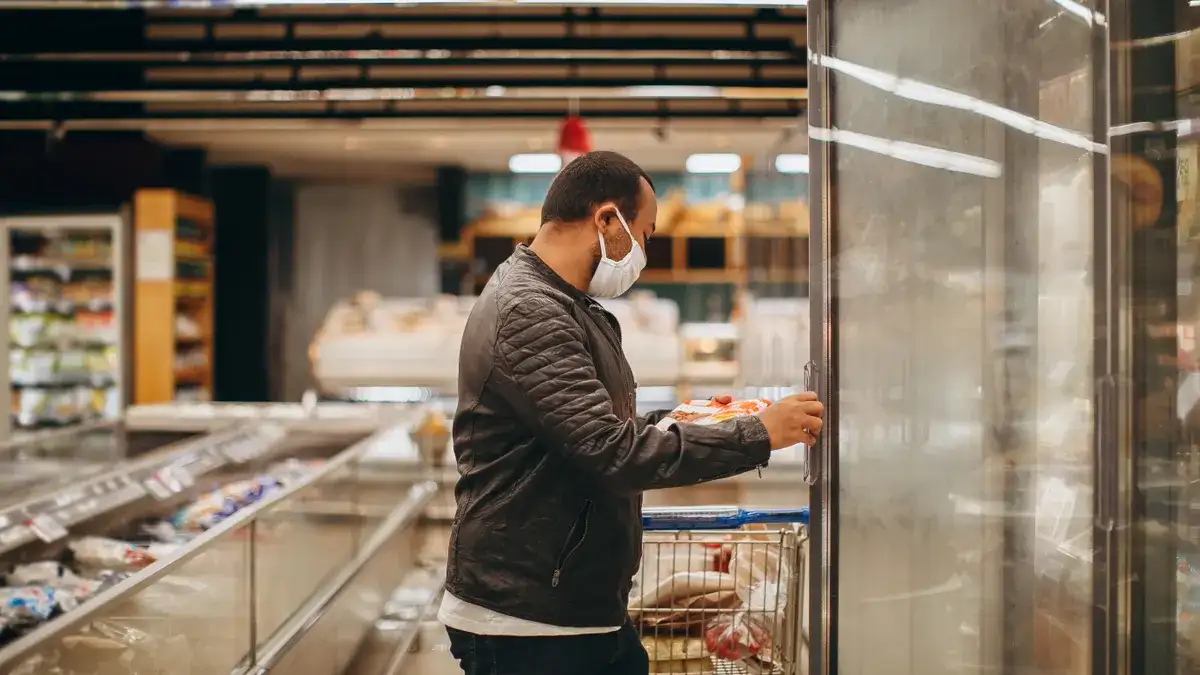
A safe low histamine shopping route starts with a 3-stop plan: produce aisle, refrigerated case, then pantry aisle, with checkout at the end. That order keeps the most perishable foods moving first and cuts the chance that you wander past extra shelves and impulse items. It also helps when you only have 15–20 minutes to shop.
Picture this: you’re in the parking lot with your phone in hand, staring at a store map or guessing at the layout. A route that looks simple on paper can turn messy fast if you enter from the wrong door. Start with the entrance that puts you closest to the first stop, not the prettiest one.
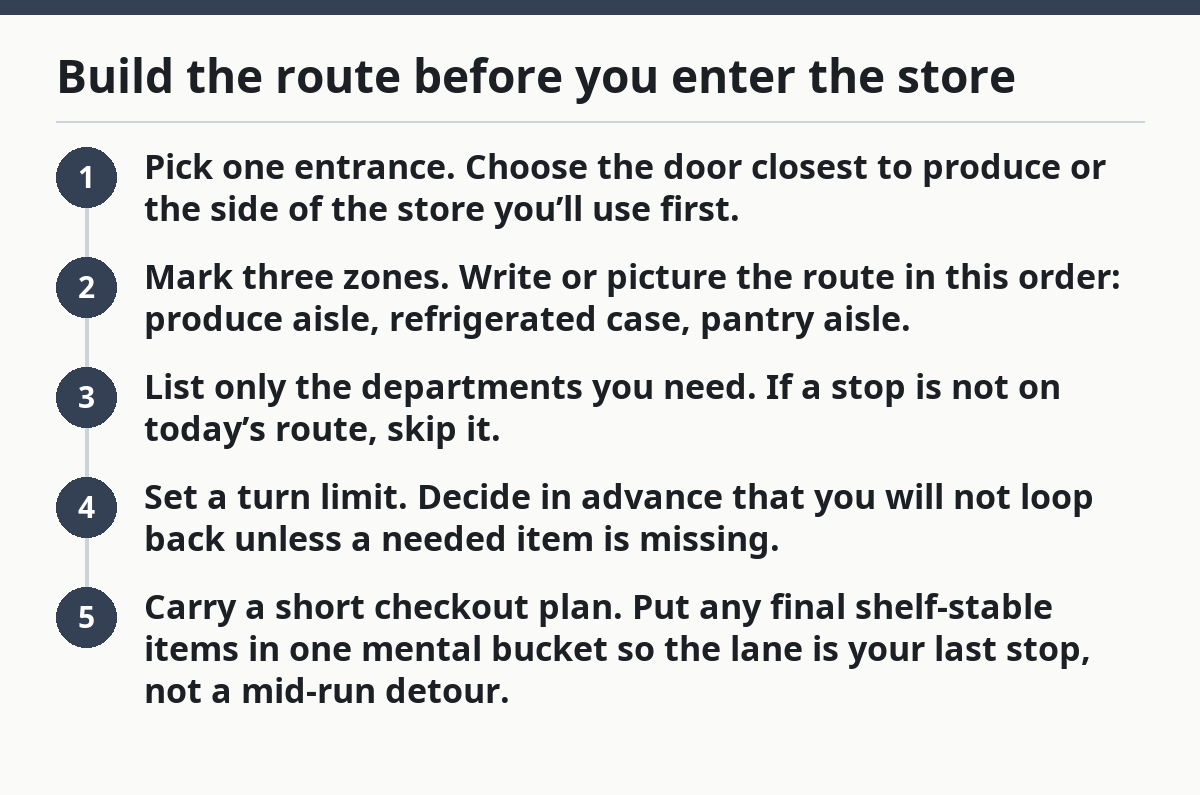
- Pick one entrance. Choose the door closest to produce or the side of the store you’ll use first.
- Mark three zones. Write or picture the route in this order: produce aisle, refrigerated case, pantry aisle.
- List only the departments you need. If a stop is not on today’s route, skip it.
- Set a turn limit. Decide in advance that you will not loop back unless a needed item is missing.
- Carry a short checkout plan. Put any final shelf-stable items in one mental bucket so the lane is your last stop, not a mid-run detour.
The route does not need to be fancy. It just needs to be repeatable.
That matters because a grocery store is built to tempt you into wandering. The more you crisscross the aisles, the more chances you have to lose time and grab something you did not plan to inspect. A clean route protects your attention.
Use the hub on [low histamine shopping and ingredient vetting] when you want the bigger label strategy behind this route. This page stays on movement through the store, not on pantry building.
How should I move through one grocery store without backtracking?
You should move in a single loop from the front of the store to the back, then out to checkout. That keeps your feet moving in one direction and stops the “just one more aisle” trap that turns a 10-minute trip into a 40-minute one.
Picture this: you’ve reached the produce aisle and now you need one cold item, one shelf item, and then you’re done. If you bounce between ends of the store, you double your walking and your decision points. The route gets sloppy, and your cart starts collecting extras.
Use this simple pattern:
- Stop 1: produce aisle for items that sit near the front or in open bins.
- Stop 2: refrigerated case for fresh chilled foods that need the coldest part of the trip to happen before the cart gets heavy.
- Stop 3: pantry aisle for shelf-stable items that do not need special handling.
- Stop 4: checkout lane with the cart already sorted so you are not rereading labels in line.
A good route also respects the store’s shape. If produce is near the entrance and dairy is on the back wall, walk the perimeter once and let each department fall into place. If the store is reversed, flip the order, but keep the same logic: front to back, cold to less cold, then out.
Fast is not the same as rushed. Fast means fewer turns and fewer decisions. Rushed means you skip the check that matters. Keep your pace steady and your path simple.
What goes wrong with a wandering route
A wandering route usually costs time, cold quality, and focus. It can also make you forget what you already picked up, which leads to duplicates or a second lap through the same aisles.
Common mistakes:
- Starting in the middle of the store. That creates backtracking from the first minute.
- Saving refrigerated items for last. It leaves you with warm cart time and more pressure.
- Cutting through unrelated aisles. Every extra aisle is another chance to lose the route.
- Stopping to browse ends and displays. End caps are where stores push extras, not where your route gets cleaner.
Do this instead:
- Keep to the outer path when possible.
- Put cold items in the cart only when you’re close to checkout.
- Treat every unplanned aisle as a detour, not a shortcut. If that detour keeps happening, ask a store employee or a qualified clinician for help planning around your needs, and consult a reliable source such as the Academy of Nutrition and Dietetics.
The truth is, a low histamine grocery store route works best when it feels almost boring. Boring means repeatable. Repeatable means safer for the next trip too.
What order should I shop in at the grocery store?

You should shop in this order: produce aisle, refrigerated case, pantry aisle, then checkout. That order gives you a clear path through one store and puts the most time-sensitive items in your cart before the less sensitive ones.
Picture this: you’ve got a short list and a store that mixes fresh food with snacks, sauces, and random displays. If you start with the pantry aisle, you may carry shelf items around while cold food sits waiting. That is the wrong shape for a low histamine route.
Use this exact sequence:
- Produce aisle first. Grab the items you need from the front of the store or the perimeter produce section.
- Refrigerated case second. Move to chilled foods so they spend less time outside cold storage.
- Pantry aisle third. Finish with shelf-stable items, where you can move a little slower.
- Checkout lane last. End where the store stops, not where your route starts over.
This order is especially useful in larger stores where the produce section sits near the entrance and the pantry aisles run deeper inside. In smaller stores, the same logic still holds even if the layout is tighter. The exact map changes. The sequence does not.
A lot of generic shopping advice says to “group by category,” but that is too vague to help in a real store. You need a route, not a slogan. A route answers where your feet go next.
How do I use the refrigerated case without losing time?
You use the refrigerated case as a short, targeted stop, not as a place to browse. That means you go in with the exact cold items you need, take them, and leave before the cart starts becoming a holding zone.
Picture this: you’re at the chilled wall and there are yogurt cups, cheeses, deli trays, and prepared foods all lined up together. The route can fail here if you start reading every label twice. The fix is to know which door or shelf section you came for before you get there.
Keep this simple:
- Go straight to the cold items you already decided to buy.
- Read only the label you need for that item, then move on.
- Avoid drifting into prepared foods unless they were already on your list.
- Check the coldest section last if the case has more than one zone.
A refrigerated case is also where shopping time matters most. Even a short delay can stretch your trip. If the store is busy, save this stop for after produce so you are not standing in front of the case longer than needed.
A short refrigerated stop keeps the rest of the route clean too. If you finish cold items early, you can spend the pantry aisle on slower decisions without worrying about temperature.
What should happen in the pantry aisle?
The pantry aisle should be your last real stop before checkout, because shelf-stable items can wait while you finish the route. That gives you room to compare labels without affecting the cold part of the trip.
Picture this: you’re now away from the produce mist and the cold wall, standing in front of cans, boxes, and jars. This is where many shoppers lose the route and start hunting through unrelated aisles for one extra item. Keep your feet in the pantry aisle and finish the job there.
Use a tight pantry strategy:
- Stay in one aisle block until you have what you need.
- Read labels once, then decide.
- Skip side trips unless a needed item is missing from the shelf.
- Keep the cart front clear so checkout is faster.
If you are carrying only a few items, the pantry aisle can be quick. If you need several shelf-stable foods, keep them together in the cart so you can check out without re-sorting at the lane. The point is not to inspect every shelf. It is to finish the route with the least extra movement.
The pantry aisle is often where stores place end caps and promos. Those are route killers. They look convenient, but they can drag you into another loop. Stay with the aisle itself unless you already planned the detour.
How do I check labels fast without turning the route into a slog?
You check labels with a fixed order so you do not reread the same package three times. That order is the same every time: ingredient list, date or freshness cue, then put it in the cart or leave it. It should take seconds, not a long standstill.
Picture this: you’re holding one package in each hand and the refrigerated case is behind you. If you try to inspect everything at once, the route stops moving. A fast check flow keeps the store trip tight and stops you from wandering back to the same shelf.
Use this 3-part check:
- Read the ingredient list once.
- Check the date or freshness cue if the package has one.
- Make a yes-or-no decision immediately.
Do not build a second route inside the label check. That means no walking away, no circling back, and no stacking maybe-items in the cart to reconsider later. If you hesitate on a package for long, put it back and keep moving.
This is also where a short list helps. A narrow route plus a narrow check beats a long route with lots of second guesses. If you are still unsure about a packaged item, leave it for another trip and stay on the planned path.
How do I know this route is safe enough for my needs?
This route is safe enough when it is short, repeatable, and keeps you from shopping in circles. It is not a medical treatment plan, and it should not replace advice from a qualified clinician if your symptoms are severe or your diet needs are complex. For medical diet guidance, see the NHS food allergy advice and the Cleveland Clinic low-histamine diet overview.
Picture this: you are trying to shop without turning the store into a puzzle. A good route does not promise perfection. It lowers friction. It helps you avoid extra turns, extra time, and extra shelf wandering.
Use this checkpoint before you leave:
- Did you enter one time only?
- Did you hit the three main stops in order?
- Did you avoid backtracking?
- Did you keep the cold section short?
If the answer to most of those is yes, the route worked. If not, the problem was usually the path, not the store.
For a deeper system behind this, the broader hub on [low histamine shopping and ingredient vetting] covers how route planning fits into the full shopping process.
How do I shop faster for low histamine foods?
Shop faster by using the same route every time and keeping your stops to three departments. That reduces decision fatigue and cuts the amount of wandering through the store. A short list and a fixed path matter more than speed-walking.
What order should I shop in at the grocery store?
Use produce aisle first, refrigerated case second, pantry aisle third, and checkout last. That order puts the most time-sensitive stop early and keeps the rest of the trip simple. If your store layout is reversed, keep the same logic but flip the direction.
How do I avoid backtracking in the store?
Avoid backtracking by choosing one entrance, one loop, and one checkout lane. Do not leave an aisle unless you are done with it, and do not cross the store for one forgotten item unless it is truly needed. A route that never doubles back is easier to repeat next time.
Drafted with AI; not yet reviewed by a person.