Last updated: November 19, 2026
Quick Answer: 3-part no-cook emergency meal
Low Histamine Ingredients for Emergency Meals When You Cannot Cook are usually plain, single-ingredient foods you can assemble in 3 parts: a base, a tolerated protein or fat, and one fresh add-on. This guide shows what to grab, what to skip, and how to turn those items into a meal without turning on a stove.
Key Takeaways
- Start with foods that are plain, dry, and short on ingredients.
- Rice cakes, plain crackers, and simple grains are common fallback options.
- Protein is harder; use tolerated nuts, canned beans only if they work for you, or plain shelf-stable protein with a short label.
- Assembly matters as much as the ingredient list.
- Freshness and storage time change how risky a food feels for many people with histamine issues.
What are good no-cook low histamine foods?
Good no-cook low histamine foods are plain, single-ingredient items with a short shelf life once opened and no fermented, aged, or highly processed extras. Picture this: you’re tired, the fridge is thin, and you need something you can eat in 5 minutes with no pan, no microwave, and no guessing. A plain starch plus a simple protein or fat is a common place to start.
That means plain crackers, rice cakes, cooked-and-chilled grains if they are already prepared, and tolerated nuts or seeds in small amounts. It also means reading labels for vinegar, yeast extract, fish sauce, “natural flavors,” and long ingredient lists that hide triggers. A food can look innocent and still be a bad fit. That part trips people up.
A simple emergency plate can look like this:
- 2 to 4 rice cakes with sunflower seed butter, if tolerated
- Plain crackers with olive oil and salt
- A bowl of plain cooked rice already in the fridge
- Cucumber slices or peeled carrot sticks for crunch
- A handful of tolerated nuts, if nuts work for you
The best part? You do not need fancy recipes. You need 3 clean parts: a base, a protein or fat, and one easy add-on. If you need a quick label guide, the hub on low histamine ingredient selection and label reading is the right next stop.
Which shelf-stable basics actually help in an emergency?
Shelf-stable basics help because they survive the week, not because they are exciting. Picture yourself opening a cupboard at 9 p.m. and realizing dinner has to come from a box, a jar, or a sealed bag. That is where plain crackers, rice cakes, and shelf-stable grains earn their place.
The truth is, a lot of shelf-stable foods are shelf-stable because they are processed in ways that can make histamine issues harder to manage. So the win is not “anything that lasts forever.” The win is short labels, low drama, and familiar ingredients. Look for plain rice cakes, plain corn cakes if you tolerate corn, quick-cook oats if oats suit you, and unseasoned grains stored dry.
If you keep grains, choose ones that cook fast later or are already cooked and frozen in small portions. A bag of rice, quinoa, or millet can become a backup meal if you can access boiling water later, but for a no-cook emergency, pre-cooked portions matter more than dry grain alone. No one wants to stare at uncooked rice in a power outage.
Use this filter before you buy:
- 1 ingredient is best when you can get it
- 3 to 5 ingredients can still work if they are plain and familiar
- Avoid vinegar, fermented soy, aged cheese, and seasoned blends
- Check for wheat, sesame, soy, and tree nuts if those are your allergens
If you need bread alternatives, plain crackers and rice cakes are usually the cleaner fallback. If you need a grain base, keep plain cooked rice or quinoa in the fridge in 1-cup portions, then eat it cold if that works for you. That is often more useful than a pantry full of dry goods you cannot use without a stove.
How do I build a backup meal without cooking?
You build a backup meal without cooking by pairing a plain base, a tolerated protein or fat, and one fresh item with a short ingredient list. Picture this: you have 2 minutes, one plate, and no energy for meal prep. The goal is not a perfect meal. The goal is food that is simple enough to eat and gentle enough to try.
Here’s the catch: people often stock one category and forget the other two. They buy crackers and forget protein. Or they keep nuts and forget a carb that actually settles the stomach. A better backup meal uses 3 parts and keeps the label short.
Use this simple order:
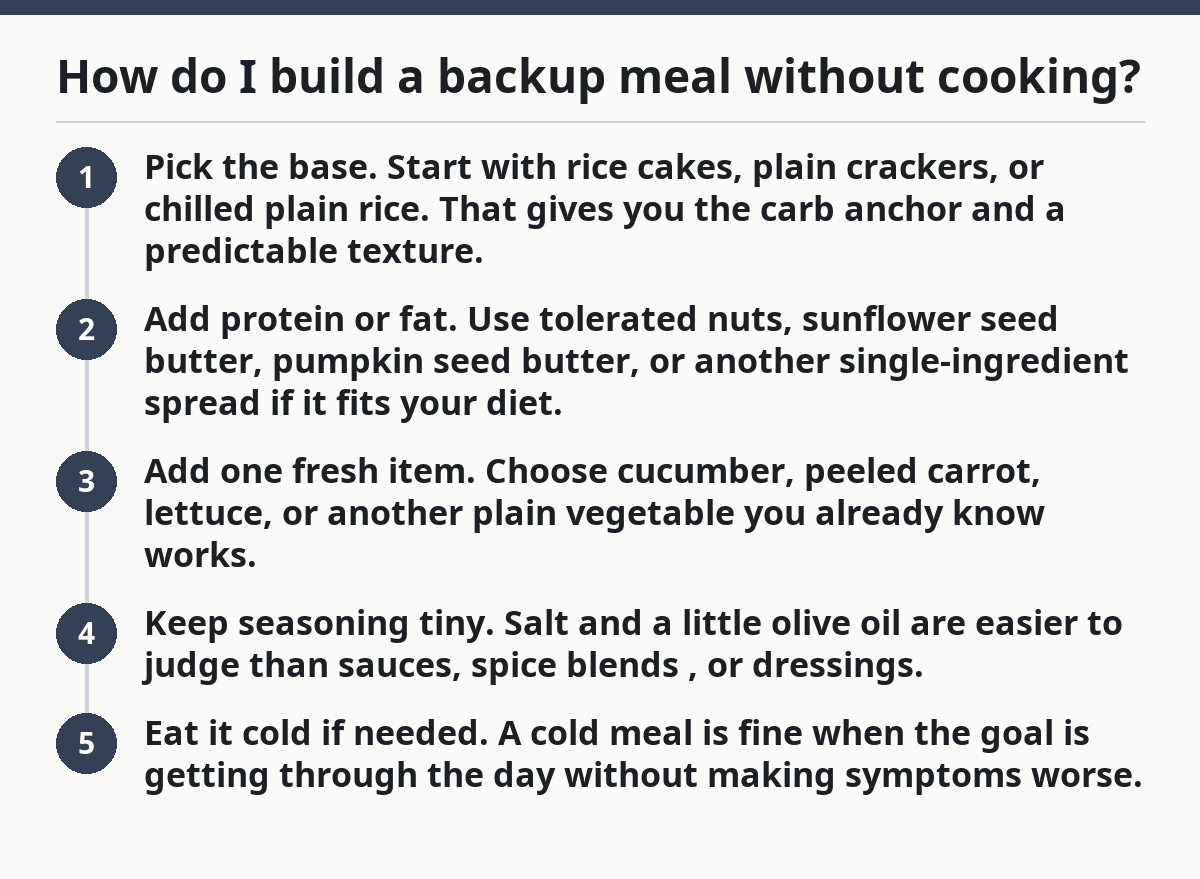
- Pick the base. Start with rice cakes, plain crackers, or chilled plain rice. That gives you the carb anchor and a predictable texture.
- Add protein or fat. Use tolerated nuts, sunflower seed butter, pumpkin seed butter, or another single-ingredient spread if it fits your diet.
- Add one fresh item. Choose cucumber, peeled carrot, lettuce, or another plain vegetable you already know works.
- Keep seasoning tiny. Salt and a little olive oil are easier to judge than sauces, spice blends, or dressings.
- Eat it cold if needed. A cold meal is fine when the goal is getting through the day without making symptoms worse.
Examples that often stay simple:
- Rice cakes + sunflower seed butter + cucumber slices
- Plain crackers + olive oil + salt + peeled carrot sticks
- Chilled rice + a little salt + olive oil + tolerated seeds
- Oats soaked with water or milk substitute if oats are safe for you and the brand is plain
An assembly meal wins when it is boring. That sounds unglamorous, but boring food is useful food when your body is already annoyed. If any part has a long ingredient list, skip it and go back to the cleaner option.
What backup protein works when I cannot cook?
Backup protein is the hardest part of an emergency low histamine meal, and that is where many people get stuck. Picture yourself with a stomach that is already touchy and a fridge that has no leftovers you trust. You need something with staying power, but you do not need a protein bar full of add-ins.
The most practical options are tolerated nuts, seed butters, and any plain protein you already know works cold and fresh. For some people, plain canned beans can fit; for others they do not. Same with plain cooked chicken or turkey stored safely in the fridge. The issue is not the protein category alone. It is freshness, handling, and your own trigger list.
A plain protein option should pass three checks:
- One short ingredient list
- No vinegar, spice mix, or smoke flavor
- A form you can eat cold without extra work
Common trade-offs matter here. Nuts are easy, but they can be a problem if you have a tree nut allergy or if they feel too dense during a flare. Seed butters are smoother, but many brands add sugar or emulsifiers. Plain cooked meat can work for some people, but leftovers are not the same as a fresh serving, and histamine can build as food sits.
If nuts are on your safe list, keep them plain and unsalted when possible. If seeds work better, sunflower or pumpkin seed butter often gives you the easiest no-cook spread. If you rely on animal protein, keep an eye on how long it has been stored and avoid heavily seasoned deli meat. That can turn an emergency meal into a regret.
Who Should Skip This: anyone with a known nut allergy should skip nut-based emergency meals and use a safer seed or plain starch option instead.
Buy this if: you need a cold protein add-on that takes 0 minutes to cook and you already know your nut or seed tolerance.
Skip this if: you react to nuts, seeds, or long-stored leftovers and need a fresher protein plan.
Which quick carbs are the safest fallback?
Quick carbs are a common fallback because they are easy to digest for many people and simple to keep plain. Picture this: you are shaky, you have no appetite, and you still need something on a plate in under 5 minutes. Plain carbs are often the first place to start.
The best no-cook choices are rice cakes, plain crackers, and chilled cooked grains if you already have them. Some people also tolerate plain oats, but that depends on the brand and your own trigger list. If oats are a problem for you, do not force them because they are “healthy.” A food that hurts you is not a help.
For a shelf-stable emergency, keep these ideas in mind:
- Rice cakes are light, dry, and easy to top with seed butter or olive oil
- Plain crackers can stand in for bread without needing a toaster
- Pre-cooked plain rice or quinoa can be eaten cold with salt and oil
- Plain oats can work as an overnight-style bowl if you already know they are safe
The mistake is choosing flavored carb foods because they sound convenient. Onion powder, garlic powder, yeast extract, malt, vinegar, and seasonings can show up fast. A plain-looking cracker can still hide three ingredients that are not friendly. Read the bag, not the marketing.
If you want a carby base that also pairs well with protein, rice cakes are often the easiest. If you want more chew, plain crackers are better. If you already batch-cook, a cold portion of rice or quinoa gives you a more filling plate than a dry snack-style carb. That matters when the meal has to hold you for hours, not minutes.
What common mistakes make emergency meals backfire?
Common mistakes make emergency meals backfire because they add hidden ingredients, stale food, or too much variety at once. Picture this: you are tired, you grab the first thing in the pantry, and later you cannot tell what actually bothered you. That is how a simple backup plan gets messy fast.
One mistake is buying “healthy” blends with 12 ingredients and assuming they are safer because they look clean. They often are not. Another is relying on leftovers that have sat too long in the fridge. Histamine can rise as food ages, so a meal you made on Monday may not feel the same on Thursday. A third is mixing too many new foods in one sitting. That makes it hard to track reactions.
Avoid these traps:
- Flavored crackers with spice blends or yeast extract
- Nuts roasted with garlic, chili, or smoke flavor
- Pre-made dips, dressings, and sauces with vinegar
- Old leftovers that have been hanging around for several days
- “Just this once” foods you already suspect are risky
The fix is dull but effective: keep a short list of foods you already trust, then rotate them before they sit too long. If you are choosing between a fancy shelf-stable item and plain rice cakes, plain usually wins. If you are choosing between a large leftover container and a fresh simple plate, fresh is usually the safer move.
A backup meal works best when you can answer one question quickly: “What’s in this?” If you cannot answer in one breath, it is probably not the right emergency food. That rule saves time, money, and a lot of second-guessing.
How do I keep emergency ingredients ready without overbuying?
You keep emergency ingredients ready by building a small, repeatable set of foods you already tolerate and replacing them before they go stale. Picture a cupboard with 6 to 10 reliable items instead of a crowded shelf full of maybes. That is enough to cover a bad day without turning your kitchen into a project.
Start with a short list: one base, one or two protein or fat options, one or two simple add-ons, and a backup grain. For many people, that means plain crackers, rice cakes, a seed butter, a safe nut if tolerated, and one cold veggie. If you use chilled grains, portion them in 1-cup containers so you can grab one without guessing.
A simple rotation plan helps:
- Check dry goods every 1 to 2 months
- Freeze or refrigerate anything that goes stale quickly
- Put the oldest plain items at the front
- Keep label reading strict for every replacement
The best part? You do not need a giant pantry to be ready. You need a few foods that survive stress, short labels, and your real symptoms. That keeps the plan practical instead of aspirational.
If you want the deeper label-reading rules behind these choices, the hub on low histamine ingredient selection and label reading gives the broader framework. This page is the emergency version: the foods you can actually assemble when cooking is off the table and the day still needs dinner.
What are good no-cook low histamine foods?
Good no-cook low histamine foods are plain, simple items you can eat as they are or with almost no assembly. Think rice cakes, plain crackers, tolerated nuts or seeds, and cold cooked grains you already prepared safely. The safer the label and the shorter the ingredient list, the easier it is to use during a rough day.
What should i keep for a food emergency?
Keep a small set of foods you already tolerate, not a random pantry full of maybes. A practical emergency kit often includes a plain carb like rice cakes or crackers, a fat or protein like seed butter, and one fresh item such as cucumber or peeled carrot. Replace items before they go stale.
How do I build a backup meal without cooking?
Build it in three parts: a base, a protein or fat, and one fresh add-on. Start with something plain like crackers or chilled rice, add a tolerated spread or nut, then finish with a simple vegetable and salt if needed. Keep the label short so the meal stays predictable and easy to repeat.
Drafted with AI; not yet reviewed by a person.