Last updated: November 19, 2026
Key Takeaways
- Cross-contact is when a low histamine meal picks up traces from another food during prep, cooking, or serving.
- Start with high-touch tools: spatulas, spoons, knives, cutting boards, tongs, towels, and storage bins.
- Preventing cross-contact during cooking works best as a one-way flow: clean tool, one food, one surface, then back to clean.
- Shared cookware can stay in rotation when it is residue-free and used in a consistent order.
How to Prevent Cross-Contact in a Low Histamine Kitchen starts with keeping one food, utensil, or surface from carrying residue into the next meal. The fix is a clear prep order, separated tools, and a few habits that stop sauce, crumbs, and drips from moving around the kitchen.
What cross-contact means in a low histamine kitchen

Cross-contact means a low histamine meal picks up traces from another food during prep, cooking, or serving. That can happen through a shared spatula, a cutting board with stuck bits, a dish towel used on the wrong pan, or a storage bin that still holds old residue.
This matters because low histamine cooking is usually about reducing avoidable triggers, not just changing ingredients. A tomato-free meal can still become a problem if it is plated with the same spoon used in a vinegar marinade, or if a shared pan still has a film of old sauce. A beginner often thinks “clean-looking” is enough. It is not. Dry crumbs, grease, and small splashes are enough to move residue from one food to another.
The easiest way to think about it is this: separate by task, then by tool. Use one set of utensils for raw prep, one for cooking, and one for serving if your kitchen is busy. Keep the same logic for cutting boards, dish towels, and storage bins. A low histamine kitchen does not need to be perfect, but it does need clear boundaries.
One useful reference point is the food safety concept of allergen cross-contact, which the U.S. Food and Drug Administration explains on its food allergen pages. The same practical idea applies here even though histamine is not an allergen. The term changes; the handling habits do not.
Start with the tools that actually move residue
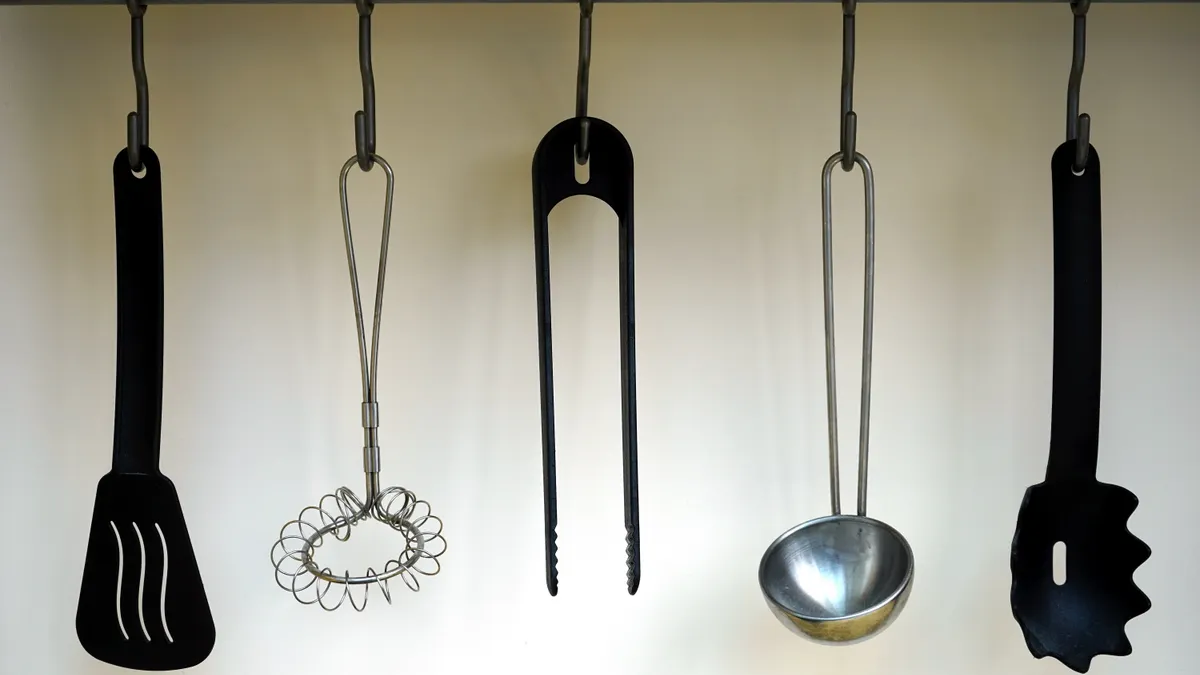
Start with the tools that touch food most often: spatulas, spoons, knives, cutting boards, tongs, dish towels, and storage bins. Those are the items that spread residue fastest because they contact both food and hands.
Set up simple separation before you cook. Keep one utensil group for wet, messy food and another for clean handling. For example, use one spatula for turning food in the pan and a different spoon for serving. Keep a separate cutting board for produce if the kitchen also handles leftovers or mixed-prep foods. Label the groups with tape or a marker if more than one person cooks in the same kitchen.
A shared kitchen works better when the separation is obvious. Put the low histamine tools in a dedicated drawer or one lidded storage bin, not loose in a utensil crock where everyone reaches in. If a drawer is not possible, use a bin with a clear label and a lid that closes fully. That one physical barrier cuts down on accidental grab-and-use mistakes.
Dish towels deserve the same treatment. One towel used for hands should not also wipe a counter, dry a pan, and grab a hot lid. Keep at least two towels in rotation, and if the kitchen is busy, make the “food contact” towel different from the “cleanup” towel by color or placement. Dish soap matters too: keep the bottle near the sink so washing happens immediately instead of waiting until residue dries on a tool.
The trade-off is convenience. Separation takes a few extra seconds and a little storage space. It is worth it in a low histamine kitchen because it is easier to maintain a small system than to keep guessing which tool touched what.
How do I prevent cross-contact while cooking?
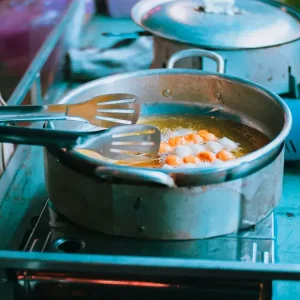
Preventing cross-contact while cooking means building a one-way flow: clean tool, one food, one surface, then back to clean. The key is to keep wet residue from traveling through pans, spoons, and hands.
-
Set out only the tools for the current recipe before you begin. Use one cutting board, one knife, one spatula, and one serving spoon per task. When this works, the counter is not crowded with extras that can pick up residue by accident.
-
Assign a prep zone and keep ingredients inside it. Use one 2-by-3-foot area of counter, or any clearly bounded section you can keep organized. When the system is working, ingredients do not drift across the kitchen and tools stay where they started.
-
Handle one ingredient type at a time. Cut produce first, then move to the pan, then plate. Do not switch back and forth between raw prep and cooked food unless you change tools. You should see fewer touches, not more.
-
Keep shared cookware out of the rotation unless it is truly clean and dry. If a pan, pot, or baking tray has been used for foods that are not part of the current meal, pick a different one. The result you want is simple: no lingering film, no crumbs, no smell from the previous food.
-
Use a clean utensil when you change jobs. A spatula used to stir a sauce should not later touch the serving plate. A fresh utensil is the cleanest way to stop transfer at the point of contact.
-
Keep hands from becoming a transfer tool. If you touch one food, wipe or wash hands before touching another with a different histamine risk. Dry hands on a dedicated towel, not the dish towel that is also used to handle pans.
-
Plate from the cooking vessel, not from a reused prep plate. Serve food onto a fresh plate or bowl rather than into something that held another ingredient earlier. The clean dish should look untouched except for the finished meal.
-
Move leftovers straight into labeled storage bins. Use containers that are closed and marked with the food name and date so old food does not get mixed into new prep later. The sign that this worked is that tomorrow’s meal starts with an organized, identifiable container, not mystery leftovers.
For a deeper kitchen-layout approach, the hub on low histamine cooking methods and kitchen setup covers the larger system. This page stays focused on preventing contact during prep and cooking.
Shared cookware: what can stay in rotation and what should not
Shared cookware can stay in rotation if it is truly free of residue and used in a consistent order. The problem is not “shared” by itself; the problem is shared and uncertain.
Use one rule for pots, pans, baking trays, and mixing bowls: if a piece of cookware has visible residue, odor, or stuck-on film from a different food, do not treat it as safe for the next low histamine recipe. That is especially important with pans that held sauces, braised foods, or seasoned mixtures, because those leave more behind than dry ingredients do. A 10-inch skillet can look clean and still hold a thin layer on the rim, handle, or rivets.
If the kitchen is shared, reserve the most dependable pieces for low histamine meals. A dedicated saucepan, one baking sheet, and one mixing bowl can be enough for many households. A separate set is not always necessary, but a dedicated set is easier to manage than trying to remember which item last touched what. That is the honest trade-off: more separation means less mental tracking.
Avoid relying on “I’ll rinse it quickly” as the whole plan. Rinsing can move residue around instead of removing the decision point. A quick rinse is not a separation strategy; it is only one step in a larger process. If another person uses the same pot for a strongly seasoned meal, the low histamine cook needs a clear marker that the pot is off-limits until it is properly cleaned and fully dry.
One practical label helps here: keep a small sticky note or bin tag that says “low histamine only” for the preferred cookware. That simple marker prevents the common mistake of borrowing the right pan for the wrong meal and not realizing it until after the food is plated.
Cleaning order that supports prevention, not cleanup after the fact
Cleaning order matters because the wrong order spreads residue from dirty items to clean ones. Start with the cleanest tasks first and finish with the messiest, then reset the work area before the next meal.
Use this order when prep is done: clear dry crumbs first, move food scraps into the trash or compost, then wash the tools that touched the most residue, and only after that handle the rest of the sink area. That keeps the cleanest utensils from sitting in contaminated water or on a damp counter while messier items are still in motion.
This section is not about deep cleaning methods; it is about keeping the cleaning sequence from undoing your prep work. A dish towel used on a grease spot should not return to drying a clean spoon. A sponge used on a pan with leftover sauce should not go right onto the cutting board. That sort of back-and-forth is where cross-contact sneaks in.
The best prevention habit is to reset between meals, even if the next meal is only an hour later. Put tools back in their labeled places, replace damp towels, and empty storage bins of scraps or wrappers. When the reset works, the kitchen looks ready for the next task instead of half-finished.
Dish soap is part of the system because it is the boundary between “used” and “ready again.” Keep it by the sink and use it consistently on the items that touched food. The exact cleaning method belongs on another page; the point here is timing and order. If a tool is not clearly ready, do not put it back into the low histamine rotation.
Labeling and storage bins that stop mix-ups before they start
Labeling and storage bins stop mix-ups by making the right tool easier to grab than the wrong one. If the system is invisible, people improvise; if it is visible, they follow it.
Use storage bins for three things: clean low histamine tools, items waiting to be washed, and leftovers that should not be mistaken for ready-to-use ingredients. A closed bin is better than an open pile because it shows status at a glance. Put a date or simple name on leftover containers so no one has to guess whether the food still belongs in the low histamine plan.
This is where a simple marker beats memory. A strip of masking tape on a container can say “serve tools,” “wash later,” or “leftovers.” That may feel fussy for a small kitchen, but it prevents the most common error: placing a clean utensil back into the wrong bin and then using it on the wrong food.
The limitation is obvious. Labeling only works if the labels stay legible and the bins stay in the same place. If the system gets ignored for a week, the labels become decoration. Keep the labels large enough to read in a hurry and the bins few enough to manage without thought.
A low histamine kitchen does not need a complicated color code with six categories. One or two labeled bins are enough for most homes. Too many categories create confusion, and confusion is the enemy of cross-contact prevention. Simpler systems are easier to keep up when the kitchen is busy.
Common mistakes that create cross-contact without obvious mess
The biggest mistake is assuming “looks clean” means “safe for the next meal.” It does not. A cutting board with faint staining, a spatula with sauce in the groove, or a dish towel that dried a pan can all carry enough residue to matter. The cost is hidden contamination; the fix is to separate tools, not to trust appearance.
Another mistake is mixing prep jobs on the same surface without a reset. Chopping vegetables next to a pan that just held something else invites drips, crumbs, and hand transfer. Use a clearly defined zone and keep it to one job at a time.
A third mistake is letting shared cookware drift back into circulation because it is the “best” pan or the biggest tray. Convenience wins in the moment and costs you certainty later. It is better to keep one dependable pan for low histamine meals than to gamble with whatever is nearest.
A fourth mistake is using one dish towel for everything. That towel becomes a moving contact point, which defeats the point of separation. Two towels, one for hands and one for surfaces, is a much safer default.
Finally, do not overcomplicate the system. If the kitchen needs six rules to stay organized, the plan is too hard to maintain. A low histamine kitchen works best when the boundaries are easy to see and hard to ignore.
Prevent cross-contact without turning the kitchen into a project
Preventing cross-contact in a low histamine kitchen is mostly about consistency: separate the tools, control the order, and make the status of each item obvious. If the system stays simple, it is easier to use every day.
The practical version is this: keep dedicated spatulas, cutting boards, dish towels, and storage bins where you can see them; keep shared cookware out unless it is clearly ready; and follow the same prep order each time. That is enough for many households without turning the kitchen into a lab.
This approach is not for someone who wants zero-effort cooking. It asks for a small amount of discipline every time food is prepared. It also does not replace ingredient choices or meal planning; it only reduces accidental transfer during cooking and prep. If the kitchen is heavily shared and nobody will respect labels or utensil separation, the system will break down fast.
For a broader framework, the hub on low histamine cooking methods and kitchen setup can sit above this page and connect the full kitchen plan. This article stays with the narrow task: preventing cross-contact while food is being made.
FAQs
How do i avoid cross-contact in a shared kitchen?
Avoid cross-contact in a shared kitchen by making the low histamine tools easy to identify and hard to mix up. Keep a labeled bin for dedicated utensils, separate dish towels, and use one prep zone at a time. If other cooks cannot follow the system, store your tools away from the shared drawer or crock.
do i need separate utensils for low histamine cooking?
Separate utensils are the safest choice, especially for spatulas, spoons, and tongs that touch both food and pans. A single shared utensil is easy to misuse when the kitchen is busy. If you cannot dedicate a full set, reserve a few key tools for low histamine meals and label them clearly.
how should i clean surfaces between meals?
Clean surfaces between meals by clearing food scraps first, then washing the area before the next prep starts. The surface should be dry enough that no crumbs, sauce, or towel residue carries over into the next dish. For the exact wash method, use the separate cleanup guide so this page can stay focused on prevention.
Drafted with AI; not yet reviewed by a person.