Last updated: November 20, 2026
Choose the freshest cut, the coldest display, and the shortest path home. For a low histamine diet, fresh protein is the safest bet when it looks bright, smells clean, sits in a cold case, and can be cooked or chilled quickly after purchase.
Key takeaways
- Pick protein that looks fresh at the counter, not just “best by” on a package.
- Choose cuts that can be cooked the same day if you want the least guesswork.
- Watch for dull color, sticky surfaces, strong odor, and excess liquid in the tray.
- Ask for the cutting time or pack date when it is available.
- Get the meat cold fast after checkout, then cook or freeze it without delay.
What should you look for first?
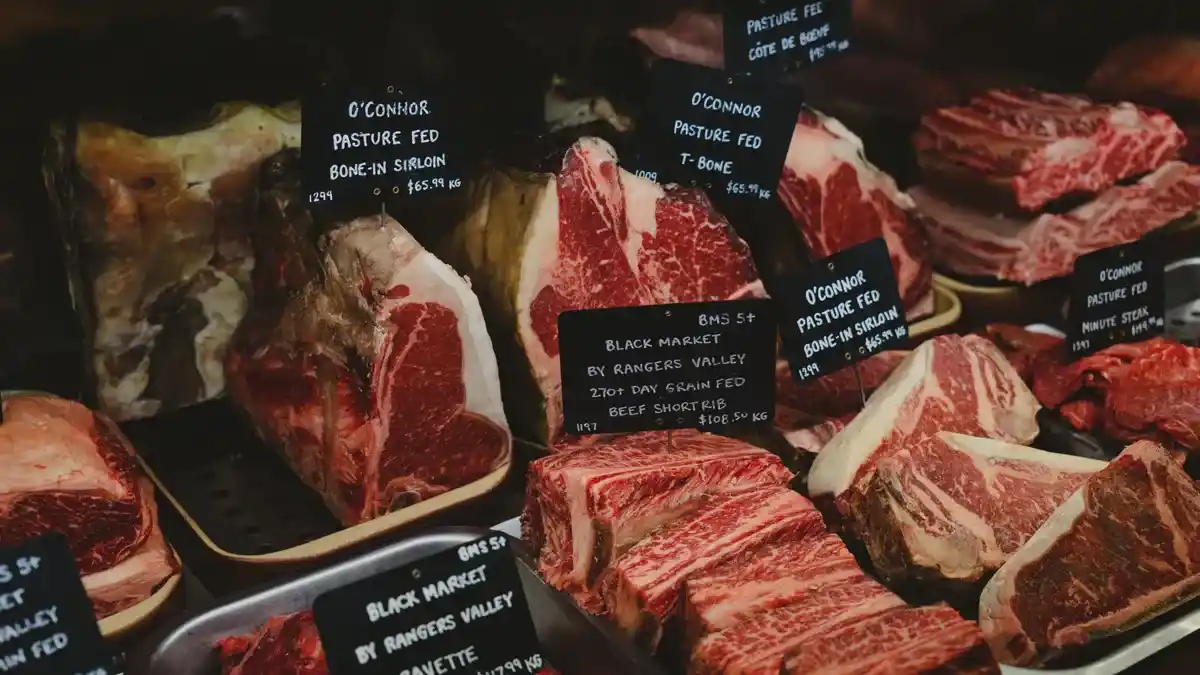
Start with the cold case, the cut surface, and the clock. For low histamine shopping, freshness matters more than the species name alone, because histamine rises as protein sits, is broken down, and spends time warm or handled.
Look first at where the meat sits. The display should be properly chilled, with no puddles of melted ice or warm spots in the case. Then look at the flesh itself: it should appear firm, not slimy, and it should not have a sour, ammonia-like, or “off” smell. A clean smell is one of the fastest clues you have at a meat counter.
The next filter is timing. Fresh protein is strongest when it has been cut close to the time you buy it and then gets home cold. Ask the counter staff when the fish, chicken, turkey, beef, lamb, or pork was cut if the store can tell you. If they cannot, choose the piece that looks least handled and plan to cook it the same day.
For a broader shopping system, see the hub on Low Histamine Shopping and Ingredient Vetting — The Complete Guide. This page stays on one job: choosing fresh protein in the store before cooking starts.
How do you choose meat at the counter?
Choose the piece that has the least time, the least damage, and the cleanest surface. The best buy is usually the one that looks the most recently handled, not the one that simply looks biggest or cheapest.
- Pick the coldest spot in the case. Choose meat that sits deep in the chilled display, not near the door or on top of a crowded tray. A proper refrigerated case should feel cold to the touch on the outside, and the meat should not look soft around the edges.
- Check the cut surface. A fresh cut should look tidy, not ragged or dried out. The surface should not be tacky or sticky. If the exposed flesh is darkened, gray, or crusted, keep moving.
- Smell before you buy. Fresh protein should smell mild. Any strong sour, fishy, or sharp odor is a reason to pass, even if the sell-by date still looks good.
- Ask one direct question. “When was this cut?” is enough. If the answer is vague, choose a different piece or a different counter.
- Choose the fastest-use option. If you plan to cook today, pick the most recently cut, plain piece with no marinade, stuffing, or added seasoning.
- Pay and chill fast. Bring a cooler bag if you are making other stops. At home, get the protein into the refrigerator or freezer right away.
That process works because low histamine shopping rewards speed and simplicity. A tray that looks fine on the shelf can still be the wrong pick if it has sat too long, been moved around often, or spent too much time warm during display.
Which proteins are easiest to buy fresh?
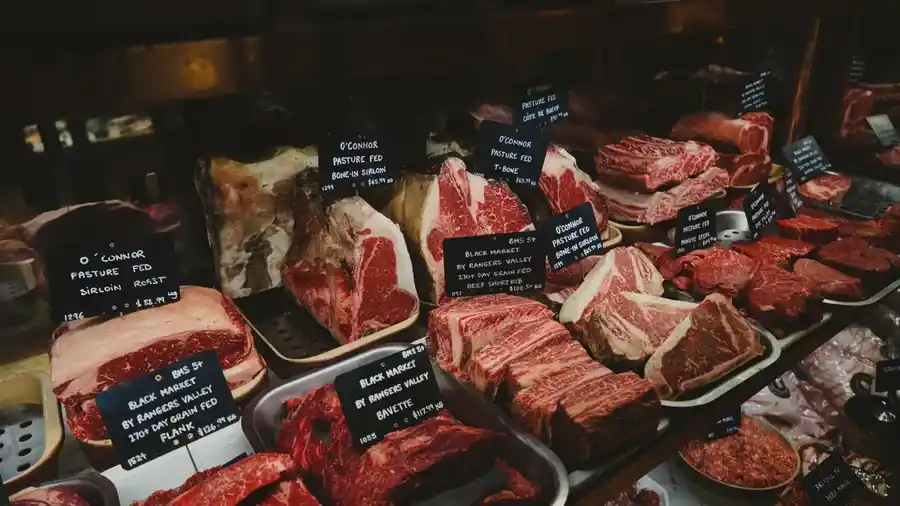
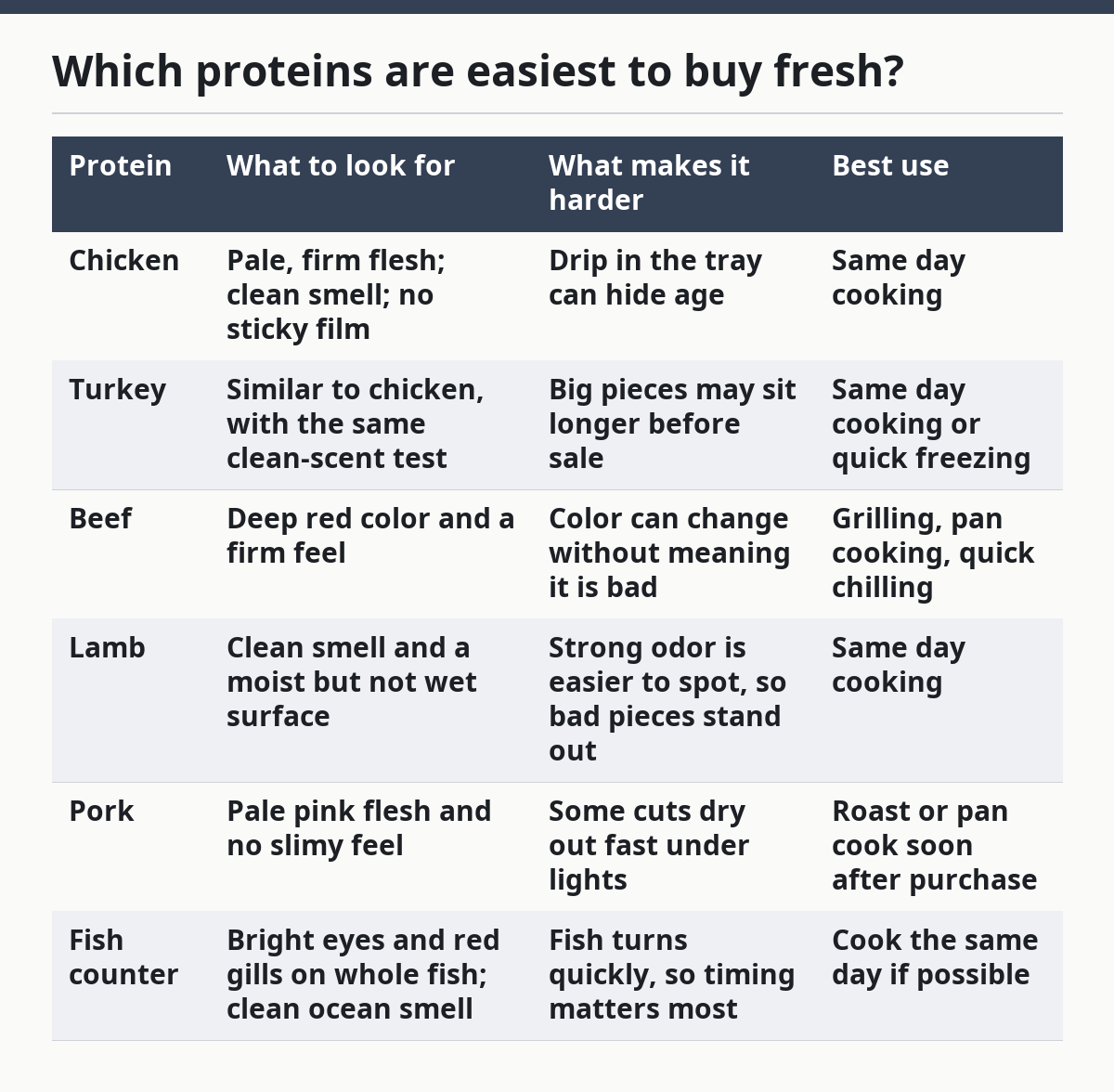
Chicken, turkey, beef, lamb, pork, and fish all can be good choices, but some are easier to judge than others at the meat counter. The table below shows the trade-offs in plain terms.
| Protein | What to look for | What makes it harder | Best use |
|---|---|---|---|
| Chicken | Pale, firm flesh; clean smell; no sticky film | Drip in the tray can hide age | Same day cooking |
| Turkey | Similar to chicken, with the same clean-scent test | Big pieces may sit longer before sale | Same day cooking or quick freezing |
| Beef | Deep red color and a firm feel | Color can change without meaning it is bad | Grilling, pan cooking, quick chilling |
| Lamb | Clean smell and a moist but not wet surface | Strong odor is easier to spot, so bad pieces stand out | Same day cooking |
| Pork | Pale pink flesh and no slimy feel | Some cuts dry out fast under lights | Roast or pan cook soon after purchase |
| Fish counter | Bright eyes and red gills on whole fish; clean ocean smell | Fish turns quickly, so timing matters most | Cook the same day if possible |
Fish needs the most caution because time matters more than almost anything else. If you are standing at a fish counter, ask when the fish came in and choose the piece that has spent the least time on display. For low histamine shoppers, fish is usually a “buy now, cook now” food, not a “buy today, use later” food.
Chicken and turkey are often the simplest for beginners because the visual cues are easy to read and the cooking plan can be straightforward. Beef, lamb, and pork can be just as useful, but they can tempt you into judging by color alone. Color helps, yet smell, texture, and handling time matter more.
What signs mean you should walk away?
Walk away if the meat looks wet, smells strong, or feels sticky. Those are the three fastest warning signs at a counter, and they matter more than a markdown label.
A puddle in the tray can mean the piece has sat too long or has warmed and chilled again. Sticky or tacky flesh is another bad sign, especially on chicken, turkey, and fish. A strong odor is the clearest stop sign of all. Fresh protein should smell mild, not sour, metallic, or sharp.
Packaging damage matters too. If a tray is cracked, leaking, swollen, or badly crushed, skip it. The same goes for meat that has been handled a lot, pushed around in the case, or moved from one tray to another with no clear reason. The more handling a piece gets, the less confidence you have in timing.
This is also where low histamine shopping differs from ordinary “freshness” advice. You are not looking only for food safety in the general sense. You are trying to reduce the chance that the protein has sat long enough for histamine to rise. That means a piece can be technically edible and still be a poor choice for your goal.
When in doubt, choose the item with the shortest and clearest path from display to pan. A plain cut from the counter is better than a piece with a long store history, even if the latter looks prettier on the shelf.
Should you buy prepackaged or counter-cut meat?
Counter-cut meat is usually the better pick for a low histamine plan, but prepackaged meat can work if it is very fresh and you can check the pack date. The right answer depends on timing, not on packaging alone.
Counter-cut meat gives you one advantage: you can ask when it was cut and choose the piece that was handled most recently. That is useful when you want to cook within the same day. The drawback is that you must judge smell, color, and cleanliness yourself, and the answer depends on the person behind the counter.
Prepackaged meat has a different trade-off. It is easier to compare dates, but it can sit in the case longer before you see it. If the pack date is recent and the seal is intact, it can still be a good choice. If the package is swollen, leaking, or covered in heavy liquid, it is a poor choice for low histamine shopping.
The best rule is simple: choose the option that gives you the clearest evidence of freshness and the shortest storage time. If the counter staff can tell you when the meat was cut, that can be more useful than a vague package label. If they cannot, a sealed pack with a recent date may beat a mystery tray.
For a quick comparison:
- Choose counter-cut when you want the freshest possible option and plan to cook soon.
- Choose prepackaged when the date is clear, the seal is intact, and the store can’t give you a useful cut time.
- Skip both when the smell, texture, or liquid in the package looks wrong.
How do you handle it after you buy it?
Handle it cold, fast, and with the fewest steps possible. Once fresh protein leaves the counter, the goal is to keep time and warmth as low as you can.
Get it home without delay. If you have more stops, use an insulated bag or cooler with an ice pack. Put the protein into the refrigerator as soon as you get in the door. If you will not cook it right away, freeze it promptly in a tight package so it spends less time in the fridge. The faster you chill it, the less chance you give histamine to build.
Keep raw protein on the lowest shelf of the fridge so it cannot drip onto other foods. Use a plate or tray under it if the package might leak. Wash your hands, knife, board, and sink after handling it. That step is basic food safety, but it matters even more when you are trying to keep other foods clean and separate.
When you do cook it, do not leave the cooked protein on the counter for long. Cool leftovers fast and refrigerate them soon after serving. For many low histamine shoppers, the safest plan is still the simplest one: buy fresh, cook quickly, and avoid long storage before or after cooking.
The main rule is not fancy. It is speed plus cold. If either one slips, the odds get worse.
What mistakes cost you the most?
The most costly mistakes are buying by price alone, trusting color alone, and waiting too long to cook. Those three errors can turn an otherwise decent protein into a risky one for a low histamine diet.
A cheaper cut can look attractive, but if it has sat in the case longer, the lower price may not be worth it. Bright color can fool you, especially with beef, where color changes do not tell the whole story. And even a fresh purchase loses value if it sits for a day or two before cooking.
Another common mistake is choosing marinated or seasoned meat because it seems convenient. That can add unknown ingredients and hide the real smell and texture of the protein. For low histamine shopping, plain is usually better than dressed-up.
A final mistake is forgetting the trip home. A good piece of chicken or fish can still be a poor choice if it sits warm in the car while you run another errand. If you need a longer stop, bring a cold bag and keep the purchase close to the ice pack.
The safest pattern is boring on purpose: plain cut, short shop, cold ride home, quick cook. That is the version that gives you the fewest surprises.
FAQ
How do I know if meat is too old for a low histamine diet?
Meat is too old for a low histamine diet when the smell, texture, or display time gives you doubt. A sour odor, sticky surface, or a tray full of liquid is enough reason to pass. If the store cannot tell you when it was cut or packed, choose a fresher piece or shop elsewhere.
Should I buy prepackaged or counter-cut meat?
Counter-cut meat is usually the better choice when freshness is your main goal. Prepackaged meat can still work if the seal is intact and the pack date is recent, but it gives you less control over timing. If the counter can tell you when the meat was cut, that information is often more useful than the package alone.
What cuts are easiest to use the same day?
Plain chicken, turkey, fish, and simple cuts of beef, lamb, or pork are easiest to use the same day. The key is not the species alone but how recently it was cut and how cold it stayed. Choose the piece that looks freshest, then cook it soon after you get home.
Drafted with AI; not yet reviewed by a person.