Last updated: November 19, 2026
Quick Answer: In most home kitchens, about 6 main food groups are poor freezer candidates for later use because they lose texture, separate, or turn watery. This guide to What Foods Should Not Be Frozen for Later Use? focuses on the foods most likely to disappoint after thawing, not on foods that are merely safe to freeze.
Some foods should not be frozen for later use because freezing breaks their structure, and thawing leaves them watery, grainy, or split. The foods most likely to disappoint are leafy greens, cucumbers, cream-based sauces, fresh herbs, potatoes, and many cut fruits.
Key Takeaways
- Freezing is hardest on foods with lots of water or fragile cell walls.
- Soft produce often turns limp, mushy, or wet after thawing.
- Dairy emulsions and cream sauces can split into grainy liquids.
- Potatoes usually go mealy or watery unless they are already cooked in a freezer-friendly dish.
- If a food is valued for crispness, freshness, or a smooth sauce, freezing is usually the wrong storage method.
Which foods should not be frozen for later use?
The foods that should not be frozen are the ones that lose texture, separate, or turn watery after thawing. That list includes cucumbers, lettuce and other leafy greens, fresh tomatoes for salads, cream-based sauces, many fresh herbs, raw potatoes, and soft cut fruit meant to be eaten fresh.
The reason is simple: freezing forms ice crystals inside food. In high-water foods, those crystals puncture cell walls and change the way the food behaves once it thaws. That damage is especially obvious in anything crisp, creamy, or delicate. A cucumber slice that was firm in the fridge can come back soft and wet. A dairy sauce can break. A handful of basil can turn dark and limp in a 0°F freezer.
Therefore, this is the easiest rule to use at home: if the food is prized for crunch, a smooth emulsion, or bright fresh texture, freezing is usually a bad bet. If the food is already cooked, mashed, blended, or part of a sturdy dish, it has a better chance of surviving. That is why a soup may freeze acceptably while the same ingredients on a salad plate do not.
For readers building a low histamine freezer system, this topic matters because a freezer is not just storage; it is a texture decision. The wrong item can come out technically safe but unpleasant enough to waste. That is also why the hub on low histamine freezer systems belongs beside this guide, not instead of it.
Foods with lots of water are the first to fail
High-water foods are the least reliable because thawing leaves them flooded from the inside out. Cucumbers, celery, watermelon, strawberries, oranges, lettuce, and many raw mushrooms all show the same pattern: they may still be edible, but they lose the texture people wanted.
Cucumbers are a clear example. A sliced cucumber contains a lot of water in a thin, fragile structure. Freeze it, and the slices usually thaw soft and glossy rather than crisp. Leafy greens do the same thing, only faster. A lettuce leaf that was meant for a sandwich or salad will usually come back wilted and collapsed. Spinach is more forgiving only when it is destined for a cooked dish or purée, not when it is supposed to stay leafy.
Cut fruit has the same problem. Once the flesh is exposed, freezing can make it bleed liquid on the plate. A cup of thawed melon or peach pieces often becomes a puddle with a few soft chunks in it. That may be fine for a smoothie, but it is the wrong result for fruit salad.
For example, the practical test is not “Can it be frozen at all?” The real question is “Will I still want the same food after the ice is gone?” If the answer depends on crunch, snap, or a dry surface, the food should stay out of the freezer.
Why cream-based sauces and dairy mixtures split
Cream-based sauces should usually not be frozen if you want them to stay smooth. Milk, cream, and cheese sauces can separate when frozen and reheated because the fat and water phases no longer stay evenly mixed.
That split shows up as graininess, curdling, or an oily layer on top. A sauce made with heavy cream, sour cream, or soft cheese may look normal in the pan before freezing, then break after thawing or reheating. This is especially true for delicate sauce styles that depend on a stable emulsion, such as cream gravies, Alfredo-style sauces, and some white sauces.
Not every dairy food behaves the same way. A baked casserole with dairy in it may hold together better than a loose sauce, because starch, eggs, pasta, or cheese structure can cushion the damage. Still, the more a dish depends on a silky finish, the more freezing works against it.
The common mistake here is freezing a sauce because the ingredients were expensive or because a recipe made too much. That often trades one problem for another. A broken sauce is not dangerous; it is just disappointing and sometimes impossible to repair fully. Reheating with gentle heat may help, but it will not restore the original texture in many cases.
If a sauce is meant to coat pasta or vegetables with a glossy finish, I would not count on freezing it for later use. Tomato-based sauces usually handle freezing better than cream-based ones, which is why the ingredient list matters more than the container.
What happens to potatoes after freezing?
Raw potatoes should generally not be frozen because thawing makes them mealy, grainy, or watery. Their starch structure changes badly in the freezer, and the result is usually a poor texture whether they were sliced, diced, or shredded.
This is one of the most misunderstood freezer problems. A potato is sturdy when raw, so people assume it will handle cold storage the way carrots or peas do. It usually does not. Raw potato pieces can turn dark, lose firmness, and release moisture after thawing. That is a bad trade if the goal is roasted potatoes, hash browns, or home fries with a clean surface.
Cooked potato dishes are different, but they are a separate category. A baked or mashed potato already has a changed texture, and some prepared dishes freeze acceptably because fat, dairy, and starch have already been combined. Even then, the result may be less fluffy or less crisp after reheating. A whole baked potato is rarely the same after freezing, and fried potatoes usually suffer even more.
According to USDA guidance, the safest practical rule is to avoid freezing raw potatoes for later use unless a recipe specifically tells you how to handle them. If the potato is destined for soup, casserole, or a thick mash, freezing may be tolerable. If the plan is for a crisp edge, skip the freezer.
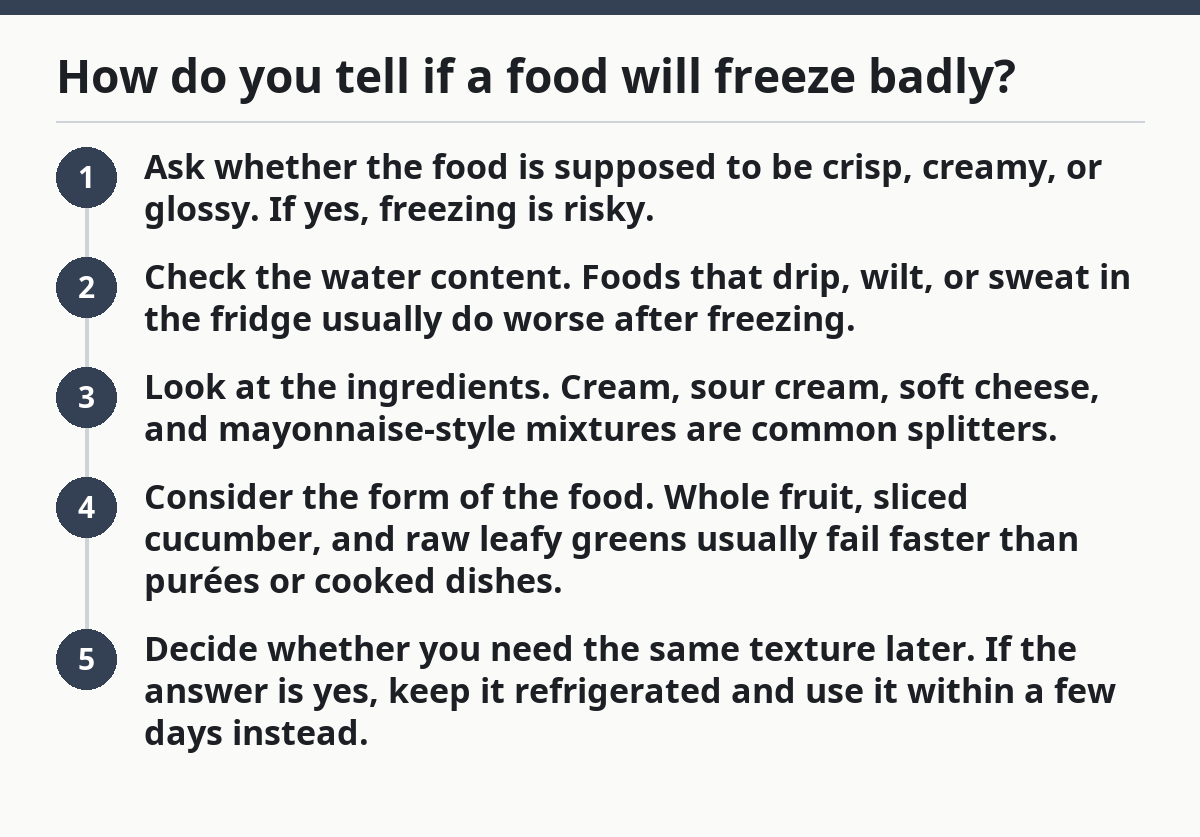
How do you tell if a food will freeze badly?
A food will freeze badly if its appeal depends on a fragile texture, a stable emulsion, or a fresh surface that water can ruin. That usually means high moisture, thin walls, or ingredients that separate when chilled hard and then thawed.
Use this quick filter before putting anything in the freezer:
- Ask whether the food is supposed to be crisp, creamy, or glossy. If yes, freezing is risky.
- Check the water content. Foods that drip, wilt, or sweat in the fridge usually do worse after freezing.
- Look at the ingredients. Cream, sour cream, soft cheese, and mayonnaise-style mixtures are common splitters.
- Consider the form of the food. Whole fruit, sliced cucumber, and raw leafy greens usually fail faster than purées or cooked dishes.
- Decide whether you need the same texture later. If the answer is yes, keep it refrigerated and use it within a few days instead.
This method is useful because it focuses on structure, not just category names. A vegetable is not automatically freezer-safe, and a dairy dish is not automatically doomed. A cooked spinach filling may freeze well enough for a pie, while a salad bowl of spinach leaves will not.
The mistake to avoid is freezing by habit. That habit creates a freezer full of food that is technically stored but practically wasted. A better rule is to freeze only what can survive a change in texture. For the rest, portion it smaller and plan to eat it sooner.
Foods that are better used fresh or refrigerated instead
Foods that are better fresh or refrigerated are the ones you want for crunch, brightness, or a clean finish. Leafy salad greens, cucumbers, fresh herbs used as garnish, cut fruit for snacking, and cream sauces for immediate serving belong in that group.
Fresh herbs deserve special attention because they are often frozen for convenience and then disappoint. Parsley, basil, cilantro, dill, and mint can all darken and lose their fresh character after freezing. They may still be useful in cooked dishes or blended sauces, but they will not look or taste like fresh garnish. If the recipe needs a green finish on top of a plate, refrigeration and quick use are the better choice.
Cut fruit is similar. Once peeled and sliced, fruit starts losing quality quickly. Freezing can be fine if the fruit is going into a smoothie, compote, or baked filling, but not if the goal is a fruit tray or lunchbox snack. The same is true for crisp vegetables. A chilled cucumber slice or salad leaf belongs in the refrigerator, not the freezer.
This is the point where many generic freezer guides go wrong. They treat “can be frozen” as the same as “should be frozen.” Those are not the same thing, and USDA guidance supports that distinction. If you are unsure, consult a food safety professional or extension service before freezing a food for later use. A food can survive the freezer and still come back in a form nobody wants to eat.
What to freeze instead when the texture matters
Freeze cooked, blended, or assembled foods that are not supposed to stay crisp. Soups, stews, tomato sauces, pureed vegetables, and cooked grains are usually better freezer candidates than the raw ingredients that go into them.
This is where ingredient stability matters. Heat, starch, and fat can protect a dish from freezer damage. A blended soup with carrots or squash has already lost the cell structure that makes raw produce fragile. A cooked sauce has had time to bind. A dish with rice, beans, or pasta may still soften, but it is usually more forgiving than a raw vegetable platter.
I would still keep expectations realistic. Even freezer-friendlier foods can change a little. Pasta softens, herbs dull, and some sauces thicken after thawing. The difference is that these changes are usually acceptable in a meal, while the same ingredients in raw form would be a poor match for the freezer.
That is the practical boundary of the whole topic: freeze foods that are already meant to be soft, blended, or simmered. Avoid freezing foods that depend on crispness, freshness, or a stable cream texture. That one distinction prevents most freezer regrets.
Why does frozen food change texture?
Frozen food changes texture because ice crystals form inside it and damage the structure that holds water, air, and fat together. When the food thaws, the damaged cells release moisture, so the result can be limp, mushy, grainy, or split.
Can all vegetables be frozen?
No, not all vegetables should be frozen for later use. Leafy greens, cucumbers, and many raw vegetables with high water content lose texture badly, while vegetables meant for cooking or pureeing usually handle freezing better. The difference is often about how the food will be used after thawing.
What foods become watery after thawing?
Foods with a lot of free water become watery after thawing, especially cucumbers, melons, lettuce, and many cut fruits. Some cooked vegetables and sauces also weep liquid if their structure is fragile. If the food is valued for crispness or a dry surface, freezing usually works against it.
Drafted with AI; not yet reviewed by a person.