Last updated: November 19, 2026
Key Takeaways
- The simplest low histamine salad dressings are oil-based blends, herb dressings, and creamy dressings made without vinegar, lemon, or bottled condiments.
- You can make dressing without lemon juice by leaning on salt, fresh herbs, and emulsification instead of acidity.
- Oil-based dressings are often the most practical low histamine option because they stay short, clean, and predictable.
- Fresh herb blends help replace some of the lift that vinegar or citrus usually provide.
Low histamine salad dressings without vinegar or citrus are usually built from oil, water, salt, herbs, and a little creamy ingredient for body. The quick answer: the basic formula is 3 parts oil to 1 part water or another mild liquid, plus salt and herbs, whisked or shaken right before serving. The trick is not to copy a classic vinaigrette; it is to replace acid with texture, fresh flavor, and a balanced salt-to-fat ratio.
The quickest answer: what actually works in salad dressings
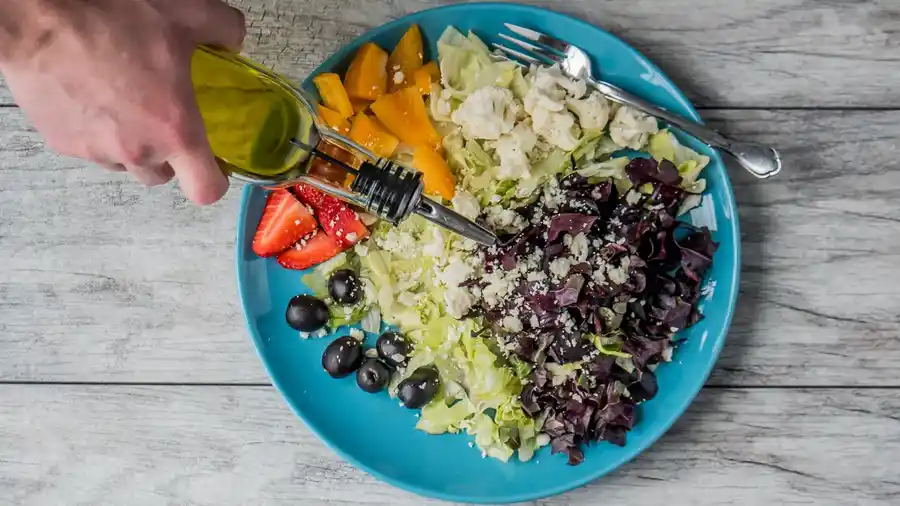
The simplest low histamine salad dressings are oil-based blends, herb dressings, and creamy dressings made without vinegar, lemon, or bottled condiments. A basic formula is 3 parts oil to 1 part water or another mild liquid, plus salt and herbs, then whisked or shaken right before serving.
That formula matters because acidity usually does two jobs at once: it brightens flavor and keeps a dressing tasting flat. Without vinegar or citrus, I have to replace both jobs separately. Oil gives richness, salt sharpens the flavor, herbs add lift, and a small amount of fresh garlic or garlic-infused oil can make the dressing taste finished.
The subject here is salad dressings, not a hunt for “secret” substitutes for vinegar, mustard, or mayonnaise. This page stays on the salad bowl side of the problem and avoids bottled condiments on purpose.
A useful place to start is a dressing you can make with ingredients already common in a low histamine kitchen:
- 3 tbsp extra-virgin olive oil
- 1 tbsp water
- 1 tsp finely chopped fresh dill
- 1 tsp finely chopped parsley
- 1 small garlic clove, grated or minced, if tolerated
- 1/4 tsp fine salt
Whisk hard for 20 to 30 seconds or shake in a jar with a tight lid. The result should look slightly thickened, not separated like plain oil. If the flavor still feels dull, add another pinch of salt before adding more herbs.
If you want a broader framework for building meals, this fits neatly into a histamine-friendly recipe building blocks approach: one fat, one fresh herb, one seasoning, and one texture cue.
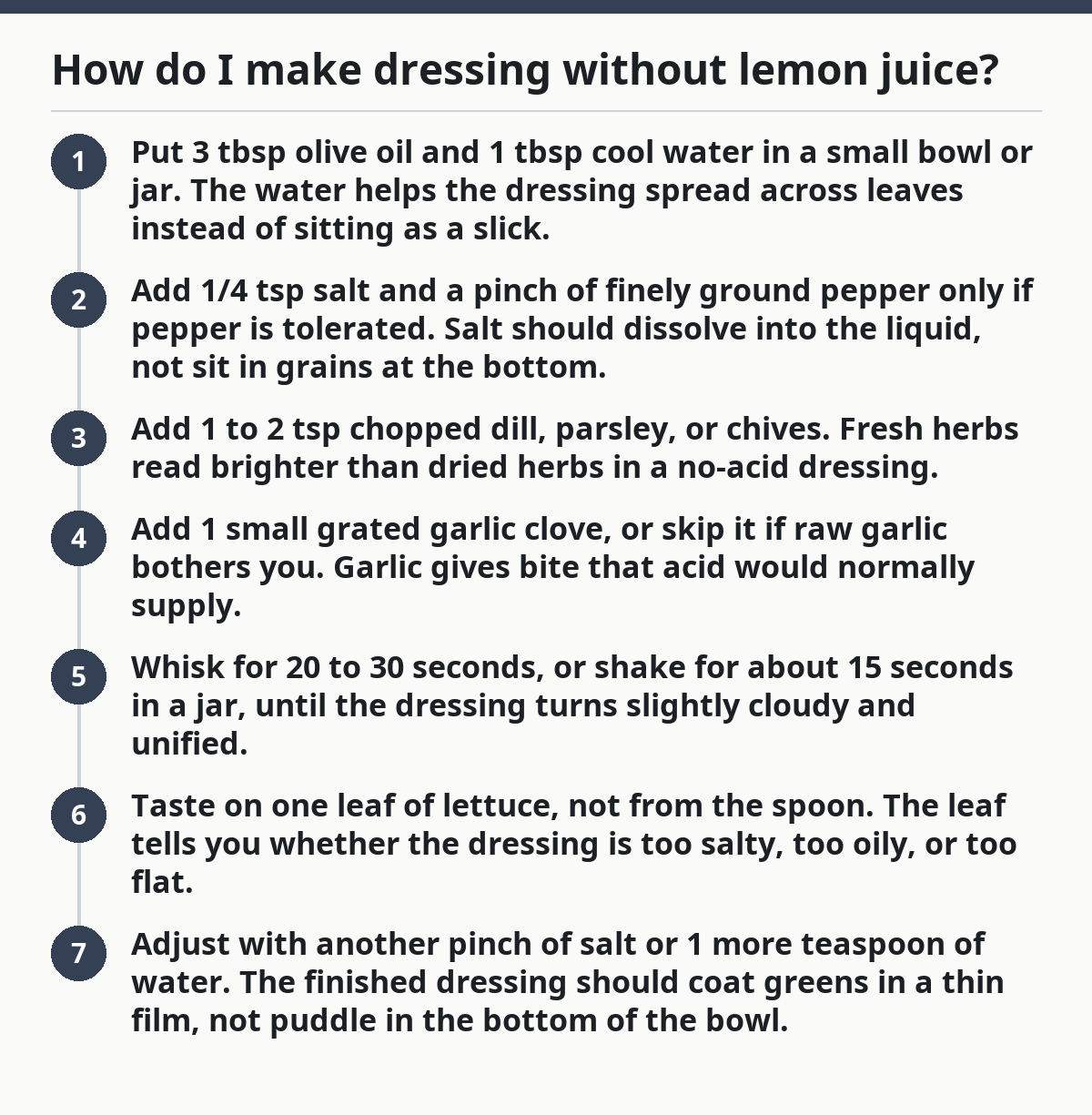
How do I make dressing without lemon juice?
You make dressing without lemon juice by leaning on salt, fresh herbs, and emulsification instead of acidity. A dressing does not need lemon to cling to greens; it needs enough body to coat them and enough seasoning to taste complete.
A good core procedure is this:
- Put 3 tbsp olive oil and 1 tbsp cool water in a small bowl or jar. The water helps the dressing spread across leaves instead of sitting as a slick.
- Add 1/4 tsp salt and a pinch of finely ground pepper only if pepper is tolerated. Salt should dissolve into the liquid, not sit in grains at the bottom.
- Add 1 to 2 tsp chopped dill, parsley, or chives. Fresh herbs read brighter than dried herbs in a no-acid dressing.
- Add 1 small grated garlic clove, or skip it if raw garlic bothers you. Garlic gives bite that acid would normally supply.
- Whisk for 20 to 30 seconds, or shake for about 15 seconds in a jar, until the dressing turns slightly cloudy and unified.
- Taste on one leaf of lettuce, not from the spoon. The leaf tells you whether the dressing is too salty, too oily, or too flat.
- Adjust with another pinch of salt or 1 more teaspoon of water. The finished dressing should coat greens in a thin film, not puddle in the bottom of the bowl.
For a creamier result, replace the water with 1 tbsp plain yogurt or 1 tbsp tahini if those ingredients suit you. Dairy and sesame are common allergens, so only use them if they are already safe for you. Yogurt makes the dressing softer and tangier in a gentle way; tahini makes it thicker and nuttier.
The biggest mistake is trying to force a no-citrus dressing to taste like lemon vinaigrette. That usually ends in too much salt or too much oil. A better goal is a savory dressing that tastes clean and fresh, even without sharp acid.
Oil-based dressings that stay simple and low histamine
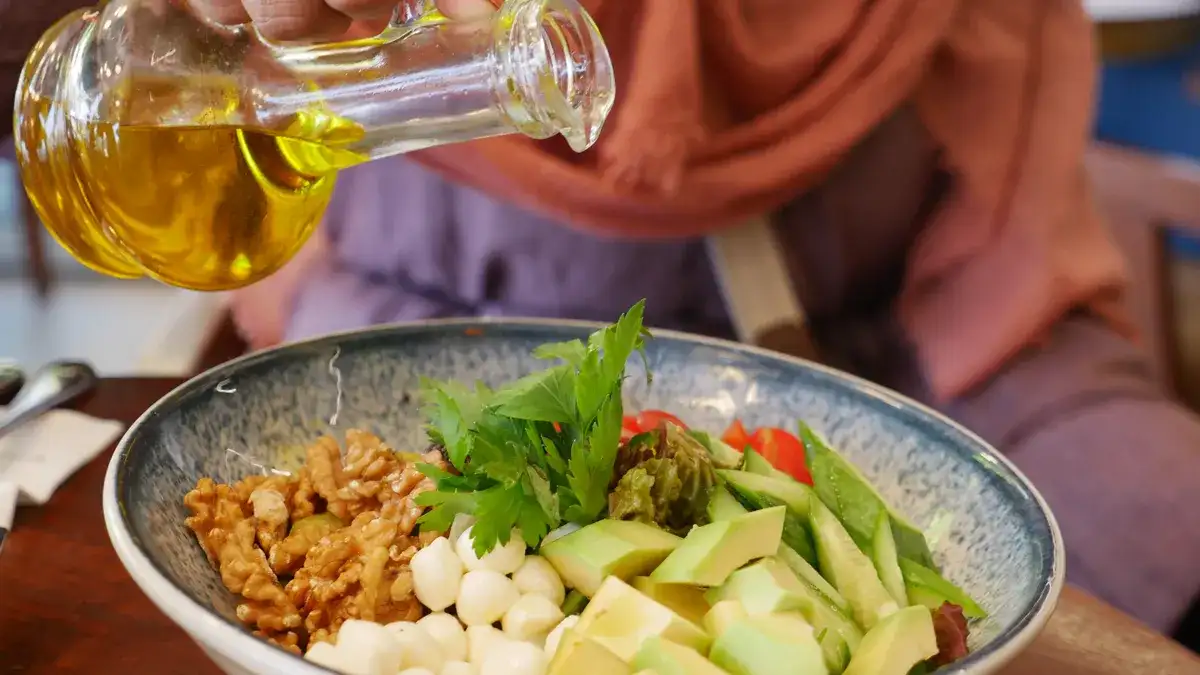
Because oil-based dressings are the most practical low histamine option, they can stay short, clean, and predictable. Olive oil and avocado oil are the main fats I would start with, and both work well with fresh dill, parsley, and garlic.
Olive oil gives a peppery, rounded flavor that suits leafy greens, cucumber, and herbs. Avocado oil tastes milder, which helps when you want the dressing to disappear into the salad instead of competing with it. Either one can be used alone with salt and herbs, but the texture improves if you add 1 to 2 tsp water per 2 tbsp oil.
A few good combinations:
- 2 tbsp olive oil + 1 tbsp water + 1 tsp dill + salt
- 2 tbsp avocado oil + 1 tbsp water + 1 tsp parsley + 1 minced garlic clove
- 3 tbsp olive oil + 1 tsp chopped basil + 1/4 tsp salt + 1 tsp water
The ratio matters because pure oil can taste heavy fast. A little water keeps the dressing looser and helps it spread across lettuce without a thick greasy layer. If you want more cling, whisk in 1 tsp mashed avocado, but only if avocado is tolerated; it is a common food sensitivity for some people and not a universal fit.
These dressings are not ideal for anyone who wants a sharp, restaurant-style pop. They are also less stable in the fridge than acid-heavy dressings, because they are usually made fresh and do not rely on acid for keeping quality. That trade-off is normal here. Make only what you need for the meal, and keep the flavor clean instead of trying to make the dressing do too much. For more on balanced meal composition, see the histamine-friendly recipe building blocks guide and the low histamine salad guide.
Herb blends that add brightness without acid
Fresh herb blends replace the missing lift that vinegar or citrus usually provide. Dill and parsley are the most useful pair because they taste green, clean, and familiar in a salad dressing without turning bitter.
Fresh dill works especially well with cucumbers, lettuce, celery, and mild greens. Parsley gives a fresher, more neutral finish and helps round out stronger oils like olive oil. Garlic can be added in a small amount, but raw garlic is strong; 1 small clove per 2 to 3 servings is enough for most bowls.
A simple herb-forward dressing looks like this:
- 3 tbsp avocado oil
- 1 tbsp water
- 1 tbsp chopped parsley
- 1 tsp chopped dill
- 1 small garlic clove, minced fine
- 1/4 tsp salt
Whisk it and let it sit for 5 minutes. That short rest softens the raw edge of the garlic and lets the herbs perfume the oil. If the dressing tastes grassy instead of bright, add a pinch more salt rather than more herbs. Too many herbs can make the dressing muddy.
Dried herbs can work in a pinch, but they need more time to soften. Use about half as much dried herb as fresh, then wait 10 minutes before serving so the flavor opens up. That is useful when fresh dill is not in the fridge, but it is still less lively than fresh herbs.
This style is wrong for anyone who wants a tangy dressing with a sharp sour note. It is not the best choice for salads that already have strong flavors, such as olives, pickled vegetables, or aged cheese, because those ingredients can push the balance away from the low-acid profile.
Creamy alternatives when you want body, not sharpness
Creamy low histamine dressings work when you need something thicker than an oil vinaigrette but still want to avoid vinegar and citrus. The best candidates can include plain yogurt, tahini, and mashed avocado, each with a different texture and a different risk profile for food sensitivity.
Plain yogurt gives the most familiar creamy salad dressing texture. Use 2 tbsp yogurt, 1 tbsp olive oil, 1 tsp chopped dill, 1/4 tsp salt, and 1 tsp water if needed to loosen it. Yogurt is a dairy allergen, so it is not an option for everyone. It also adds a mild tang, which can be useful, but some readers who react to fermented foods may still want to skip it.
Tahini makes a thicker dressing with a nutty, sesame flavor. Mix 1 tbsp tahini with 1 tbsp water, 1 tbsp avocado oil, 1 tsp parsley, and a pinch of salt. Sesame is a major allergen, so this is not a casual swap. The upside is that tahini gives body without needing acid, and it coats sturdy vegetables well.
Mashed avocado can stand in for creaminess too. Use 2 tbsp mashed avocado, 1 tbsp water, 1 tbsp olive oil, and salt to taste. This version is soft and mild, but it is not as stable as yogurt or tahini and should be made right before serving. It is also not a fit for anyone who knows avocado is a trigger.
A creamy dressing solves one problem and creates another: it can hide too much salt or too much garlic. I would season in small steps, then stop as soon as the flavor reads complete. With creamy dressings, less is usually better.
How to keep the dressing from tasting flat
A flat dressing usually needs salt, not more oil. Without vinegar or citrus, the dressing has to earn brightness through seasoning, texture, and freshness instead of sourness, so the finish can seem muted if the salt is underdone.
The easiest fix is to season in stages. Start with 1/4 tsp salt per 3 tbsp dressing, then taste on a leaf of lettuce. If the dressing tastes bland but not salty, add another pinch. If it tastes oily, thin it with 1 tsp water and whisk again. If it tastes “green” but still dull, add more fresh dill or parsley rather than more garlic.
Temperature also matters. A dressing with olive oil can taste muted when it is cold from the fridge. Let it sit at room temperature for 10 minutes before serving, then shake or whisk again. That small wait helps the oil loosen and the herb flavor come forward.
The other common mistake is using old herbs. Wilted parsley or limp dill has less aroma, so the dressing comes across as muddy. Fresh herbs do not need a large amount, but they do need to be fresh enough to smell like themselves when you chop them.
A useful rule: if the dressing tastes too harsh, add water; if it tastes too flat, add salt; if it tastes too heavy, add herbs. That simple pattern can help prevent the most common over-correction, which is dumping in more oil and making the problem worse. If symptoms or reactions are a concern, consult a registered dietitian or clinician for individualized guidance, and see the Academy of Nutrition and Dietetics for evidence-based food and nutrition advice.
For readers building a full low histamine plate, this is where a salad dressing belongs in the meal structure: mild greens, cucumber, cooked chicken if tolerated, and a dressing that supports the food instead of dominating it. A dressing with no vinegar or citrus can still be complete. It just needs more attention to balance.
Storage tips for low histamine salad dressings
Low histamine salad dressings are best made fresh and used the same day, especially when they contain raw garlic, fresh herbs, yogurt, or avocado. That keeps flavor cleaner and avoids the dull, broken texture that comes from sitting too long.
If you need to store one, use a small airtight jar and refrigerate it immediately. A dressing made with only oil, water, salt, and herbs is often the best choice to hold for a short time, but freshness still matters. Shake hard before each use because oil and water separate naturally. If the dressing smells stale, looks cloudy in an odd way, or tastes flat beyond repair, discard it.
Here is the practical approach:
- Make only 2 to 4 tbsp at a time for one salad.
- Refrigerate any leftover dressing right away.
- Use a clean spoon each time to avoid contamination.
- If the dressing contains dairy, avocado, or garlic, treat it as a same-day or next-meal dressing rather than a week-long staple, and follow food-safety guidance from the USDA.
This is the main trade-off of no-vinegar, no-citrus dressings: they are less shelf-stable and less “set and forget” than acid-based versions. That does not make them difficult, but it does make them more hands-on. If you want a bottle you can keep in the fridge for weeks, this is probably not the right style.
The best fit is usually the reader who wants a fresh salad tonight and can make a quick dressing in 2 minutes. The wrong fit is someone looking for a pantry condiment that behaves like store-bought vinaigrette.
What can replace vinegar in salad dressing?
In a low histamine salad dressing, vinegar is usually replaced by a mix of oil, water, salt, and fresh herbs rather than by one single ingredient. A little tahini, yogurt, or mashed avocado can add body, while dill, parsley, and garlic bring back some of the brightness that vinegar normally supplies.
How do i make dressing without lemon juice?
Make it by building flavor from salt, herbs, and texture instead of acidity. A simple ratio is 3 parts oil to 1 part water, then add chopped dill or parsley and a small amount of garlic if tolerated. Shake or whisk well so the dressing turns slightly unified and coats the leaves.
Which herbs work best in a low histamine dressing?
Fresh dill and parsley are the most useful starting point because they taste clean and lively without needing vinegar or citrus. Chives can also work if tolerated, while basil gives a softer finish. Use fresh herbs when possible; dried herbs are less bright and need a short rest to open up.
Drafted with AI; not yet reviewed by a person.