Last updated: November 19, 2026
Quick Answer: The best low histamine condiments are usually simple homemade or short-ingredient alternatives, and many readers can keep a sandwich, burger, or dip workable with 1 to 2 tablespoons of a tolerated spread. Low Histamine Condiments: Ketchup, Mustard, and Mayonnaise Alternatives are usually the safest way to keep sandwiches, burgers, bowls, and dips interesting without relying on ketchup, mustard, or mayonnaise. For the broader context on histamine and diet, see NHS guidance on intolerance and food reactions and Cleveland Clinic’s overview of histamine intolerance. The best approach is often to swap in simple spreads and sauces with short ingredient lists, then watch labels for the usual histamine troublemakers: fermentation, long aging, and mystery “spice blends.”
What low histamine condiments usually replace on the plate
Low histamine condiments replace the sharp, tangy, creamy condiments most people reach for first: ketchup, mustard, mayonnaise, and aioli. They also cover the small things that make lunch feel complete, such as a sandwich spread, a burger topper, or a dip for roasted vegetables. For related pantry planning, see the low histamine ingredient swaps guide and low histamine pantry basics.
That matters because the problem is rarely the food itself. It is the condiment stack. A plain turkey sandwich can be fine, then one spoon of mustard or a smear of mayo can make the whole meal feel like a gamble. For a low histamine eater, the goal is not “condiment-free.” The goal is “same job, fewer triggers.”
The easiest substitutes fall into three buckets:
- Creamy spreads for sandwiches and wraps
- Savory herb sauces for bowls, potatoes, and chicken
- Simple dips for fries, crackers, and vegetables
A few examples help set expectations. A peeled avocado mash can replace mayo in a sandwich if avocado is tolerated. A yogurt-free herb sauce can stand in for aioli when you want garlic-forward flavor without egg-heavy richness. A quick roasted red pepper spread can do the work of ketchup on a burger, though it will taste less sweet and more vegetal.
The trade-off is taste and convenience. Store-bought ketchup is bright and sweet. Mustard is sharp. Mayonnaise is rich and emulsified. Most low histamine substitutes are milder, less processed, and less shelf-stable. That is the point. It also means the flavor profile is different enough that a one-to-one copy is unrealistic.
For the broader framework behind ingredient choice, this page fits under the low histamine ingredient selection and swaps hub. The hub is where the bigger pantry strategy lives; this article stays with condiments and the decisions people make at the table. See also the low histamine sauces page for more meal-building ideas.
Ketchup alternatives that work on burgers, eggs, and fries
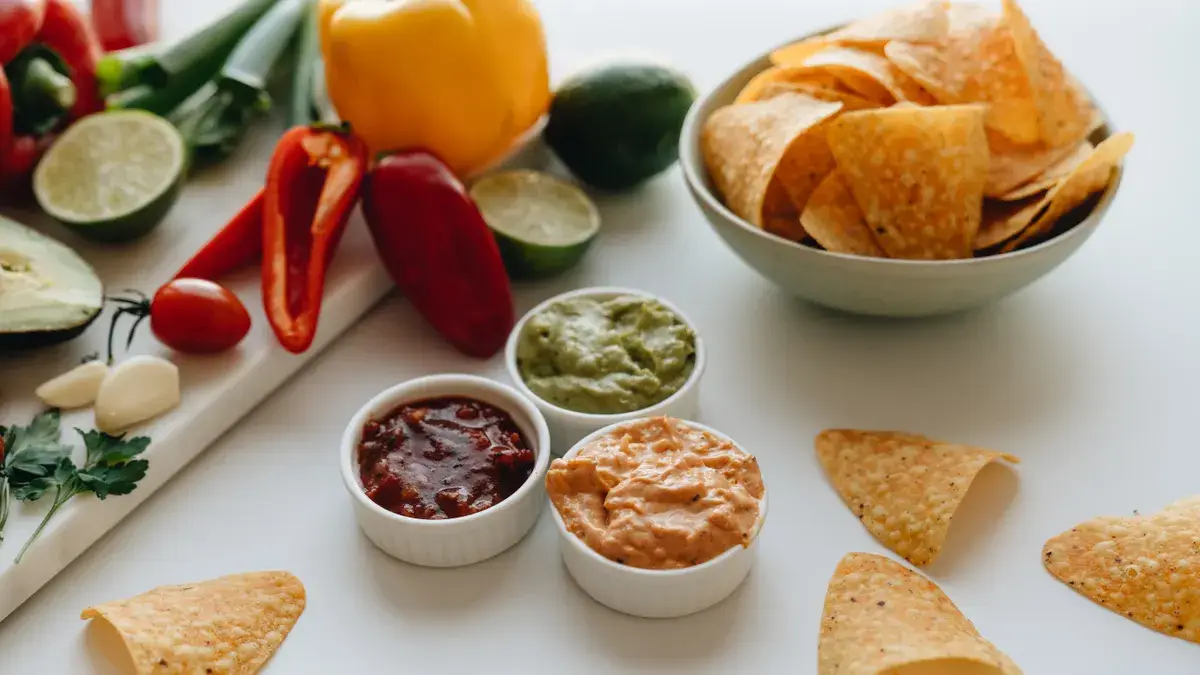
Ketchup alternatives usually need sweetness, acidity, and a thick enough texture to cling to food. The closest low histamine answer is often a homemade sauce rather than a bottled substitute, because many commercial ketchup-style sauces add vinegar, spice blends, or preservatives. For general food-label context, FDA ingredient labeling guidance is a useful reference.
A practical starting point is a 3-ingredient tomato-free or tomato-light spread: roasted red pepper, olive oil, and a pinch of salt, blended until smooth. Use 2 to 4 tablespoons on burgers or as a dip for fries. It gives color and body, even if it does not taste like classic ketchup. If tomato is tolerated, a very small batch of gently cooked tomato sauce can work better, but it is still a personal tolerance question.
Another option is mashed cooked carrot or beet with olive oil. Carrot leans sweeter; beet leans earthier. Both can be thinned with a little water and cooked down for 10 to 15 minutes until spoonable. That makes a decent spread for roasted potatoes or breakfast sandwiches.
For people who want a more conventional “ketchup job” without the bottle, the key is to treat it as a sauce base, not a literal duplicate, and to check tolerance with a qualified clinician or dietitian if symptoms are unpredictable. Ketchup’s sweet-tart profile is hard to match without the ingredients that often cause trouble. I would not recommend chasing a perfect clone if the whole point is predictability.
A quick decision rule helps:
- If you want sweetness, use carrot or a mild squash base.
- If you want bright color, use roasted red pepper.
- If you want a fast fix, use plain olive oil-based drizzle with a little salt and herbs.
What not to do: do not assume every “no sugar added” ketchup is low histamine. Sugar is not the main issue. The issue is usually the acid, seasoning blend, or long ingredient list. A bottle with 12 or more ingredients is already a warning sign for many people who are avoiding histamine triggers.
Mustard alternatives when you still want bite
Mustard alternatives are the hardest of the three because mustard is defined by its bite, and that bite is exactly what many low histamine eaters lose when they drop it. A good substitute should bring either a mild sharpness or a savory punch, even if it never tastes like classic Dijon or yellow mustard. If you want related meal ideas, the low histamine sandwich spreads article may help.
One workable route is olive-oil herb sauce with a little garlic if garlic is tolerated. Another is a seed-free green sauce built from parsley, olive oil, and salt. These are not mustard clones, but they do the same job on a sandwich: they keep the bread and filling from tasting flat.
A more mustard-like use case is a sandwich smear with creaminess and spice. If dairy is tolerated, a plain fresh spread made from soft cheese or yogurt-style alternative can be seasoned lightly and used in 1- to 2-tablespoon amounts. The texture matters more than the exact flavor here. A spread that glues ingredients together often matters more than a perfect tang.
For people who miss mustard on hot food, the most practical workaround is often to move the flavor elsewhere: into the protein, the vegetable topping, or the herb sauce. A bun topped with a low histamine spread and a well-seasoned chicken cutlet usually reads as “complete” even without mustard.
One honest limitation: if mustard is one of the few condiments you genuinely love, no low histamine alternative will fully replace it. That is not a failure of the recipe. It is the nature of the swap. The most useful substitute is the one you can use consistently without second-guessing every bite.
For store shelves, read labels with special care. Mustard products often hide behind names like “dressing,” “relish,” or “stone-ground spread,” and the ingredient list can run 8 to 15 items before it reaches the spice details. If the label is long, vague, or relies on an unspecified “seasoning,” skip it.
Mayonnaise and aioli swaps that stay creamy

Mayonnaise and aioli alternatives need fat, body, and enough richness to coat bread or vegetables. The simplest answer is usually a homemade spread with a short ingredient list, because jarred versions often include preservatives, lemon, vinegar, or other ingredients that can be hard to sort out. For practical home food safety, USDA guidance on leftovers and refrigeration is worth keeping in mind when making small batches.
A practical method is an olive oil–based mash. Start with a tolerated base such as cooked potato, peeled cucumber, ripe avocado, or a dairy-free soft spread if it is safe for you. Add olive oil 1 teaspoon at a time until the texture turns creamy, then season lightly. For sandwiches, this gives you the glide of mayo without the eggy, acidic profile.
Aioli-style flavor is easier if you build in garlic and herbs, but that only works if those ingredients are already safe for you. Keep the batch small, around 1/2 cup, so it stays fresh and predictable. A low histamine spread is not a place to make a big jar for the week and hope for the best.
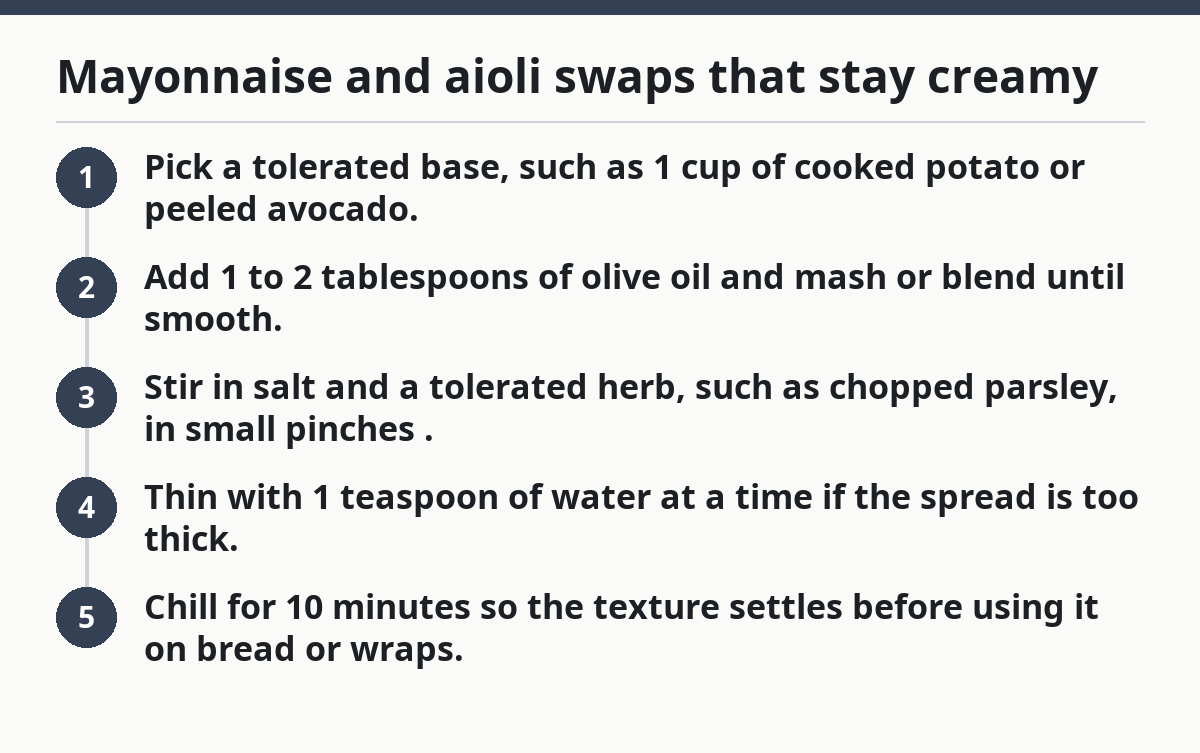
Here is the most useful home procedure for a creamy sandwich spread:
- Pick a tolerated base, such as 1 cup of cooked potato or peeled avocado.
- Add 1 to 2 tablespoons of olive oil and mash or blend until smooth.
- Stir in salt and a tolerated herb, such as chopped parsley, in small pinches.
- Thin with 1 teaspoon of water at a time if the spread is too thick.
- Chill for 10 minutes so the texture settles before using it on bread or wraps.
That spread will not behave like commercial mayonnaise. It will be softer, less tangy, and less stable at room temperature. That is a reasonable trade-off for many readers, especially for a lunch that only needs one sandwich or a few spoonfuls for dip.
What I would avoid is trying to build a “mayo replacement” from a long list of pantry ingredients. A recipe with eggs, vinegar, mustard powder, and multiple spices is simply another version of the same problem. Shorter ingredient lists are the point.
Which store-bought condiments are easiest to check?
Store-bought condiments are easiest to check when the ingredient list is short enough to read in under 15 seconds. That is the real filter. The fewer ingredients, the easier it is to spot hidden triggers and the less chance there is of flavoring systems, acidity agents, or preservatives complicating the picture. For more reading on packaged foods, see the low histamine grocery shopping guide.
The best candidates are usually single-base spreads rather than true condiments. Think of plain mashed avocado cups, simple pesto-style herb sauces without cheese if tolerated, or refrigerated vegetable spreads with recognizable ingredients. Anything shelf-stable and brightly flavored is more likely to contain the usual problem ingredients.
A label-reading routine saves time:
- Scan the first 5 ingredients. If one of them is a known trigger for you, stop there.
- Look for fermented ingredients, vinegar, soy sauce, or “natural flavors” if those are a personal issue.
- Check whether the product is refrigerated or shelf-stable. Refrigerated spreads are often simpler.
- Compare serving size. A condiment that seems safe at 1 teaspoon may still become a problem when someone uses 2 tablespoons.
- If the label is vague, move on.
The main mistake is choosing “clean-looking” branding instead of actual ingredients. A jar can say simple, organic, artisanal, or small batch and still be a poor fit. The label matters more than the marketing.
I would especially be cautious with aioli, gourmet ketchup, mustard blends, and “chef-inspired” sandwich spreads. Those products often look like shortcuts but behave like seasoning systems, not simple condiments. If a product tries to be all three—tangy, creamy, and spicy—it usually carries more ingredients than a low histamine eater wants.
A useful rule of thumb: if a condiment needs a paragraph of explanation on the package, it is probably not the right daily choice.
How do I build a low histamine sandwich or dip without ketchup, mustard, or mayo?
I would build it from one base, one moisture source, and one flavor accent. That gives you a sandwich or dip that feels finished without needing the classic condiment trio.
For sandwiches, start with a base such as plain turkey, chicken, egg if tolerated, or roasted vegetables. Add 1 to 2 tablespoons of a tolerated spread, like avocado mash, potato spread, or a mild herb sauce. Then add crisp texture from lettuce, cucumber, or cooked carrot. The goal is contrast: soft plus crisp, rich plus fresh.
For dips, the same logic works in reverse. Start with a creamy base, then thin it to the texture you want. A dip for vegetables or crackers should usually be spoonable, not runny. For that, 2 tablespoons of olive oil-based sauce plus a little water or tolerated vegetable puree is often enough for one serving.
The common mistake is trying to replace every condiment at once. That leads to bland food and confusion about what is actually causing a reaction. Swap one condiment at a time for 3 to 4 days, and keep the rest of the meal simple. That makes the result much easier to judge.
Another mistake is assuming every low histamine eater needs the same swaps. Some people tolerate avocado and not tomato. Some tolerate garlic and not onion. Some do fine with fresh herbs and no creamy base at all. The right condiment is the one that fits your own pattern, not a universal “safe list.”
If symptoms are severe, unpredictable, or tied to several foods at once, it is sensible to work with a qualified clinician or dietitian. Food pattern changes are manageable, but repeated reactions deserve a closer look.
A short list of the most useful low histamine condiment swaps
The most useful low histamine condiment swaps are the ones that can do a job quickly without a long ingredient list. That usually means a roasted vegetable spread, a simple herb sauce, or a creamy mash that you can make in 5 to 15 minutes. For more combinations, see the low histamine meal prep guide.
The most reliable way to choose is by use case:
- For burgers and fries: roasted red pepper or carrot-based sauce
- For sandwiches: avocado, potato, or mild herb spread
- For dipping vegetables: olive oil herb sauce or a smooth vegetable puree
- For aioli-style richness: a short-ingredient creamy mash with tolerated fat
What I would not do is keep buying replacement condiments that still depend on the same problem ingredients, just in smaller amounts. A low histamine condiment strategy works when it gets simpler, not when it gets more “specialty.”
The reader who benefits most from these swaps is the person who wants practical lunch food again: a sandwich that tastes finished, fries with something to dip into, or a burger that does not feel naked. The reader this is not for is someone who wants a perfect replica of ketchup, mustard, or mayonnaise. Those are different products with different jobs, and low histamine eating usually rewards adaptation over imitation.
Key Takeaways
Low histamine condiment choices work best when they are short, simple, and tied to one clear job. Ketchup, mustard, and mayonnaise are each replaced differently: fruitless sweetness is hard to mimic, mustard’s bite is hard to copy, and mayo’s creaminess is easiest to recreate with a small homemade spread. Short labels and small batches matter more than brand promises. For a broader overview, see the low histamine condiments guide.
What condiments are usually tolerated on a low histamine diet?
Usually tolerated condiments are the ones with short ingredient lists and no obvious trigger for the individual eater. That often means simple herb sauces, mild vegetable spreads, or homemade mash-style condiments in 1- to 2-tablespoon amounts. Tolerance varies, so the safest choice is the simplest one you can repeat consistently.
Can I replace mustard and mayo safely?
Yes, for many people, but the replacement has to fit your own trigger pattern. A mustard swap usually needs savory bite, while a mayo swap needs creaminess and fat. If a recipe uses only 3 to 5 ingredients, it is easier to judge than a commercial substitute with a long label.
What is a good low histamine sandwich spread?
A good low histamine sandwich spread is one that matches the meal and your tolerance pattern, such as avocado mash, potato spread, or a mild herb sauce.
Drafted with AI; not yet reviewed by a person.