Last updated: November 19, 2026
Quick Answer: the most practical histamine-friendly meal prep systems usually center on small batches, fast cooling, and freezing extra portions the same day. Histamine-friendly meal prep works best when you cook, portion, and chill food in a way that limits time in the fridge and avoids long storage. The core system is simple: start with low-histamine ingredients, cook in small batches, cool quickly, freeze most portions, and thaw only what you will eat that day. In this guide to Histamine-Friendly Meal Prep Systems — The Complete Guide, the focus stays on storage, timing, and simple ingredient choices rather than complicated recipes.
If histamine flares make dinners unpredictable, the real problem is usually not the recipe — it is the storage system. Leftovers are where many “safe” meals turn into trouble, so this article keeps the emphasis on meal prep choices that reduce risk.
Key takeaways
- A cautious prep system is usually cook once, freeze fast, reheat once.
- Short fridge life matters more than fancy recipes.
- Some foods are fine fresh but get riskier after 24 to 48 hours in the refrigerator, especially if you are histamine-sensitive.
- A freezer-first routine usually beats a “make a week of lunches” routine.
- Batch cooking can still work if you portion food into single servings right away and label dates.
- The best system depends on whether you need weekday lunches, family dinners, or grab-and-go breakfasts.
Why histamine-friendly meal prep is different from normal meal prep
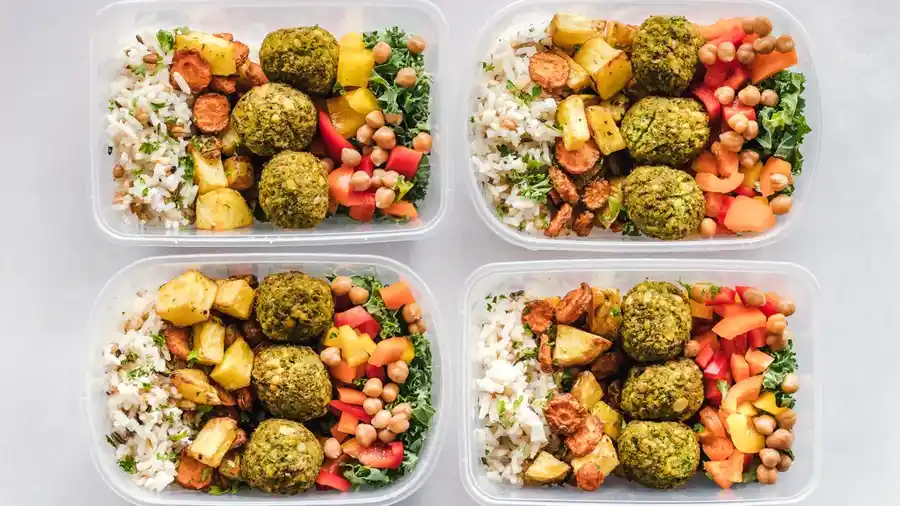
Histamine-friendly meal prep is different because the food can become a problem after cooking, even if the ingredients were acceptable at the start. That is why a standard “meal prep Sunday” plan can fail for someone who reacts to leftovers, fermented foods, or aged proteins.
The issue is not only histamine in the ingredient list. It is also time, temperature, and handling. Chicken that was fine on Monday may cause symptoms on Wednesday if it sat in the fridge too long. Cooked fish is even less forgiving. The same goes for dishes made with stock, slow-cooked meats, or sauces that contain vinegar, soy sauce, yogurt, parmesan, or tomato. For general food-safety guidance on cooling and refrigeration, see the USDA Food Safety and Inspection Service and the FDA food storage guidance.
For that reason, the safer system for many people is small-batch cooking plus freezing. That means cooking enough for one meal, maybe two if you tolerate leftovers well, then freezing the second portion within the same day. A fridge-only system can still work for some people, but it is the least forgiving option.
This is also why a generic “healthy meal prep” article misses the point. The usual advice — roast a tray of chicken, cook rice for five days, make a pasta salad — can be exactly wrong here. The right plan is less about convenience in the moment and more about controlling how long food stays cooked before you eat it.
The meal prep system that usually works best: cook, cool, freeze, reheat
The freezer-first system wins for most people who need histamine-friendly meals because it cuts the storage window down to hours instead of days. That matters more than any single ingredient swap, and it is the organizing principle behind Histamine-Friendly Meal Prep Systems — The Complete Guide.
Here is the structure:
-
Choose simple ingredients
Build meals around fresh meat, fresh or frozen vegetables, rice, quinoa, oats, or potatoes. Keep flavoring plain: salt, herbs, olive oil, garlic-infused oil if tolerated, and mild seasonings. Skip vinegar, fermented condiments, cured meat, and aged cheese if you are unsure how you tolerate them; if you have medical conditions or a restrictive diet history, consult a registered dietitian or clinician before making changes. -
Cook in small batches
Make 2 to 4 servings at a time, not 8 to 10. A smaller batch cools faster and gives you less food sitting around. -
Portion immediately
Divide the food into single-meal containers while it is still fresh. This reduces repeated opening, stirring, and reheating. -
Cool quickly and freeze promptly
Do not leave hot food out for hours. Spread it in shallow containers so it cools faster, then freeze the portions you will not eat within the next day. -
Thaw only what you need
Move one portion to the fridge the night before, or reheat from frozen if your appliance handles it safely.
This system works because it shortens exposure to the very conditions that can raise concern: extended storage and repeated reheating. It is also flexible. A container of plain rice, roasted zucchini, and baked turkey can become lunch, dinner, or a soup base later.
The drawback is obvious: you have to think ahead by at least a few hours, and you need freezer space. A tiny freezer or a household that forgets to label containers will struggle here.
What to cook first: the safest building blocks for a low-histamine prep plan
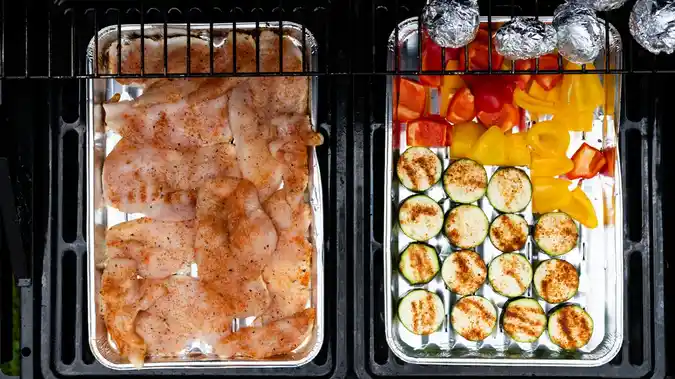
The most practical prep foods are the ones that are simple, fresh, and easy to freeze in separate parts. That usually means building a meal from three components rather than one mixed casserole, which is a useful starting point for Histamine-Friendly Meal Prep Systems — The Complete Guide.
A reliable base looks like this:
- Protein: fresh chicken, turkey, lamb, or very fresh beef if tolerated
- Starch: white rice, brown rice, quinoa, potatoes, sweet potatoes
- Vegetables: zucchini, carrots, green beans, cauliflower, broccoli, cucumber, lettuce, celery, or peeled squash if tolerated
- Fat: olive oil, coconut oil, butter if dairy is tolerated
- Seasoning: salt, basil, parsley, thyme, ginger, turmeric, and other mild herbs if tolerated
A few foods deserve special caution because many histamine-sensitive people report trouble with them, though tolerance varies widely: tomatoes, spinach, eggplant, avocado, citrus, vinegar, soy sauce, sauerkraut, yogurt, kombucha, smoked meats, and aged cheese. That list is not a moral rule; it is a practical starting point. Some people tolerate one or two items and fail on others.
For meal prep, the easiest mistake is making food “interesting” with sauces. A tomato-based chicken bake, a yogurt marinade, or a dressing with vinegar may seem healthy, but they reduce the odds of a calm week. Simpler is safer.
A second mistake is choosing ingredients that are already old before you cook them. Histamine risk rises with age in many foods, so fresh produce and fresh proteins matter. If you cannot cook the same day, freezing raw portions first is often better than letting them sit in the fridge.
A refrigerator-only system versus a freezer-first system
The freezer-first system wins for anyone who reacts to leftovers, but the refrigerator-only system has one advantage: it is easier to follow. That makes it useful for people who cook daily and eat the same day.
| Criteria | Refrigerator-only prep | Freezer-first prep | Winner for this condition |
|---|---|---|---|
| Storage window | Usually 1 to 3 days at 4°C / 40°F or colder in the fridge | Weeks to months in the freezer at -18°C / 0°F | Freezer-first for people who react to leftovers |
| Risk of histamine buildup | Higher, because food stays cooked longer | Lower, because food is frozen soon after cooking | Freezer-first |
| Convenience on busy weekdays | Very easy if you can eat within 24 hours | Easy once portions are labeled and organized | Depends on freezer discipline |
| Up-front effort | Lower | Higher, because you portion and freeze immediately | Refrigerator-only for simplicity |
| Food variety | Limited by what will stay tolerable in the fridge | Better, because you can freeze several different meals | Freezer-first |
| Waste risk | Higher if leftovers go uneaten | Lower if portions are frozen before spoilage | Freezer-first |
| Works for families | Only if everyone eats quickly | Better for staggered meal times | Freezer-first |
| Needs freezer space | Minimal | Yes, and often a lot of it | Refrigerator-only for small kitchens |
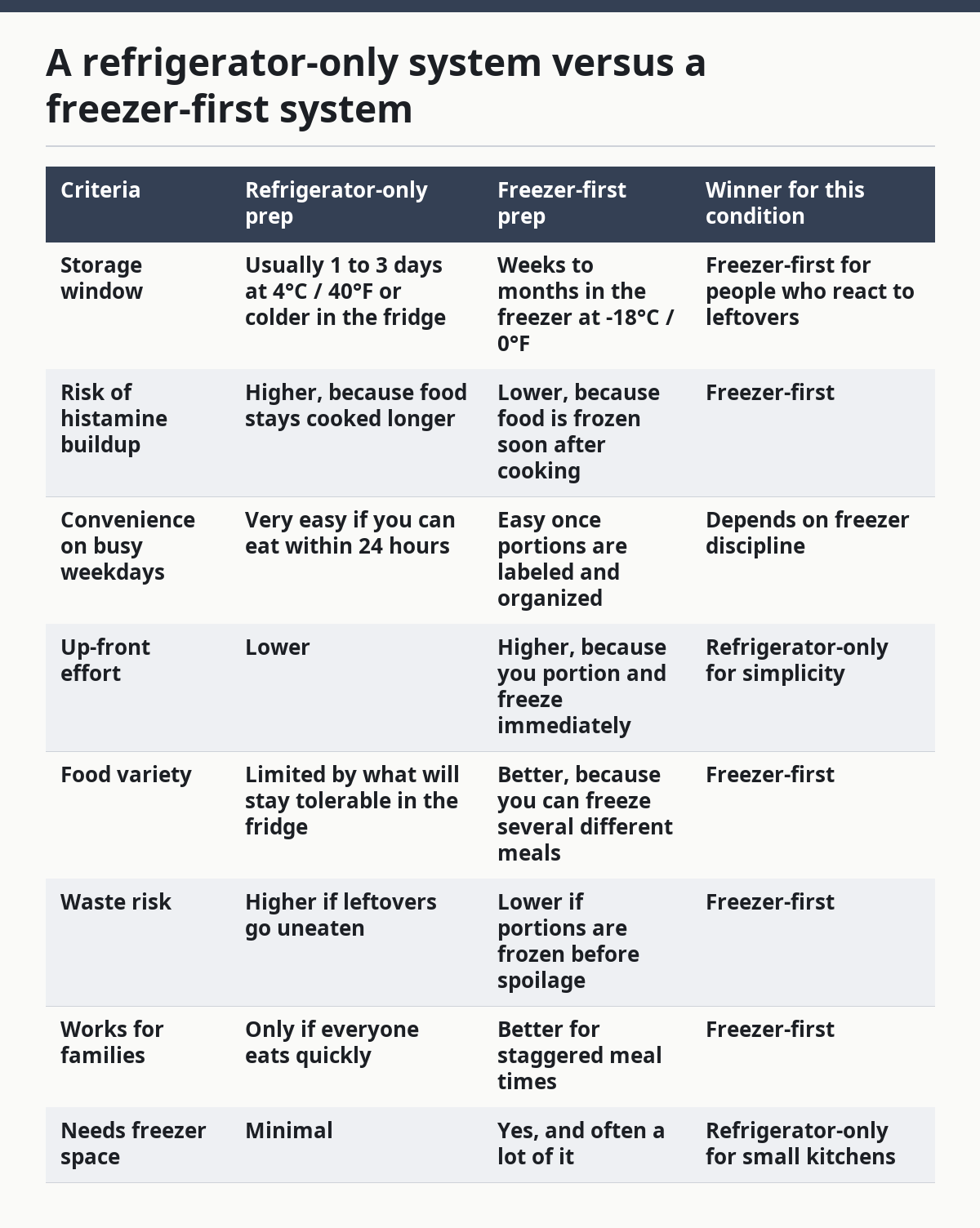
The refrigerator-only method still has a place. It is the right call for someone who cooks every evening, eats the meal right away, and does not want to manage thawing. But it becomes a weak choice when lunch needs to survive until Thursday or when family schedules are unpredictable.
The freezer-first method takes more planning, but it is the safer default. It is especially useful when a person already knows that fish, leftovers, or long-cooled meats are common triggers.
How do you build a week of meals without stacking leftovers?
You build a week of meals by repeating ingredients, not by repeating cooked food. That is the main shift most people need, and it is central to Histamine-Friendly Meal Prep Systems — The Complete Guide.
A practical weekly pattern looks like this:
- Cook Day 1: roast chicken breasts at 200°C / 400°F for about 20 to 25 minutes, depending on thickness; cook rice and steam carrots
- Meal 1: eat one portion immediately
- Portion 2: chill fast, then freeze
- Meal 2: thaw a separate frozen portion later in the week
- Repeat with a different protein such as turkey or lamb
That pattern gives the feel of variety without leaving cooked food in the fridge for days. It also keeps ingredients manageable. One batch of rice can support several meals, but it should be frozen in portions rather than held in a large container and reheated again and again.
A good week might include:
- rice with turkey and zucchini
- potatoes with chicken and green beans
- quinoa with lamb and carrots
- oatmeal with pear and cinnamon for breakfast, if tolerated
The best meal prep system for this use case is the one that lets you rotate proteins and vegetables while keeping storage time short. If you eat the same lunch for four days straight, the food has to stay tolerable long enough to survive that schedule. For many histamine-sensitive people, that is the weak link.
The common mistake is building a giant Sunday batch and assuming the problem is solved. A big batch can be efficient, but it is only safe if it is split into small containers and frozen quickly. One large pot of soup in the fridge for four days is not the same thing as four single servings frozen on day one.
The details that matter most: cooling, containers, and reheating
The details matter because histamine-friendly cooking is a storage problem as much as a recipe problem. A good ingredient list can still fail if the food sits too long in the danger zone.
Use shallow containers when cooling hot food so the temperature drops faster. Avoid sealing steaming food into a deep, dense block that stays warm for too long. If you are packing rice, meat, or vegetables, spread them out instead of stacking them.
Container choice matters too. Glass containers are useful for visibility and odor control, but they are heavier and breakable. BPA-free plastic containers are lighter and easier to stack. Either can work if they seal well and you actually use them. The more important feature is size: single-meal portions are better than family-size tubs.
Reheating should be simple and direct. Reheat once, then eat. Repeated warming and cooling is a poor fit for anyone managing histamine symptoms. A microwave, skillet, or oven can all work if the food is heated thoroughly and served right away.
This is also where seasoning strategy helps. Keep sauces separate when possible. A plain protein and grain bowl can be dressed after reheating, which gives you flexibility if you tolerate one topping one day and not the next.
The biggest drawback of this approach is that it asks for discipline in a normal kitchen. If a household shares food and no one labels anything, the system breaks down fast. Labeling with the prep date and the freeze date is not optional if the goal is to keep food moving.
When a histamine-friendly meal prep system is the wrong answer
A histamine-friendly meal prep system is the wrong answer when your symptoms are not primarily food-storage related or when your kitchen setup cannot support safe chilling and freezing.
It may be the wrong fit if:
- you cannot tolerate most leftover meat, even frozen leftovers
- your freezer is too small for portioning
- you share food with people who will eat your labeled containers
- you need a no-prep household pattern because fatigue is severe
- you have multiple medical issues that require a clinician-guided diet plan
It is also not the first move if you have not yet identified whether the problem is histamine, another food sensitivity, or a medication issue. That matters because a low-histamine prep system is restrictive. If the real trigger is something else, you may give up foods you do not need to remove.
There is also a cost in time. Fresh shopping more often, portioning meals, and freezing promptly all take attention. That overhead is worth it when histamine control is the priority. It is not worth it for someone who only has mild, rare symptoms after certain restaurant meals.
If symptoms are severe, broad, or unexplained, medical guidance is the smarter starting point. Food diaries, elimination diets, and histamine management are best handled carefully, especially when weight loss, anemia, or digestive symptoms are already in the picture.
The verdict: which system to choose and why
Choose the freezer-first system if leftovers tend to trigger you, if you need meals to last more than 24 hours, or if you cook in batches and want the safer storage pattern. Choose the refrigerator-only system if you cook daily, eat food right away, and have a very small freezer or no room for portions. Neither if you cannot reliably cool, label, and store food or if your symptoms need professional medical assessment before any restriction plan.
That is the clearest call: for most people trying to make meal prep work with histamine sensitivity, the freezer-first system is the better default. It gives you the shortest path from cooking to eating, which is the whole point.
Exception scenarios where the recommendation flips
The freezer-first plan is not always the winner. A fridge-based routine can make more sense in a few specific cases.
First, if you only need one meal a day prepared in advance and you eat it within a few hours, the freezer may add unnecessary friction. A fresh-cooked dinner and a same-day lunch may work better than a freezer full of containers.
Second, if your household freezer is already packed with bulk food, a fridge-only plan may be easier to maintain. The best system is the one you can execute every week, not the one that looks smartest on paper.
Third, if your symptoms show up more from ingredient type than from storage time, then prep style will not solve the problem by itself. A person reacting mainly to tomato, vinegar, or aged cheese still needs ingredient control first.
Fourth, if you rely on very simple foods and cook small portions every day, the fridge-only method can be perfectly adequate. A fresh batch of rice, turkey, and zucchini eaten the same day does not need the extra complexity of freezing.
What a simple 3-day starter plan looks like
A simple 3-day starter plan is often enough to prove whether the system is working. Start with three meals, not seven, so the routine stays manageable.
Day 1
- Bake chicken breasts at 200°C / 400°F until fully cooked, usually 20 to 25 minutes depending on thickness.
- Cook white rice and steam carrots.
- Eat one portion immediately and freeze the second portion in a single-serving container.
Day 2
- Roast turkey patties or turkey meatballs.
- Prepare zucchini and potatoes.
- Use one portion for lunch and freeze the rest.
Day 3
- Cook quinoa with olive oil and herbs.
- Add fresh cucumber on the side after reheating the main food.
- Keep the meal plain and simple rather than adding a sauce.
This starter plan works because it teaches the system without asking for perfect variety. It also makes failures easier to spot. If a meal causes symptoms, the ingredient list is short enough to troubleshoot.
The downside is boredom. Plain meals can feel repetitive, and that is often where people quit. The fix is not complicated sauces; it is rotation. Change the starch, change the vegetable, and keep the storage system the same.
FAQ
How long can histamine-friendly meal prep stay in the fridge?
For many people, the safer answer is not long. A 1 to 3 day fridge window is a more cautious starting point than a full workweek, especially for cooked meat, fish, and mixed dishes. If you already know leftovers trigger you, freeze the extra portion the same day.
Can I meal prep chicken for the week if I have histamine issues?
You can, but week-long fridge storage is usually a poor fit. Chicken is one of the foods that many histamine-sensitive people find more problematic after sitting cooked for several days. A better method is to cook it, portion it, and freeze the servings you will not eat within 24 hours.
Are frozen leftovers safer than refrigerated leftovers?
Usually yes, because freezing pauses the clock much sooner. The key is freezing the food soon after cooking, not letting it sit in the fridge for days first. Once thawed, treat it like a one-time meal and reheat it only once.
What foods are easiest to prep first?
Plain proteins, rice, potatoes, carrots, zucchini, and quinoa are common starting points. They are simple to portion, easy to label, and less likely to rely on sauces or fermented ingredients. Freshness still matters, so shop and cook close together when possible.
Do I need to avoid every high-histamine food forever?
Not necessarily. Tolerance varies, and many people react to certain foods, storage times, or combinations rather than to every possible trigger. A dietitian or clinician can help if the list of safe foods is getting too narrow, especially if symptoms are frequent or severe.
Drafted with AI; not yet reviewed by a person.