Last updated: November 19, 2026
Quick Answer: Use a pressure cooker to make low histamine food in about 10 to 30 minutes of active cooking, then portion and freeze it immediately. How to Use a Pressure Cooker for Low Histamine Food is about speed, freshness, and fast cooling, not about making food last longer. Pressure cooking can make low histamine meals faster, but the real win is control: you cook a fresh batch, serve it promptly, and freeze the rest in portions before histamine has time to build up. A pressure cooker is especially useful for chicken, rice, root vegetables, and plain broths when you want dinner on the table without long simmering.
The short version: cook fast, cool fast, freeze fast
Pressure cooking helps low histamine eating because it compresses the time food spends warm or sitting around, which is the part that usually makes leftovers harder to manage. The method is not a cure for histamine intolerance, and it is not a license to leave food in the pot for hours; if you have symptoms or a medical condition, consult a clinician or registered dietitian. It is a tool for making fresh food quickly, then chilling or freezing it while it still tastes clean.
Therefore, the setup is simple. Use a pressure cooker, not a slow cooker, when your goal is a low histamine meal with fewer waiting periods. An electric model with a stainless steel inner pot is often easier for this kind of cooking because it handles one-pot meals well and does not require constant supervision. A 6-quart cooker is a common size for small households, but the exact size matters less than being able to get food cooked, portioned, and out of the hot pot quickly.
The food pattern that fits this method is also simple: plain protein, plain starch, and gentle vegetables. Chicken, white rice, carrots, parsnips, turnips, and potatoes are the kinds of ingredients that belong here. Broth is trickier, because long-simmered stock can be a problem for some people with histamine intolerance. If broth is a trigger, use water with salt and low-histamine seasonings you already tolerate instead of forcing a stock base into every pot.
For the broader method, this page fits under the hub on low histamine cooking methods, which organizes the kitchen approach without turning dinner into a research project.
What to put in the pot and what to leave out
Use fresh, plain ingredients and leave out anything aged, fermented, cured, or heavily processed; if you are unsure what you tolerate, consult a clinician or dietitian. That means a pressure cooker works best with chicken, rice, root vegetables, and simple liquids rather than with sausages, tomato-heavy sauces, store-bought broth cubes, soy sauce, vinegar, or leftovers that have already sat for days.
A useful rule is to build the pot from ingredients that would still taste mild if they were served on their own. A boneless chicken breast or thighs, a cup of white rice, chopped carrots, and enough water to cook everything is a clean starting point. If you want more flavor, add salt, a bay leaf only if you know you tolerate it, or a mild herb you have already tested separately. Keep the first versions plain. That makes it easier to tell whether the pressure cooker meal is the issue or a specific ingredient is the issue.
Root vegetables are especially useful because they soften well under pressure without turning into a long-simmered mess. Carrots and potatoes hold up better than delicate greens. Zucchini, spinach, and mushrooms can work for some people, but they are less predictable in a low histamine plan because freshness matters and they can go soft fast. If you do not already know your tolerance, keep the first batch to the simplest vegetables you know are safe.
Broth alternatives matter here. If you cannot tolerate commercial broth or a long-cooked stock, use plain water plus salt, or make a very simple quick-cooking liquid with chicken and water, then strain it right away and freeze the result in small containers. That gives you a base for soups without relying on a stockpot that sits for half the day. For more ingredient-focused planning, see the low histamine ingredients guide.
How to use a pressure cooker for low histamine food
Use the pressure cooker to make a fresh batch, then portion it as soon as it is safe to handle. The basic method is the same whether you are cooking chicken and rice or a one-pot vegetable meal: load fresh ingredients, cook under pressure, release the pressure, and move the food out of the pot quickly.
-
Put fresh ingredients in the pot. Add 1 to 2 pounds of chicken, 1 cup of rice or chopped root vegetables, and enough water to cover the food according to your cooker’s minimum liquid rule. The result should be a balanced pot, not a dry pile that risks scorching.
-
Choose a plain pressure-cooking setting. Use the Pressure Cook or Manual setting on an electric cooker, or bring a stovetop cooker up to pressure and then reduce heat to maintain it. For boneless chicken, a short cycle often works; for rice, follow the cooker’s rice setting or the standard cook time your machine uses. The goal is tender food without overcooking into mush.
-
Release pressure in the simplest safe way. For low histamine cooking, quick release is often useful because it gets the food out of the hot cooker sooner. Follow the model’s manual and keep hands clear of steam. The result is faster access to the food and less time sitting in a warm pot.
-
Check doneness and separate the components. Chicken should be fully cooked, rice should be tender, and root vegetables should be soft enough to cut without resistance. If the pot includes broth, pour it off or ladle it into a separate container right away.
-
Portion immediately. Divide the food into meal-sized containers, or spread it out in a shallow dish if you need it to cool faster before freezing. A shallow layer cools faster than a deep bowl.
-
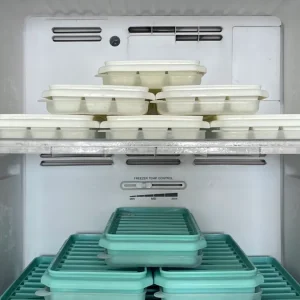
Freeze what you will not eat soon. Put extra portions in the freezer as soon as they stop steaming heavily. Small containers or freezer bags laid flat work better than large tubs because they thaw faster and more evenly. For practical freezer planning, see the low histamine freezer guide.
-
Reheat only what you need. Reheat one portion at a time until it is hot throughout. Repeated warming and cooling is a poor fit for a low histamine kitchen.
That pattern is the heart of pressure cooker low histamine cooking: short cook time, short standing time, and small portions. The same pattern also makes meal prep easier to repeat on a weekly schedule.
What cook times make sense for chicken, rice, and root vegetables?
The right cook time is the shortest one that gives you fully cooked food, because overcooking wastes texture and can make leftovers harder to manage. Exact times vary by model, cut, and how full the pot is, so the safest approach is to use your cooker’s manual and treat the numbers below as starting points rather than fixed rules.
Chicken is the most forgiving starting point. Boneless chicken cooks faster than bone-in pieces, and smaller cuts cook faster than whole breasts. If you are making a low histamine chicken bowl, the chicken and rice can cook together if the liquid ratio and timing work for your cooker, but many people get better texture by cooking chicken and rice in separate batches. Separate cooking also makes it easier to freeze chicken alone, rice alone, or both together in different portions.
Rice works best when it has enough water and room to expand. White rice is usually the simplest option for this kind of meal because it cooks quickly and has a mild flavor. Brown rice needs longer and can be less convenient when the goal is a fast, low histamine dinner. If you use rice as the base, keep the seasoning plain so you do not build a heavy sauce around ingredients that might not be safe.
Root vegetables are very practical under pressure. Carrots, potatoes, parsnips, and turnips can all go from raw to soft in a short cycle, which makes them good partners for chicken or rice. Larger chunks hold their shape better than diced pieces. If you want a soup-style meal, cut the vegetables bigger than you would for a stovetop stew.
The trade-off is texture. Pressure-cooked food is softer than roasted food, and that can be a drawback if you want crisp edges or separate grains. It is a good method for a gentle bowl, soup, or mash, but it is not the right tool for every dinner. A pressure cooker is the wrong choice if your ideal meal depends on browning, reduction, or long-simmered flavor from ingredients that are already low histamine problems for you.
For appliance-specific guidance, the manufacturer’s manual for your model matters. Instant Pot’s official instructions, for example, explain the difference between pressure levels, steam release, and the minimum liquid needed for safe operation. The same is true for other brands. See the Instant Pot support documentation and USDA guidance on safe pressure-cooker use.
Can you make low histamine soup in a pressure cooker?
Yes, you can make low histamine soup in a pressure cooker if you keep the ingredient list short and avoid long-simmered broth as a shortcut. A good version is more like a fresh chicken-and-vegetable soup than a traditional stock-heavy soup.
Start with water, chicken, carrots, potatoes, and salt. Cook under pressure until the chicken is done and the vegetables are tender. Then separate the solids and liquid if that is easier for your digestion. If you tolerate a simple broth made this way, freeze it in small containers or ice-cube trays so you can build a soup base later without keeping a whole pot in the fridge.
This is where the pressure cooker earns its place. A stovetop soup can sit on the burner for an hour or more, and a slow cooker can keep food warm for a long stretch. A pressure cooker shortens the active cook time, then lets you portion the soup before it spends a long time in a warm state. That does not eliminate histamine concerns, but it removes a common problem: the endless simmer.
A plain soup also gives you a practical test. If you react to a pressure-cooked chicken soup with only a few ingredients, the issue is more likely one of those ingredients than the cooking method itself. If the soup feels fine, you have a repeatable base for weeknights.
The mistakes that make pressure-cooked food worse for histamine intolerance
The biggest mistake is treating pressure cooking like a fix for old food. It is not. If the chicken has been in the fridge for several days, or the vegetables are already wilting, a 10-minute pressure cycle does not reset the clock. Histamine is a freshness problem as much as a cooking problem, so if your symptoms are severe or confusing, consult a clinician.
The second mistake is building the pot around high-risk ingredients because they are convenient. Tomato paste, vinegar, soy sauce, aged cheese, cured meat, and commercial broth concentrate can turn a simple meal into a trigger for some people; if you are not sure, check with a professional who understands histamine intolerance. The cost is not just a bad dinner; it is losing trust in a method that should be helping. The fix is to keep the first versions boring on purpose.
A third mistake is making too much and letting it sit. A pressure cooker can produce a large batch quickly, which makes overcooking the fridge easy. If you know you will not eat four servings in a day or two, freeze the extras right away in meal-sized portions. A 2-cup container is often more useful than one large one because it thaws faster and reduces waste.
A fourth mistake is chasing deep flavor with long-held leftovers. Pressure-cooked onion bases, long-fridged soups, and repeated reheating often look efficient but work against the point of the diet. If you need convenience, split the batch while it is fresh and freeze it.
If symptoms are severe, unpredictable, or tied to multiple foods, it is worth discussing the plan with a clinician or registered dietitian who understands histamine intolerance. Food tolerances can overlap with other GI problems, and a pressure cooker cannot sort that out for you.
How to make batch cooking safer without turning it into meal prep drama
Pressure cooking is useful for batch cooking low histamine food, but the batch has to be handled like fresh food, not like a weeklong stash. The safe version is to cook once, portion once, and freeze the portions you will not use soon.
A practical setup is a protein, a starch, and a vegetable in separate containers. For example, cooked chicken in one container, plain rice in another, and carrots or potatoes in a third. That gives you flexibility without forcing everything into a single mixed dish. If one ingredient causes trouble, you know which one it was. It also lets you combine portions in different ways through the week.
Because the food is already separate, use freezer containers or bags that seal well and do not trap a lot of air. Flat freezer bags thaw faster than thick tubs. Label each one with the contents and the date if you need the reminder. That is not about perfection; it is about avoiding mystery food that sits too long.
The trade-off with batch cooking is that it asks for a few extra minutes right after cooking, when you are most tempted to quit. That is the moment that matters. If you portion the food right away, pressure cooking can save time for the rest of the week. If you do not, the same pot becomes one more container of leftovers to manage.
For a low histamine kitchen, that is the real value of the pressure cooker: not fancy recipes, but a fast path from raw ingredients to small, usable portions.
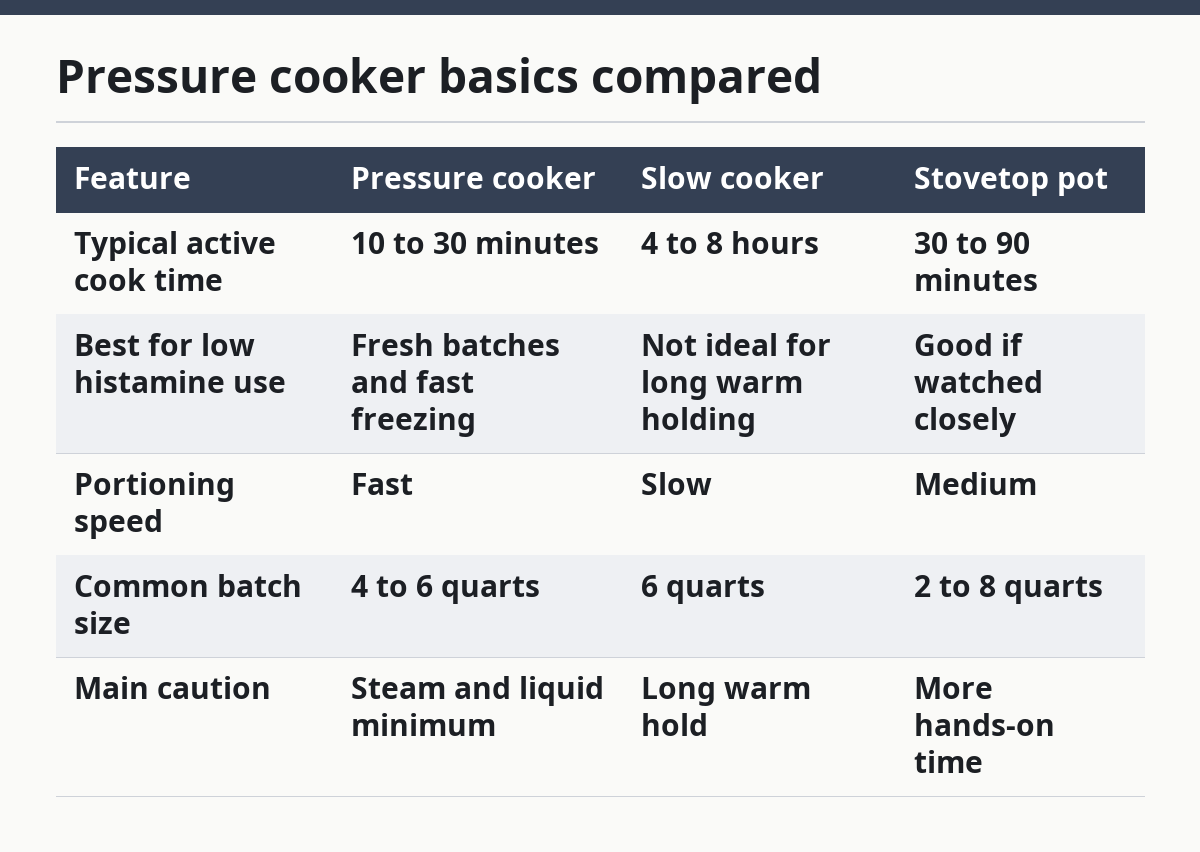
Pressure cooker basics compared
| Feature | Pressure cooker | Slow cooker | Stovetop pot |
|---|---|---|---|
| Typical active cook time | 10 to 30 minutes | 4 to 8 hours | 30 to 90 minutes |
| Best for low histamine use | Fresh batches and fast freezing | Not ideal for long warm holding | Good if watched closely |
| Portioning speed | Fast | Slow | Medium |
| Common batch size | 4 to 6 quarts | 6 quarts | 2 to 8 quarts |
| Main caution | Steam and liquid minimum | Long warm hold | More hands-on time |
Key Takeaways
- A pressure cooker works best for low histamine food when the ingredients are fresh, plain, and easy to portion.
- Chicken, rice, and root vegetables are the most practical starting point because they cook quickly and freeze well.
- Broth is the tricky part; if long-simmered stock is a trigger, use water and salt or a very simple quick-cooked liquid instead.
- The method helps most when you cook, portion, and freeze quickly instead of letting food sit in the pot or the fridge.
- It is not the right tool for aged, fermented, cured, or heavily seasoned foods, and it cannot rescue old leftovers.
Can you use a pressure cooker for low histamine meals?
Yes, a pressure cooker can be a useful tool for low histamine meals. It helps you cook fresh chicken, rice, and vegetables quickly, then portion the food before it sits around. The method works best when you keep the ingredients simple and move leftovers into the freezer soon after cooking.
What foods work best in a pressure cooker for histamine intolerance?
Chicken, white rice, carrots, potatoes, parsnips, and turnips are some of the easiest foods to use. These ingredients cook well under pressure and do not need long simmering or aggressive seasoning. Plain water and salt usually work better than broth, especially if stock tends to bother you.
Is pressure cooking good for batch cooking low histamine food?
Yes, as long as the batch is handled carefully. Pressure cooking is useful for making several portions at once, but the food should be divided and frozen quickly rather than left in the fridge for days. Small containers or flat freezer bags are usually the easiest way to do that.
Drafted with AI; not yet reviewed by a person.