Last updated: August 10, 2026
- Low-histamine tolerance varies a lot, so if symptoms are significant, consult a qualified clinician or registered dietitian.
- In a low histamine starter menu, those are not harmless defaults.
- A low-histamine menu is not a starvation plan.
- The Specific Situations Where the Low Histamine Plan Wins This plan wins when the day-to-day problem is uncertainty.
Quick Answer: A low histamine meal plan week: simple starter menu can be as short as 7 days, with 3 meals a day built from a few fresh foods. Not much room for improvisation. A workable low histamine meal plan for a week is not about perfect variety; it is about repeating a short list of meals that are easy to cook, easy to tolerate, and easy to change if one ingredient turns out to be a problem. When histamine is making you miserable, a simple starter menu usually keeps meals plain, fresh, and predictable.
I write about food and dietary patterns for readers who need practical, not trendy, advice. To get started with this topic, I’d use a simplified low histamine meal plan week: simple starter menu built around freshly cooked proteins, low-histamine vegetables, rice or potatoes, and a few safe fats. Medical advice still matters. Low-histamine tolerance varies a lot, so if symptoms are significant, consult a qualified clinician or registered dietitian. NHS Food allergy and ACG patient information on food intolerance are good starting references.
The Real Difference Between a Low Histamine Meal Plan and “Just Eating Clean”
A low histamine meal plan wins because it strips out guesswork. “Eating clean” sounds useful, but it often leaves people cooking from a pantry full of shaky choices on histamine: leftovers, aged foods, fermented foods, cured meats, and long-stored ingredients. Keep the frame narrow on purpose. That is the point. For a 7-day reset, that tighter frame can help.
And the tightness matters. Should your symptoms spike after meals, the plan should cut two things at once: ingredient count and the time food sits around after cooking. Fresh food. Simple seasoning. Batch prep that does not leave a week of questionable leftovers. The drawback is obvious: this style of eating can feel repetitive fast, and it can be socially awkward if you are used to sauces, takeout, and shared meals. Dry toast, basically.
The practical difference is not moral purity. It is timing and freshness. I’d rather see someone eat the same safe breakfast four mornings in a row than keep “adding variety” with ingredients that might trigger symptoms. A generic healthy-eating article often misses that issue and tells people to build meals around yogurt, avocado, tomatoes, vinegar, nuts, or meal-prepped leftovers. In a low histamine starter menu, those are not harmless defaults.
For the week ahead, the main job is not to be adventurous. It is to stay steady long enough to learn what your body does with a simple pattern. That is why I recommend starting with a short rotation instead of a full recipe library. A little boring? Yes. Useful? Also yes.
The Starter Menu: What I’d Put on the Plate for Seven Days
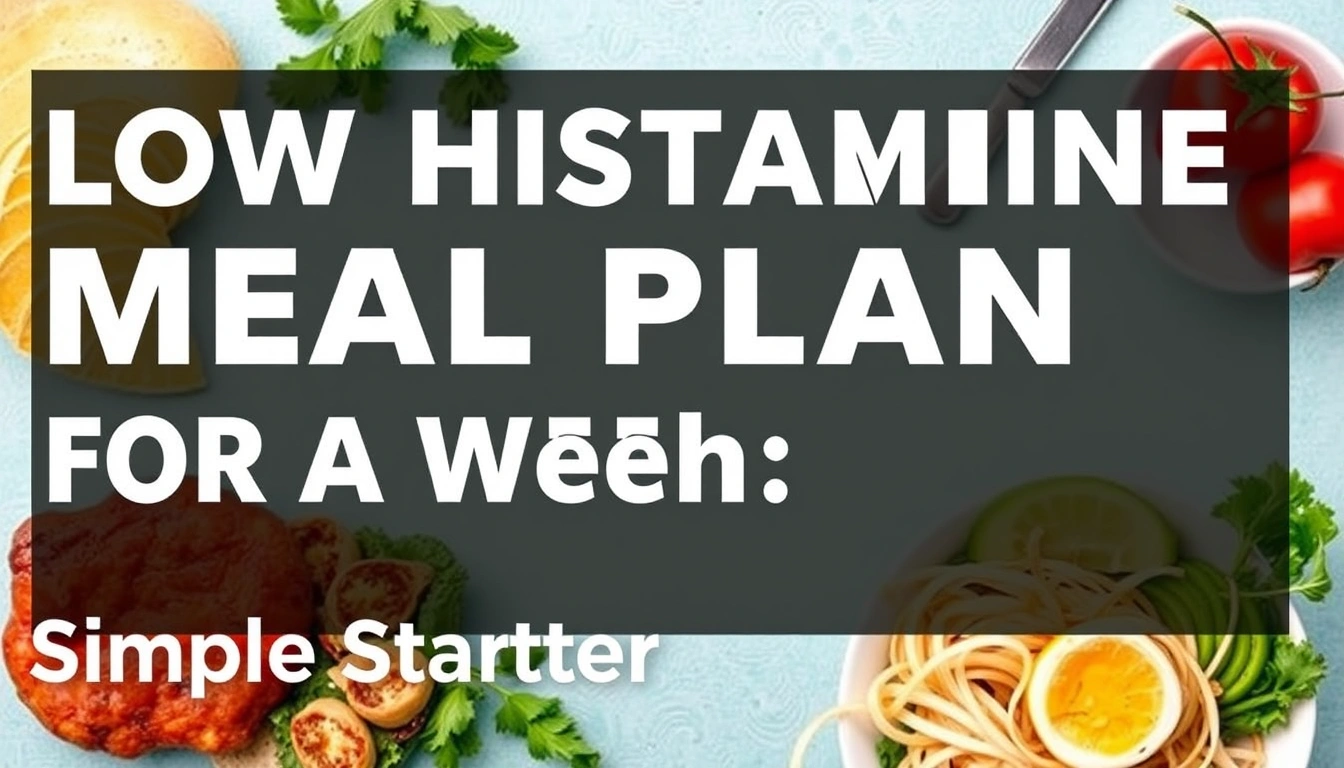
My recommendation is a 7-day menu built from the same basic structure: one protein, one starch, one or two vegetables, one simple fat. Unless you already know a spice is safe for you, I’d keep seasoning plain. If you want a clean starting point, this is the model I’d use.
Day 1
– Breakfast: oatmeal made with water or a tolerated milk alternative, topped with a peeled pear if that suits you
– Lunch: rice bowl with freshly cooked chicken and steamed zucchini
– Dinner: baked potato with turkey and cucumber on the side
Day 2
– Breakfast: scrambled eggs if tolerated, with sautéed zucchini
– Lunch: rice with chicken and carrots
– Dinner: turkey patties with sweet potato and steamed green beans
Day 3
– Breakfast: oatmeal with diced apple if tolerated
– Lunch: potato bowl with chicken and cucumber
– Dinner: white fish cooked and eaten fresh, served with rice and zucchini
Day 4
– Breakfast: rice porridge with a little salt and a tolerated fruit
– Lunch: turkey with carrots and rice
– Dinner: chicken with sweet potato and green beans
Day 5
– Breakfast: eggs or oatmeal, whichever has been steady for you
Day 5
– Lunch: rice with white fish and zucchini
– Dinner: turkey with potatoes and cucumber
Day 6
– Breakfast: oatmeal with pear
– Lunch: chicken with rice and carrots
– Dinner: baked sweet potato with turkey and zucchini
Day 7
– Breakfast: repeat the safest breakfast from earlier in the week
– Lunch: repeat the safest lunch from earlier in the week
– Dinner: repeat the safest dinner from earlier in the week
Looks plain. It should. The strength here is not culinary flair; it is pattern recognition. Should one meal irritate you, you can isolate the ingredient more easily when the rest of the plate is boring and consistent. The weakness? A plan this simple can turn nutritionally lopsided if you forget vegetables, fluids, and enough calories. A low-histamine menu is not a starvation plan.
Low Histamine Meal Prep: Who Should Actually Use This and Who Shouldn’t
This kind of starter menu works best for the person who needs immediate stability. During a flare, while trying to calm symptoms, or at the beginning of an elimination-style approach with professional guidance, a short low histamine menu is the most sensible place to begin. It also fits people who cook at home most of the time and can control freshness.
What it does well:
– keeps ingredients recognizable
– lowers decision fatigue
– makes it easier to spot triggers
– reduces the temptation to “push through” with leftovers that have been sitting too long
What it does poorly:
– gets repetitive quickly
– takes more planning than a normal week of meals
– can be hard if you rely on batch cooking for convenience
– may not suit someone who already knows their triggers are not histamine-related
I wouldn’t hand this plan to someone who hates plain food and will quit by Wednesday. Nor would I recommend it for anyone whose symptoms are severe enough that even a basic diet change feels risky without a clinician’s input. Histamine intolerance is not self-diagnosable in a neat, universal way, and similar symptoms can come from allergies, GI disorders, medication effects, or other problems. If you have significant symptoms, talk to a qualified clinician or registered dietitian before making major changes.
The best fit is the person who wants a calm reset. Not forever. Just long enough to get traction.
The Honest Side-by-Side
Below is the comparison I would use if I had to choose between a strict low-histamine starter menu and a broader “healthy but flexible” meal plan for the week.
| Criteria | Low Histamine Starter Menu | Broader Healthy Meal Plan | Winner for this condition |
|---|---|---|---|
| Symptom control | Narrows common trigger foods and keeps meals simple | More likely to include risky foods by accident | Low Histamine Starter Menu if symptoms are the priority |
| Ease of shopping | Short ingredient list, fewer decisions | More variety, more shopping complexity | Low Histamine Starter Menu for stressed cooks |
| Meal variety | Limited, especially after several days | Higher variety and better palate fatigue resistance | Broader Healthy Meal Plan if boredom is the main issue |
| Leftover safety | Better if you cook fresh and avoid long storage | Often depends on batch prep and leftovers | Low Histamine Starter Menu for sensitive eaters |
| Social flexibility | Harder at restaurants and gatherings | Much easier to adapt on the fly | Broader Healthy Meal Plan for social eaters |
| Nutrient breadth | Can be too narrow if followed too long without guidance | Usually easier to cover a wider nutrient range | Broader Healthy Meal Plan for long-term balance |
| Cooking time | Simple techniques, but frequent fresh cooking | Can be efficient with batch meals | Depends on your schedule |
| Trigger tracking | Better for identifying problem foods | Harder to identify patterns | Low Histamine Starter Menu for troubleshooting |
| Emotional sustainability | Can feel restrictive | Feels more normal and flexible | Broader Healthy Meal Plan if restriction wears you down |
The table points to the real trade-off: the low histamine plan is a symptom-management tool, not the most enjoyable way to eat. A generic article often acts like restriction is all upside. It isn’t. You give up convenience and flexibility to get a better shot at stable meals. Simple bargain. Not free.
The Specific Situations Where the Low Histamine Plan Wins
This plan wins when the day-to-day problem is uncertainty. Should you keep reacting and cannot tell which meal caused it, a stripped-down week gives you something useful: a baseline.
It is especially helpful in these situations:
– you are reacting to multiple meals and want to simplify
– you cook at home and can control ingredient freshness
– you want a short reset before reintroducing foods
– you need repeatable meals for a stressful week and cannot afford decision fatigue
The biggest strength is clarity. Plain rice, potatoes, chicken, turkey, low-histamine vegetables, and simple fruit are not exciting, but they make it easier to spot patterns. If symptoms calm down, that tells you something. If they do not, that tells you something too, and the answer may not be histamine at all.
The weakness is that people often overstay in this phase. A restrictive starter menu should stay a starter menu. Should you live on it too long without professional advice, you can end up with nutrient gaps, food aversion, or a growing fear of food. I wouldn’t treat this as an identity; discuss long-term restriction with a qualified clinician or registered dietitian. I’d treat it as a short experiment with a clear purpose.
Storage matters here, too. Histamine can build in foods that sit too long after cooking, so the plan works best when meals are made fresh or cooled and stored quickly under safe food-handling practices. The cheapest-looking option is not always the best choice if it lives in the fridge for days and turns into a leftover routine.
Our Verdict: Which One to Choose and Why
Choose the low histamine starter menu if you are actively trying to calm symptoms and need a simple week that reduces guesswork. Choose the broader healthy meal plan if your symptoms are stable, your main problem is boredom, and you need more flexibility. Neither if you are having severe reactions, rapid weight loss, trouble swallowing, or other worrying symptoms that need medical evaluation.
That’s my call. For a one-week reset, the low histamine version is the better tool because it answers the question the reader actually has: “What should I eat this week that is simple and least likely to make things worse?” The whole point is to reduce noise.
I would not use this plan as a forever diet. I’d use it to create a calmer baseline, then reintroduce foods one at a time if that is part of your clinician’s approach. If you already know you tolerate many foods, the broader plan is less frustrating and more sustainable. If you do not know your triggers, the starter menu gives you a cleaner starting line.
When to Reconsider This Choice Entirely
The verdict flips in a few real situations.
First, if your main issue is not histamine sensitivity but general digestive upset, a low histamine plan may solve the wrong problem. You could restrict foods and still feel bad.
Second, if you cannot cook fresh meals often, this approach may be impractical. A plan that relies on time-sensitive food handling can fail simply because your schedule is unforgiving.
Third, if the menu is causing anxiety, avoidance, or a shrinking list of “safe” foods, I’d step back. When restriction starts running your life, the cost can outweigh the benefit.
Fourth, if you have a known food allergy or another medical condition that changes what you can safely eat, the starter menu should be adapted with professional input. A low histamine label does not make a food safe for everyone.
My bottom line is simple: use the week plan as a tool, not a verdict. It works best when it is brief, plain, and intentional. Should it help, great — then you have a baseline. If it does not, that failure is still useful because it tells you to look beyond histamine and get better guidance.