Last updated: August 10, 2026
- – A practical trial is often 2–4 weeks , then a structured reintroduction, with professional guidance if needed.
- Key Facts – Low histamine foods are usually fresh, minimally processed, and not aged, fermented, cured, or leftover-heavy.
- Low Histamine Foods: What to Eat First Need a short grocery list that lowers flare odds?
- The Honest Side-by-Side The low histamine side gives you more control.
Quick Answer: In a low histamine foods list: what eat what avoid plan, the easiest place to begin is usually 10–15 fresh, minimally processed foods plus a break from the biggest triggers for 2–4 weeks. Ideally, a clinician or registered dietitian is involved if symptoms are significant. Flushing, headaches, itching, congestion, or a suddenly angry stomach? Then the first move is not chasing a perfect “histamine-free” diet. Cut the biggest histamine triggers, keep meals to a short safe list, and stop making food more reactive by storing it badly. I write about food tolerances and elimination diets for people who want practical, low-drama answers, and this is the route I’d take first.
Key Facts
– Low histamine foods are usually fresh, minimally processed, and not aged, fermented, cured, or leftover-heavy.
– A practical trial is often 2–4 weeks, then a structured reintroduction, with professional guidance if needed.
– The biggest common triggers are alcohol, fermented foods, aged cheese, cured meats, and leftovers.
– Freshness and storage matter: histamine can rise as food sits, even after cooking.
– A short list works best as a temporary tool, not a permanent life sentence.
The Real Difference Between Low Histamine Foods and High Histamine Foods
Low histamine eating is not one tidy menu. It is damage control. Fresh, minimally processed foods usually sit on one side; aged, fermented, cured, or leftover-heavy foods sit on the other, though if you are making major diet changes, consulting a clinician or registered dietitian is wise. High histamine foods either already contain plenty of histamine or encourage your body to release more.
People often blame the wrong thing. That’s the trap. Fresh chicken may be fine for someone, while the same chicken reheated after two days in the fridge may not be. A plain potato is usually easier than potato salad with vinegar and pickles. Same ingredient family. Very different outcome.
Because histamine tolerance varies so much, a food list is only a starting point, not a law, and a clinician or registered dietitian can help you make sense of reactions. Some people flare on a long list of “safe” foods because they’re already in a rough patch. Others handle small amounts of foods that are usually labeled moderate.
Low Histamine Foods: What to Eat First
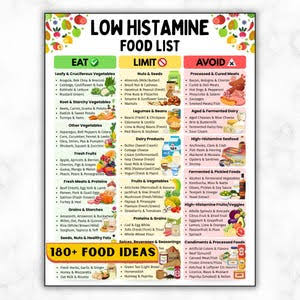
Need a short grocery list that lowers flare odds? Start here. I would build meals around these foods first, and if your reactions are severe or you have another condition, it is best to check the plan with a clinician or registered dietitian:
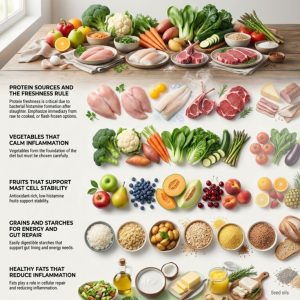
- Fresh meat and poultry, cooked and eaten soon after buying
- Freshly cooked fish, if you tolerate fish and it is very fresh
- Eggs, if you personally tolerate them
- Rice, quinoa, oats, and other plain grains
- Most fresh vegetables, especially lettuce, carrots, cucumber, zucchini, cauliflower, and broccoli
- Many fresh fruits, such as apples, pears, blueberries, grapes, and melons
- Olive oil, coconut oil, and simple salt-based seasoning
- Fresh herbs such as parsley and basil
- Water and non-caffeinated herbal teas that you know you tolerate
I’d pick this lane because it keeps meals straightforward. Simplicity matters with histamine; every extra step can add risk. Fermentation, aging, spice blends, sauces, storage time — all of that can nudge the odds the wrong way. A baked sweet potato with olive oil is plain. Maybe boring. But it is far easier to predict than a “healthy” bowl with kimchi, avocado, tomato, leftover chicken, and tahini.
The downside is obvious: the list can feel repetitive, and if you stay on it too long without planning, nutrition can get narrow. No one should live there forever. It is a temporary reset so you can learn what else your body handles.
High Histamine Foods: What to Avoid or Put on Pause
High histamine foods only win if your goal is to trigger symptoms, which obviously is not the point. If you are trying to settle reactions — especially without professional guidance — these are the foods I would pause first:
- Aged cheeses
- Cured, smoked, or fermented meats
- Alcohol, especially wine and beer
- Vinegar and foods made with vinegar
- Fermented foods such as sauerkraut, kombucha, kimchi, miso, and many pickled items
- Tomatoes and tomato-based sauces
- Spinach and eggplant, which are frequent troublemakers for many people
- Avocado
- Citrus fruits for some people
- Chocolate
- Soy sauce and many fermented soy products
- Canned, smoked, or leftover fish
- Leftovers that have sat in the fridge too long
Why do these matter? Not just because of histamine content in a lab sense. Some foods are histamine-rich because they’ve been aged or fermented. Others seem to trigger release, or they’re simply harder for sensitive people to handle. According to the Cleveland Clinic, common triggers often include alcohol, aged cheese, fermented foods, and processed meats.
The main drawback is that this list can look like half the modern pantry. So I would not treat it like a moral code. I’d use it as a temporary filter. If symptoms are bad, begin with the loudest offenders: alcohol, fermented foods, aged cheese, cured meats, and leftovers. Those categories tend to hit hardest.
The Honest Side-by-Side
The low histamine side gives you more control. The high histamine side gives you more flavor, more convenience, and longer shelf life. If symptoms are driving the decision, control beats convenience for now.
| Criteria | Low Histamine Foods | High Histamine Foods | Winner for this condition |
|---|---|---|---|
| Symptom risk | Usually lower when foods are fresh and simple | Usually higher, especially with aged or fermented items | Low histamine if you react often |
| Meal variety | More limited at first | Much wider and more flavorful | High histamine for variety |
| Ease of planning | Requires more label reading and freshness discipline | Easier to grab ready-made foods | High histamine for convenience |
| Leftover tolerance | Often needs careful handling or freezing | Leftovers and aged foods are common triggers | Low histamine for symptom control |
| Flavor intensity | Milder, cleaner tasting | Stronger, deeper, more complex | High histamine for taste |
| Eating out | Harder to control ingredients and storage | Many restaurant foods are naturally high risk | Low histamine if you are highly sensitive |
| Nutrition variety | Can be good, but only if you rotate foods carefully | Can be broader on paper, though often less suitable | Depends on tolerance |
| Best use case | Flare management and elimination phases | Normal eating for people without histamine issues | Low histamine during symptoms |
One thing the table hides: freshness can matter as much as ingredients. A low histamine meal that sits around can stop being low histamine in practice. That’s why I care about the food list and the handling. Both.
Low Histamine Foods: Who Should Actually Use This and Who Shouldn’t
People with pattern-based reactions tend to benefit most: flushing after wine, congestion after leftovers, itching after aged cheese, or headaches after a mix of fermented and processed foods. It also makes sense for anyone in a symptom flare who needs a short reset diet and does not yet know which triggers matter most.
This approach especially helps when symptoms are all over the map and you need a narrow, repeatable meal pattern. Fewer variables. That’s the point. With fewer moving parts, it becomes easier to spot what is actually causing trouble.
Who should not treat this as a full solution? Anyone with a history of restrictive eating, anyone already struggling to get enough calories, and anyone planning to cut out whole food groups without a replacement plan. A low histamine diet can shrink fast. Not in a good way. It can create new problems like low energy, poor appetite, and constant food stress. If that sounds familiar, a clinician or registered dietitian should help you decide whether the plan makes sense.
I also would not use it forever as a self-diagnosis tool. If your symptoms are severe, erratic, or worsening, talk to a clinician. Histamine intolerance can overlap with allergies, gut disorders, medication effects, and mast cell conditions, and those deserve real medical attention.
High Histamine Foods: The Specific Situations Where It Wins
High histamine foods are useful in real life only when symptom control is not the main issue. When you do not react, these foods may be completely fine. They also make sense when shelf life, stronger taste, and less prep matter more.
That matters for people cooking for families, traveling often, or needing fast food options. Fermented and aged foods are popular because they are flavorful and practical. Canned fish, cured meats, and cheese have obvious convenience value, and plenty of people lean on them for quick meals. I wouldn’t pretend those benefits vanish.
But convenience can become expensive if you are sensitive. High histamine foods are not inherently bad; they’re just less forgiving. One dinner out can wipe out several days of careful eating if the restaurant piles vinegar, wine, sauces, aged cheese, and leftover proteins into the same plate.
If you know you tolerate these foods, there is no reason to fear them. When you do not know, they’re the first place I’d set aside and test later, one at a time, not all at once.
Our Verdict: Which One to Choose and Why
Choose low histamine foods if you are actively reacting, need to calm symptoms, or want a clean elimination phase with fewer moving parts. Choose high histamine foods if you do not have symptoms, or if you have already confirmed that your body handles aged, fermented, cured, and leftover foods well. Neither if you are having severe reactions, losing weight, or restricting so much that meals have become stressful; in that case, talk to a clinician or dietitian before cutting more foods.
My recommendation is straightforward: start on the low histamine side if you landed here because eating makes you feel bad. It gives you the best shot at relief without turning every meal into a puzzle.
The honest downside? Low histamine eating takes work. You may need to shop more often, cook more simply, and freeze portions the right way. That’s the trade-off for better control.
When to Reconsider This Choice Entirely
There are a few situations where the verdict flips or the whole framework needs a reset.
-
You do not actually react to the common high histamine foods. When wine, aged cheese, tomatoes, leftovers, and fermented foods do not change your symptoms, the problem may be elsewhere.
-
Your symptoms show up only with one specific food, not a whole category. In that case, a blanket low histamine diet may be too blunt. A targeted elimination is smarter.
-
You are becoming more restricted instead of more stable. If the list keeps shrinking and you still feel awful, stop treating histamine as the only explanation.
-
You cannot maintain enough calories or protein on the short list. Nutrition always matters more than perfect food rules. If the diet is making you weaker, it is no longer helping.
A lot of generic advice gets this wrong by making low histamine food lists sound permanent. I would not do that. I’d use the list as a tool, not a lifestyle badge.
The Practical Low Histamine Food List I Would Start With
If you want the shortest useful version, I would build your cart around these foods first:
Proteins
– Fresh chicken, turkey, beef, lamb
– Eggs, if tolerated
– Freshly cooked fish, only if very fresh and tolerated
Carbs
– Rice
– Oats
– Quinoa
– Potatoes
– Sweet potatoes
Vegetables
– Carrots
– Lettuce
– Cucumber
– Zucchini
– Cauliflower
– Broccoli
– Green beans
Fruit
– Apples
– Pears
– Blueberries
– Grapes
– Melons
Fats and seasonings
– Olive oil
– Coconut oil
– Salt
– Parsley
– Basil
That is enough to make real meals. Not fancy. But workable. Symptom control is the goal.
What I Would Avoid First
If you only cut a few things, I would start here:
- Alcohol
- Vinegar
- Aged cheese
- Fermented foods
- Cured and smoked meats
- Leftovers that have been sitting too long
- Tomato sauces
- Soy sauce
- Spinach
- Avocado
- Chocolate
That’s the first-pass list I’d use because it is practical, and because it removes the biggest common triggers without turning your diet into a chemistry project.
Plain truth: low histamine eating works best when it is simple, fresh, and temporary enough to teach you something. Use it that way, and it can help. Try to make it perfect, and it gets exhausting fast.