Last updated: November 19, 2026
Quick answer: pack the meal in 3 parts, keep it cold or hot, and leave sauce until the end. That is the simplest way to handle How to Pack a Low Histamine Dinner for Late Return Home after a late day without making the food harder to eat later.
Key takeaways
- A portable dinner works best when the rice bowl, protein portion, and vegetables stay apart until you are ready to eat.
- Sauce is the first thing to separate, because it can turn a good meal soggy and harder to manage after a long wait.
- Use a meal container that seals well, plus an insulated bag and an ice pack or heat-safe setup, depending on how you will store it.
- The best plan is the one that fits your return time. A dinner packed for 2 hours is not the same as one packed for the end of a long shift.
- A reheat-at-home plan matters as much as packing. If you do not have a clear way to warm the meal in 1 step, the dinner usually gets worse.
What makes a portable dinner different?
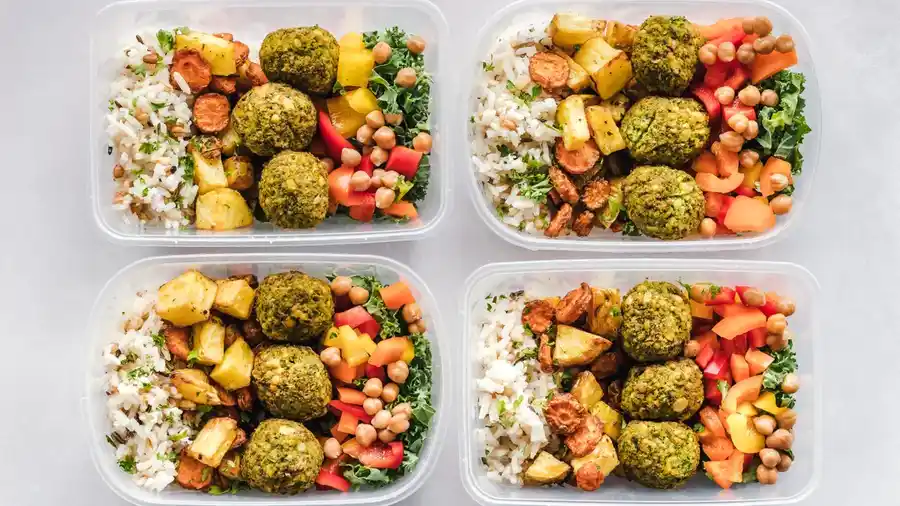
A portable dinner is a meal built to wait, then still taste good when you get home. For How to Pack a Low Histamine Dinner for Late Return Home, that means the food should stay as fresh as possible, with minimal time in the middle where texture, smell, and temperature drift.
That is why a rice bowl with a protein portion and vegetables works better than a mixed, sauced dish. Each part keeps its shape longer, and each part can be warmed or assembled at the end in the right order. A dinner that sits mixed together for hours is more likely to turn mushy or smell stronger by the time you eat it.
The other difference is timing. This page is for dinner that you pack before a late return home, not for same-day snacking or a lunch cooler. If the meal is going to wait, the way you hold temperature matters as much as the ingredients. The FDA’s refrigeration guidance and the USDA FSIS leftovers guidance both point to the same basic idea: keep perishable food out of the danger zone as little as possible and chill or reheat it properly. You can read those pages here: FDA on refrigeration and food safety, and USDA FSIS on leftovers and food safety.
How do I pack a low histamine dinner?
I pack a low histamine dinner by building it in 3 parts, sealing each part, and planning the last step before I leave. The goal is a meal that can wait without turning into one blended, dull container.
- Start with the base. Put the rice bowl or other grain in the bottom compartment or a small container. Rice gives the meal shape and makes reheating easier later.
- Add the protein portion. Place the cooked protein in its own section or a second small container. Keep it away from sauce so the surface stays drier.
- Pack the vegetables separately. Use a third compartment or a small side container. Roasted vegetables stay more usable than very wet vegetables after a wait.
- Put sauce in a tiny sealed cup. Use just enough for the meal, not a full pour over the bowl. This keeps the rice from soaking and helps the protein stay firm.
- Choose the holding method before you leave. If the dinner will be cold, place the sealed meal in an insulated bag with an ice pack. If it will be reheated later, make sure the food can go straight from container to heat-safe setup at home.
- Write the reheat plan on the container if needed. Even a simple note like “rice + protein, sauce last” keeps the meal easy to finish after a long day.
The point is not fancy packing. The point is making sure each piece still has a job when you get home. A mixed bowl is faster to pack, but it is also the easiest way to lose texture and control.
What should go in the container?
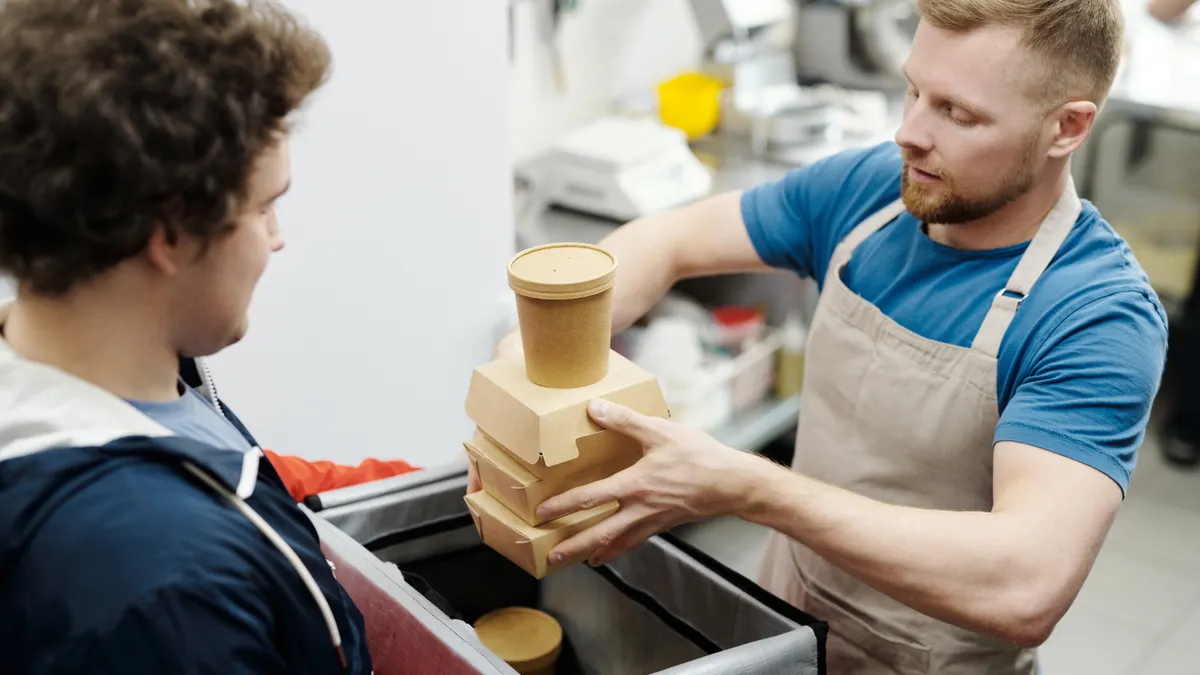
A good low histamine portable dinner usually has a rice bowl base, a protein portion, vegetables, and sauce separated into a small cup. That is the most practical layout for a late return home because each food can handle time a little differently.
A rice bowl is a strong base because rice reheats well and does not need much help to become a full meal again. Protein should be portioned so it is enough for dinner but not so crowded that the container traps steam. Vegetables should be dry enough to hold shape. Sauce belongs in the smallest container of all, because the sauce changes the meal fastest.
For example, one mixed bowl is best only for a very short wait. It is weak on texture and control. A divided meal container is the best all-around option if you want the rice, protein, and vegetables to stay separate. Separate small containers give the most control, but they add pieces to carry.
The most useful detail is portion size. A meal that is packed too full holds steam and softens faster. A meal that is too empty shifts around and cools unevenly. I would rather see a medium-fill container with a tight lid than an overstuffed one that leaks and steams itself into a soggy dinner.
How do I keep it cold or hot until I get home?
I keep it cold or hot by matching the container, the insulated bag, and the time window instead of guessing. If the food is meant to stay cold, the meal container goes into an insulated bag with an ice pack as soon as it is packed. If it is meant to stay hot for a short period, the food should be held in a heat-safe setup and eaten soon after arrival.
The main trade-off is simple: cold holding protects texture better, while hot holding is more convenient if you will reheat at once. A cold portable dinner is usually easier to manage for a late return home because it gives you more control at the end. A hot-held meal can work, but the quality drops faster if the timing slips.
Use the table below to decide:
| Goal | What to use | What can go wrong |
|---|---|---|
| Keep dinner cold | Meal container, insulated bag, ice pack | Food warms up if the bag is opened often |
| Bring dinner home for reheating | Meal container that can go straight to reheat setup | Sauce and steam can ruin texture if packed together |
| Keep parts separate | Divided container or small side cups | More pieces to remember and carry |
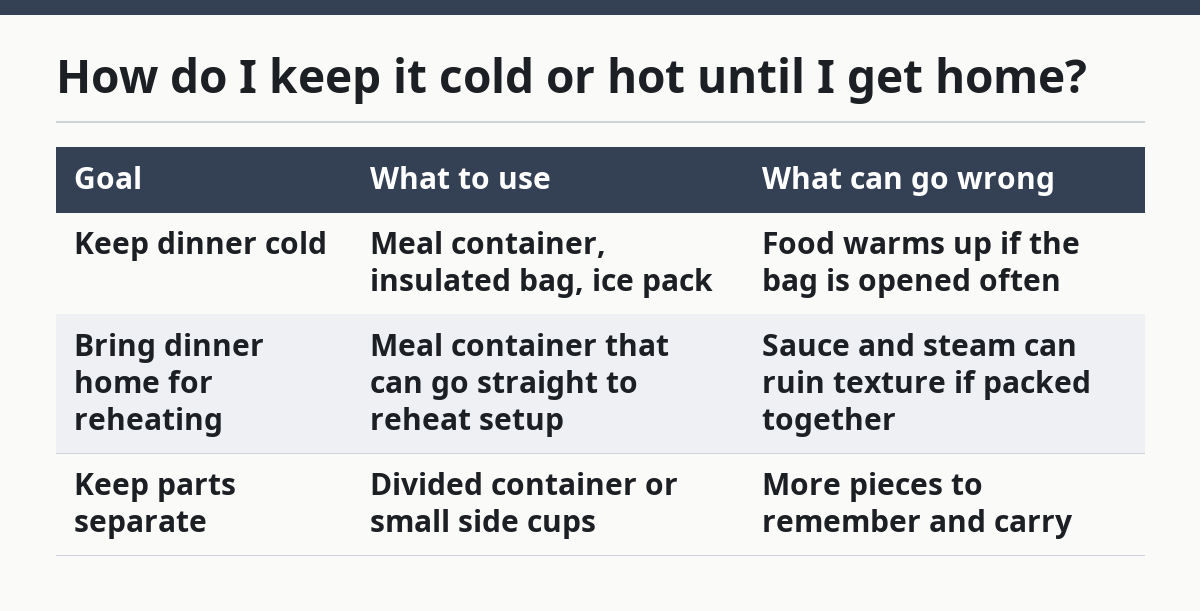
A late return home changes the whole plan. If the dinner will sit for a long stretch, do not rely on a thin tote or a loose lid. The container and the bag are part of the meal, not extras.
What are the mistakes that ruin the meal?
The biggest mistake is packing everything together and hoping it will still be fine hours later. That usually costs texture first, then smell, then appetite. A rice bowl that should be simple can become wet and heavy if sauce, vegetables, and protein sit in one wet layer.
Another common mistake is using the wrong container size. A container that is too large lets the food slide around and cool unevenly. A container that is too small traps steam and softens the meal. A snug fit is better than a packed-to-the-top fit.
A third mistake is forgetting the end of the meal. If you do not know whether the dinner will be eaten cold, reheated in a pan, or reheated in a microwave at home, the packing method becomes random. The sauce may belong in one place for a microwave meal and another for a pan meal. I would not pack a low histamine dinner without deciding that last step first.
Another problem is timing. This page is not for answering how long food can stay out safely in general. It is for planning around a late return home. Still, the broad food safety rule matters: perishable food should not sit at room temperature as a habit. If the plan has a long gap, use cold holding or a hot-hold method instead of leaving the meal loose on a counter.
What is the easiest reheat-at-home setup?
The easiest reheat-at-home setup is a container system that lets you warm the rice bowl, protein portion, and vegetables without rebuilding the meal from scratch. That usually means one main container plus one small sauce cup.
If I were choosing the most practical arrangement, I would use a divided meal container for the base and sides, then keep sauce separate in a small sealed cup. At home, the food can be warmed in one step, then finished with sauce last. That setup saves time because the dinner is already portioned for the plate. It also avoids the problem of trying to stir sauce into a bowl that is already too wet.
A microwave-safe container is useful if you want speed. A pan works better if you want more control over the texture of the protein and vegetables. If you choose the pan, the rice bowl should still be packed in a way that lets you tip it out cleanly. If you choose the microwave, keep the sauce out until the end so the meal does not steam into mush.
This is the right plan for a person who wants a portable dinner that still feels like dinner when they get home. It is not the right plan for someone who wants a single-container meal with no extra steps. That shortcut usually costs the most in texture and control.
What should I do before I leave?
Before I leave, I should check the container, the bag, and the eating plan. That final check takes less time than fixing a soggy dinner later.
Make sure the lid seals, the sauce cup is closed, and the insulated bag has the ice pack or heat setup you intended. If you are carrying a rice bowl, keep the bowl level so the grains do not collect at one side. If you are carrying vegetables, make sure they are dry enough that they will not dump extra liquid into the base.
I also like a simple order of assembly for home: rice first, protein second, vegetables third, sauce last. That keeps the dinner easy to eat and makes the whole pack-and-reheat routine feel repeatable. Repetition helps here, because a late return home is not the time to improvise.
For a broader view of timing and storage, the hub page on Low Histamine Meal Timing and Storage — The Complete Guide is the right next stop.
FAQ
How long can dinner stay packed before I eat it?
The answer is that dinner should be packed with the shortest practical wait in mind, not an open-ended delay. If the meal has to sit for a longer stretch, keep it cold with an insulated bag and ice pack or hot-hold it in a proper setup instead of leaving it at room temperature.
Should I pack sauce separately?
Yes, sauce should usually be packed separately for a low histamine dinner. A small sealed cup keeps the rice bowl from getting soggy and gives you more control over texture at the end. Sauce last is the easiest way to keep the meal usable after a long wait.
What container keeps dinner easiest to reheat later?
A divided meal container is usually the easiest to reheat later. It keeps the rice bowl, protein portion, and vegetables apart enough to heat evenly, and it still lets you finish with sauce after warming. If you want more control, use separate small containers for each part.
Is an insulated bag necessary for a portable dinner?
An insulated bag is the simplest way to protect a portable dinner when you are away from home for hours. It helps keep the meal at the right temperature and gives you a better chance of preserving texture and food quality. Pair it with an ice pack if the meal needs to stay cold.
Drafted with AI; not yet reviewed by a person.