Last updated: November 19, 2026
Key Takeaways
- Common low histamine dairy-free thickeners for sauces and soups include arrowroot, tapioca starch, cornstarch, potato starch, and vegetable purées.
- Make a slurry, whisk it into hot liquid, and cook briefly until the sauce turns smooth and lightly opaque.
- Choose the starch for the finish you want, since each one behaves differently at the stove.
- A roux alternative is usually a starch slurry or a vegetable purée, rather than a butter-and-flour paste.
Low histamine dairy-free thickeners for sauces and soups are usually starches, pureed vegetables, or a few plant-based add-ins that give sauce and soup body without cream, milk, or cheese. The most common everyday choices are often arrowroot, tapioca starch, cornstarch, and potato starch, with coconut milk used more as a creamy base than a true thickener.
The thickeners that usually fit this job best: Low Histamine Dairy-Free Thickeners for Sauces and Soups
Low histamine dairy-free thickeners for sauces and soups are arrowroot, tapioca starch, cornstarch, potato starch, and vegetable purées, because they thicken without depending on dairy protein. These are not identical, though, and the wrong one can turn a glossy pan sauce into glue or a soup into a cloudy paste.
Arrowroot gives a clear, shiny finish and works well in fruit sauces, light pan sauces, and soups that will not be boiled hard for long. It tends to lose strength after prolonged simmering, so it is better for a final thickening step than for a stew that sits on the stove for an hour. Tapioca starch makes a similar glossy texture but can turn slightly stretchy if overused, which is why it suits fruit fillings and light gravies more than delicate cream-style soups.
Cornstarch is the familiar all-purpose option. It thickens quickly, is easy to find, and holds up well in many soups and sauces, but it can look a little opaque and can taste chalky if undercooked. Potato starch thickens at a lower temperature than flour and gives a soft texture, yet it can break if boiled too long. Coconut milk is different: it adds richness and a creamy mouthfeel, but it does not thicken the way a starch slurry does unless it is reduced.
If a reader wants one place to start, cornstarch is often the easiest first trial, with arrowroot close behind for clearer sauces. I would not pick all-purpose flour as the default for this topic, because most flour-based roux recipes depend on butter and longer cooking, which adds extra variables for a sensitive diet. For more ingredient swaps, see the site’s low histamine ingredient selection and swaps.
How to thicken a sauce or soup without dairy
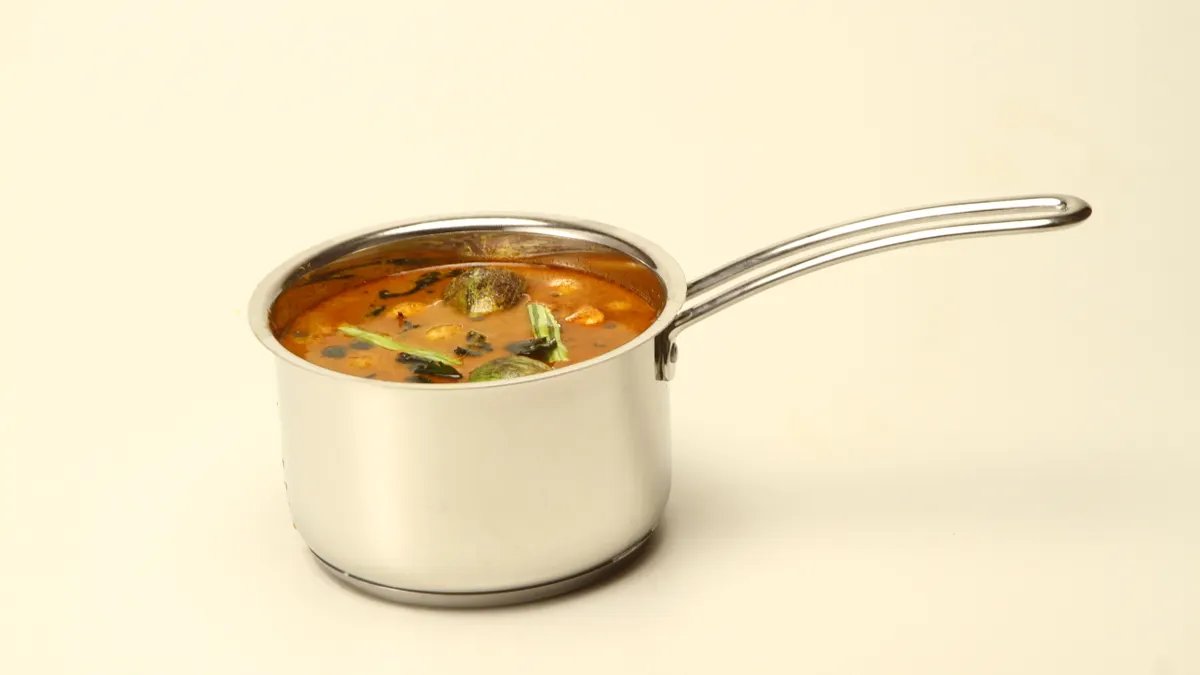
The simplest method is to make a slurry, whisk it into hot liquid, and cook it for 1 to 3 minutes until the sauce turns smooth and lightly opaque. That method works better than dumping starch straight into the pot, which usually creates lumps. According to the FDA, careful ingredient handling and clear labeling matter when you are cooking for dietary restrictions.
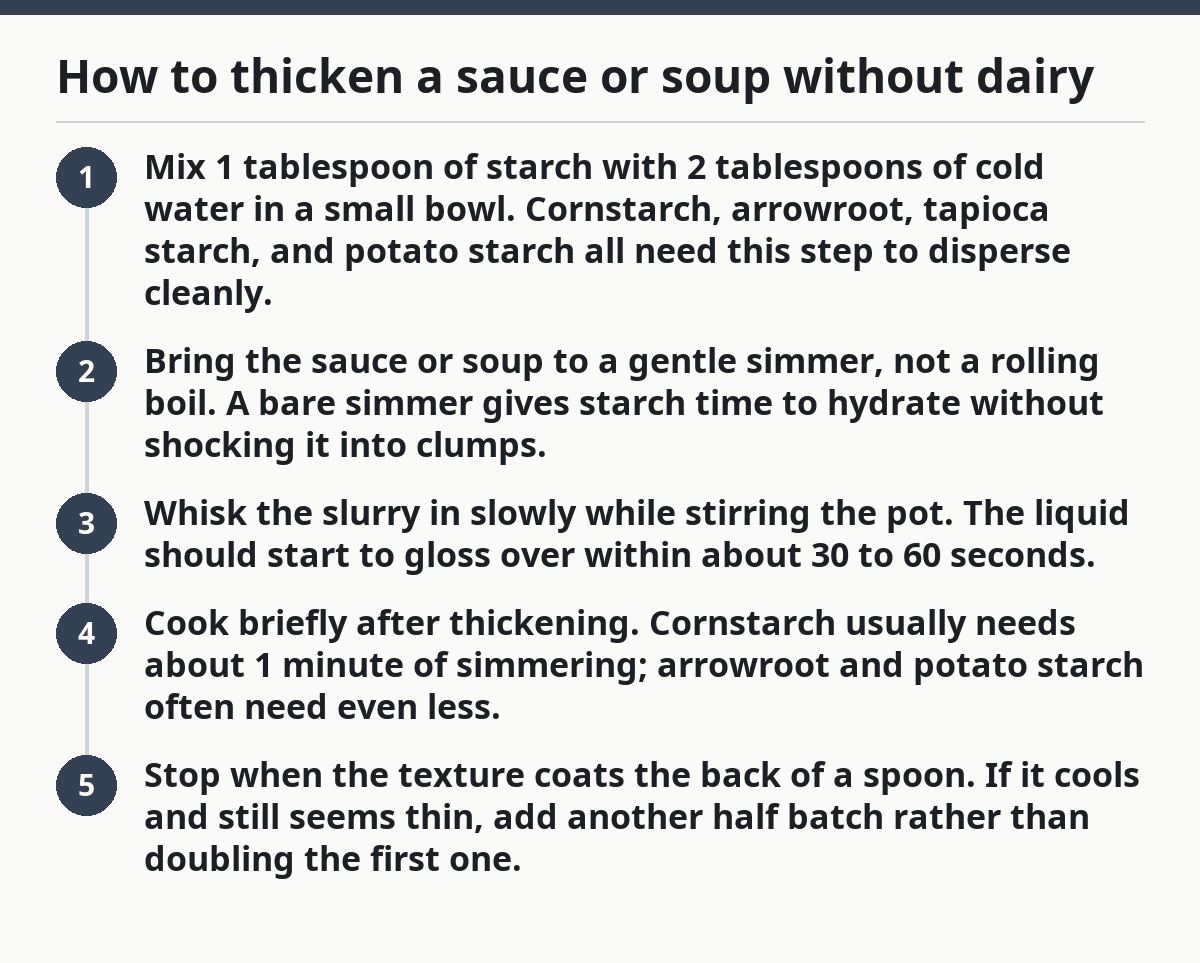
- Mix 1 tablespoon of starch with 2 tablespoons of cold water in a small bowl. Cornstarch, arrowroot, tapioca starch, and potato starch all need this step to disperse cleanly.
- Bring the sauce or soup to a gentle simmer, not a rolling boil. A bare simmer gives starch time to hydrate without shocking it into clumps.
- Whisk the slurry in slowly while stirring the pot. The liquid should start to gloss over within about 30 to 60 seconds.
- Cook briefly after thickening. Cornstarch usually needs about 1 minute of simmering; arrowroot and potato starch often need even less.
- Stop when the texture coats the back of a spoon. If it cools and still seems thin, add another half batch rather than doubling the first one.
This method is easy, but it has one drawback: starches thicken fast, then thin out if they are overcooked. That matters in long-simmered soups, especially tomato-based ones or broths that stay on low heat for a while. If the pot is going to keep cooking, thicken near the end, not at the beginning.
For a silkier finish, whisk the slurry into a ladle of hot liquid first, then pour that mixture back into the pan. That extra step is worth it for delicate cream-style soups where a single lump is noticeable. For more kitchen technique basics, see how to thicken soup and dairy-free sauce ideas.
Which starch should I use for the texture I want?
The starch choice should match the finish you want, because each one behaves differently at the stove. Cornstarch gives the most familiar thick sauce, arrowroot gives a cleaner shine, tapioca starch gives stretchier body, and potato starch gives a softer texture.
Cornstarch is the practical default for everyday sauces. It works well in chicken-style soups, vegetable soups, and quick gravy-style pan sauces, and it is usually the most predictable if you are making a one-pot meal. Use about 1 tablespoon per cup of liquid as a starting point, then adjust. Too much cornstarch turns a sauce pasty after cooling, so it is better to undershoot and add more.
Arrowroot is better when the sauce must stay clear. It suits berry sauces, lemony glazes, and pale broths where a cloudy finish looks heavy. It also tolerates acidic ingredients better than cornstarch in many cases, which makes it useful for tomato-forward dishes, though it should still be added near the end.
Tapioca starch is useful when you want a little elasticity. Fruit fillings, potpie-style gravies, and some soups with root vegetables benefit from that slightly springy body. Used heavily, it can become slippery or stringy, which is why it is not my first pick for a classic cream soup texture.
Potato starch thickens quickly and creates a smooth, soft mouthfeel. It is handy for quick sauces and light soups, but it dislikes hard boiling. If you keep it on the heat too long, the texture can loosen again. That makes it better for finishing than for deep simmering.
A useful rule: choose cornstarch for general use, arrowroot for clarity, tapioca starch for elasticity, and potato starch for a tender finish. For more swap guidance, see gluten-free thickeners and low histamine cooking tips.
What about roux alternatives?
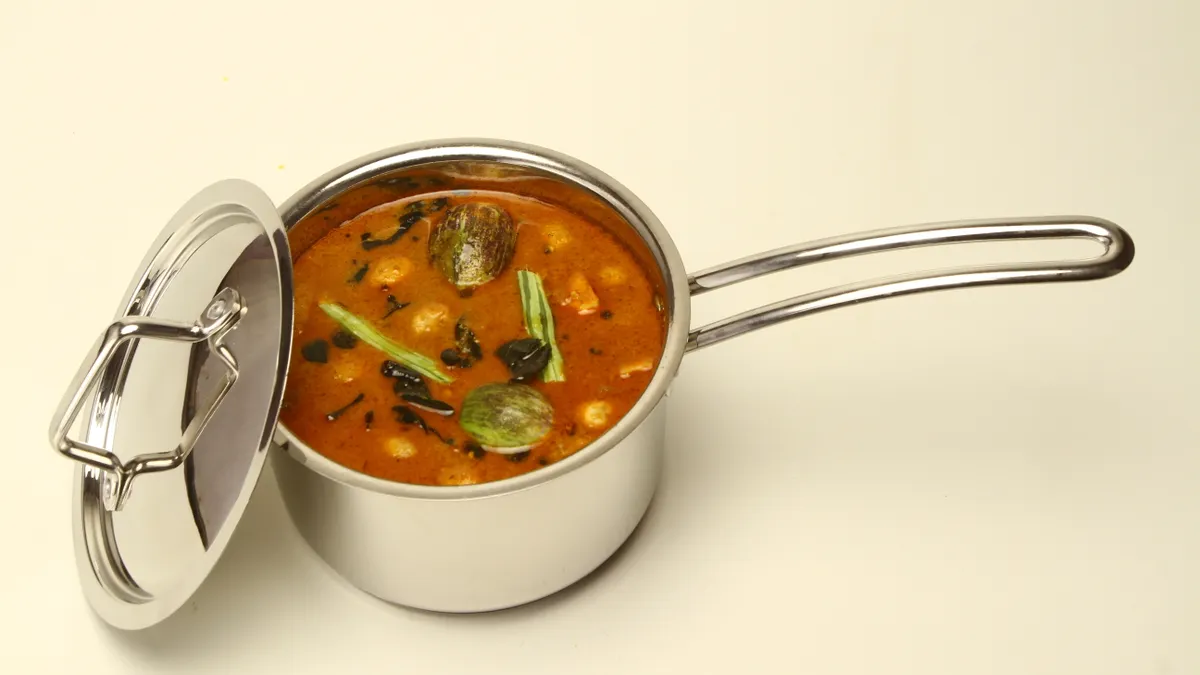
A roux alternative is usually a starch slurry or a vegetable purée, not a butter-and-flour paste. That matters because the classic roux depends on dairy fat in many kitchens, while low histamine cooking often needs something simpler and less rich.
If a recipe asks for a roux, the closest swap is a starch-based thickener added after the liquid is already hot. For 2 cups of sauce or soup, start with 1 tablespoon cornstarch mixed into 2 tablespoons cold water. For a thinner sauce, use 2 teaspoons instead. This gives body without the longer cook time that a roux needs.
A second option is to cook the flavor base in a small amount of oil, then add a starch slurry at the end. That keeps the texture close to a traditional sauce without relying on butter. It works well for onion-free or garlic-free bases too, which many sensitive eaters prefer.
A third option is a vegetable purée, such as cooked cauliflower, carrot, or zucchini, blended until smooth and stirred back in. This does more than thicken: it gives the sauce substance and rounds out thin broth. It is especially useful in soups that need body without a starchy finish.
What this is not for: a dark, browned gravy that depends on caramelized flour flavor. A starch slurry can thicken that style, but it will not mimic the exact toasty note of a long-cooked roux. If the recipe depends on that specific flavor, the result will be different, and pretending otherwise helps no one.
For a reader who wants the broadest answer, I would link this topic to the site’s hub on low histamine ingredient selection and swaps, because the thickener choice usually depends on the rest of the ingredient list.
Pureed vegetables can thicken more than a starch can
Pureed vegetables are a strong low histamine dairy-free thickener when the goal is body, not gloss. They make soups feel fuller, and they can rescue a sauce that tastes thin even when the liquid is technically reduced enough.
The easiest choices are cauliflower, carrot, butternut squash, pumpkin purée, and well-cooked potato. Each behaves a little differently. Cauliflower gives neutral bulk, carrot brings mild sweetness and color, and squash gives the richest, most spoon-coating texture. Potato makes a soft, familiar thickness that works well in chowders and blended soups.
This method works best when the vegetables are already cooked until completely tender. A blender or immersion blender breaks them down into a smooth base, and then they can be stirred back into the pot. If the soup is already on the edge of being too salty or too seasoned, a purée can calm it down by adding more mass without adding another separate flavor.
The trade-off is that purées can change the dish more than starches do. A cauliflower-based soup thickened with its own purée will taste like cauliflower, not like cream. That is fine in a vegetable-forward bowl, but it is the wrong tool for a lemon sauce or a delicate herb broth.
A practical ratio is 1 to 2 cups of cooked vegetables blended into 4 cups of soup, though the exact amount depends on how dense you want the result. If the texture is still too loose after blending, add a small starch slurry instead of more vegetables. That keeps the flavor from turning muddy.
This is the method I would choose when a sauce needs nutrition as well as thickness, but I would not use it for a clear pan reduction where the chef wants a polished look. For related soup bases, see vegetable purée soup ideas and simple pantry sauces.
Coconut milk can stand in for cream, but it is not the same thing
Coconut milk can create a creamy sauce or soup, but it does not behave like dairy cream, so it should be treated as a richness ingredient rather than a pure thickener. According to Cleveland Clinic diet guidance, people with food sensitivities or complex restrictions should check ingredients carefully and, when needed, consult a registered dietitian or clinician before making regular swaps. Full-fat canned coconut milk often gives more body than beverage-style coconut drinks, which are usually too thin for most sauce work.
A good use case is a silky soup, curry-style sauce, or blended vegetable base that needs rounded texture. Stirring in 1/4 to 1/2 cup of canned coconut milk toward the end can soften sharp edges and make the bowl feel fuller. If the recipe needs more thickness after that, add a starch slurry rather than relying on extra coconut milk alone.
There are two drawbacks worth saying plainly. First, coconut milk brings its own flavor, which can clash with tomato, dill, mushroom, or delicate herb sauces. Second, it separates if boiled hard for too long. A gentle simmer is fine; a hard boil is not.
That makes coconut milk a good stand-in for cream-style dishes but a weaker choice for classic white sauce texture. It can also make sweet fruit sauces taste heavy, where arrowroot or tapioca starch would stay cleaner.
If a recipe calls for a dairy-free cream substitute, coconut milk belongs in the conversation, but not as the only answer. The best result usually comes from combining it with a small starch thickener. That pairing gives body and richness without forcing one ingredient to do both jobs. For another dairy-free option, see coconut-free alternatives.
Common mistakes that make low histamine sauces fail
The biggest mistake is adding starch directly to hot liquid. That usually makes lumps, and once they form, they take longer to smooth out than the whole thickening step should have taken in the first place. A 10-second slurry fixes that problem before it starts.
The second mistake is overcooking the thickener. Cornstarch can lose its clean finish, arrowroot can thin out, and potato starch can go fragile if it stays at a strong boil too long. The cost is a sauce that looks good for 2 minutes and then turns slack or pasty. The fix is simple: add the thickener late and cook only until the texture changes.
The third mistake is using too much. A sauce that seems slightly loose while hot often thickens more as it cools. If you aim for a final texture too early, you can end up with glue. Start with a small amount, let it sit for 1 minute, then decide whether it needs more.
The fourth mistake is choosing the wrong thickener for the job. Arrowroot is poor for long simmering, tapioca can become stringy, and coconut milk alone will not rescue a thin broth. Matching the thickener to the dish matters more than memorizing a universal rule.
The fifth mistake is forgetting that flavor changes with texture. A soup thickened with cauliflower purée will taste fuller but also more vegetable-forward. A sauce thickened with cornstarch will be neutral but less luxurious than one with coconut milk. That trade-off is normal, not a failure.
The quickest way to choose the right thickener
The quickest choice is usually cornstarch for general sauces, arrowroot for clear finishes, potato starch for a soft texture, tapioca starch for a little stretch, and vegetable purée when the dish can absorb more flavor. Coconut milk belongs in creamy soups and sauces, not as a stand-alone thickener.
For a weeknight soup, I would start with a starch slurry made from 1 tablespoon of cornstarch in 2 tablespoons of cold water per cup of liquid, then adjust at the end. For a bright sauce where clarity matters, arrowroot is the cleaner pick. For a blended vegetable soup that needs to feel substantial, pureed cauliflower or squash often gives a better result than any starch.
The wrong choice is the one that fights the recipe. If the dish needs a glossy finish, do not bury it under purée. If the sauce needs a neutral body, do not force in coconut milk. If the pot will simmer for a long time, do not depend on arrowroot alone.
That is the real answer to low histamine dairy-free thickeners for sauces and soups: there is no single best one, only the one that matches the sauce, the soup, and the cooking time. For more examples, see low histamine recipe ideas and sauce thickening basics.
What can thicken soup without dairy?
Soup can be thickened without dairy by using a starch slurry, vegetable purée, or canned coconut milk. Cornstarch and arrowroot work well for a quick finish, while blended cauliflower, potato, or squash add body as well as thickness.
Which thickener is best for low histamine cooking?
Cornstarch is usually the easiest starting point for low histamine cooking because it is versatile and widely available. Arrowroot is the better choice when a clear, glossy sauce matters more than a creamy look.
Can I use starch instead of cream in sauces?
Yes, starch can replace cream’s thickening role, but it will not replace cream’s richness by itself. A sauce made with cornstarch or arrowroot will thicken cleanly, while coconut milk can add some of the mouthfeel that cream would normally provide.
Drafted with AI; not yet reviewed by a person.