Last updated: November 19, 2026
Quick answer: Reheat low histamine food safely by warming 1 portion once and serving it right away. A small, covered container and a food thermometer help you avoid extra time in the danger zone. Reheating low histamine food safely means using a single gentle pass, a clean container, and enough heat to make the center hot without holding the food warm for long. For most meals, a practical choice is to reheat only the portion you will eat, then serve it right away.
How to Reheat Low Histamine Food Safely: the safest reheating method starts before the heat turns on
The safest reheating method starts with a small portion, a covered pan or dish, and food that has already been cooled promptly in a sealed container. If you begin with a large batch, a cold center and a hot edge will force extra heating time, which is exactly what you are trying to avoid on a low histamine diet.
Low histamine eating is not just about the ingredient list. Time and temperature matter too. That is why reheating is not the same as cooking from fresh. Food that sits warm for too long, or gets reheated more than once, is a worse fit for this style of eating. If you need broader kitchen context, the hub on low histamine cooking methods and kitchen setup covers the bigger system.
Use a food thermometer if you have one. For most home kitchens, a digital probe thermometer gives a clearer result than guessing by steam alone. You do not need a fancy model; a basic instant-read thermometer is enough. What matters is knowing that the center has heated through, especially for soups, rice, poultry, and meat.
A practical rule: reheat only what you plan to eat in one sitting. If you divide a meal into 1 serving or 2 servings before it cools, you reduce the need to warm the same food again later. That matters because repeated heating and cooling cycles create more handling and more time in the danger zone.
This approach is not for people who want buffet-style batch warming or all-day warming in a slow cooker. It is for someone who wants one safe plate, fast.
How do you reheat low histamine food safely step by step?
You reheat low histamine food safely by warming one portion once, checking the center, and serving it immediately.
-
Take out only the portion you will eat.
Move 1 serving into a small pan, oven-safe dish, or microwave-safe container. A smaller portion heats more evenly than a full casserole dish, and that usually means less time spent waiting for the middle to catch up. -
Choose the method that fits the food.
Use the stovetop for soups, stews, sauces, and moist leftovers. Use the oven for casseroles, baked vegetables, and items you want heated through without stirring. Use the microwave for a quick single bowl or plate, especially when you need the meal ready in about 1 to 3 minutes. -
Add a little moisture if the food is dry.
A spoonful or two of water, broth, or sauce can keep rice, grains, and vegetables from drying out during reheating. This is especially useful in a microwave or a covered pan. -
Heat gently until the center is hot.
On the stovetop, use low to medium heat and stir every 30 to 60 seconds. In the oven, use a moderate setting and cover the dish if the food dries out easily. In the microwave, heat in short bursts of 30 to 60 seconds and stir or rotate between bursts when the food allows it. -
Check the thickest part with a food thermometer.
Insert the probe into the center, not the edge. You want the thickest part to be hot enough to serve safely, not just the rim. If the outside is steaming but the middle is cool, keep heating in short increments. -
Serve right away.
Put the food on the plate and eat it soon after heating. Do not let it sit on the counter while you finish another task. The whole point is to avoid a second warm hold.
This method works because it limits both time and handling. It is not the right choice for food that is already old, smells off, or has sat at room temperature too long.
Stovetop reheating: a strong choice for soups, sauces, and saucy meals
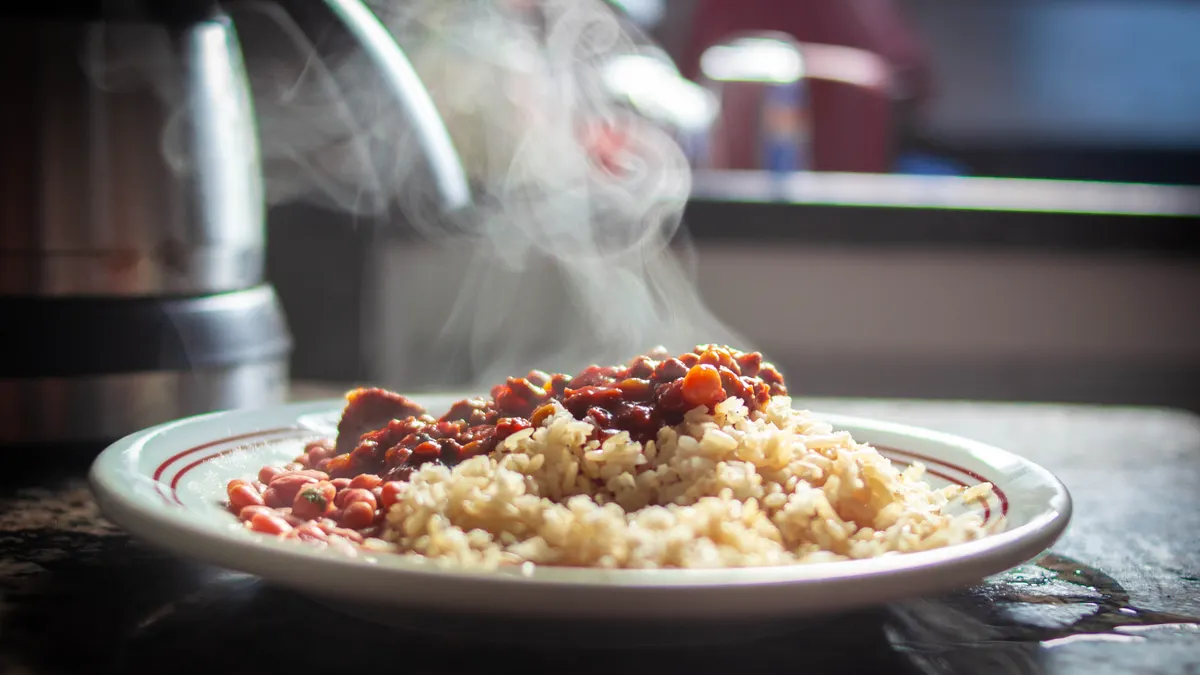
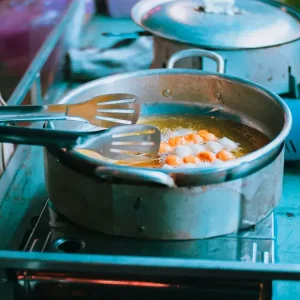
Stovetop reheating is a strong choice for soups, sauces, chili, and other moist foods because it gives you more control than the microwave. A small saucepan with a lid, low to medium heat, and a spoon for stirring is enough for most single servings.
Start with the smallest pan that fits the portion. If the pan is too large, the food spreads thin and can overheat at the edges before the center is ready. Add 1 to 2 tablespoons of water or broth if the food has thickened in the fridge. Keep the lid on part of the time so steam helps the center warm without drying the food out.
Stir every 30 to 60 seconds. That breaks up hot spots and helps you avoid the common problem of a scorched bottom with a cool middle. For soups and stews, aim for a steady hot simmer rather than a hard boil. A hard boil is rough on delicate textures and can make the meal less pleasant without giving you any safety advantage for a small portion.
Use the thermometer in the thickest part of the food once it looks hot throughout. If the dish is mixed, such as a bean stew or chicken-and-rice bowl, check more than one spot. A single reading near the edge can fool you.
The stovetop is not ideal if you are distracted, because a pan can go from warm to dry very quickly. It is also less convenient for tiny leftovers that would splatter or scorch in a shallow pan. In those cases, the microwave is easier.
Oven reheating: a dependable option for casseroles and baked dishes
Oven reheating is a dependable option for casseroles, roasted vegetables, and baked meals that you want heated more evenly than a microwave usually allows. A covered oven-safe dish at a moderate temperature is the simplest setup for this job.
Use a dish that matches the portion size. A deep, narrow dish warms more evenly than a wide, thin layer spread across a big tray. Cover the food with a lid or foil if the surface dries out fast. That keeps the top from hardening before the middle is warm.
The oven is slower than the microwave, so it works best when texture matters more than speed. Expect a reheating time measured in minutes rather than seconds. That slower pace can be useful for foods with several layers, like baked chicken with vegetables, because the heat has time to move inward without constant stirring.
Do not keep opening the oven to check every few minutes. Every door opening drops the temperature and stretches the process. Instead, check near the end with a thermometer in the center of the thickest area. If the top is hot but the middle is not, keep it covered and give it a little more time.
The downside is obvious: the oven uses more time and more energy than other methods, and it is awkward for a single bowl of soup. It is also not a good choice if you are in a hurry or if the food is already dry and would only lose more moisture.
Microwave reheating: fast for single portions, but use short bursts
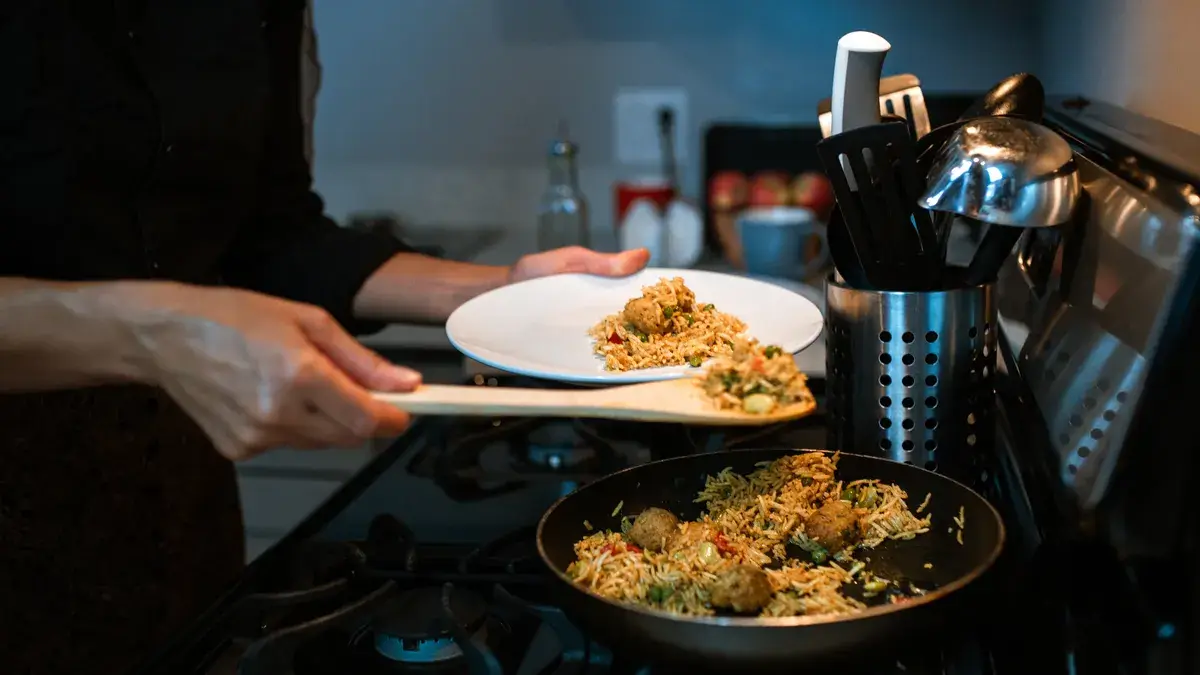
Microwave reheating is the fastest option for a single portion, and it works well when you want a meal ready in 1 to 3 minutes. It is also the easiest method to overdo, so short bursts matter more here than with any other method.
Use a microwave-safe container and spread the food out in an even layer if you can. A narrow mound heats unevenly. A ring shape with a hole in the center, when practical, can help thicker food warm more evenly, but a simple flat layer is enough for most meals. Cover the dish loosely to trap steam and reduce splatter.
Heat in 30-second or 45-second bursts, then stir, flip, or rotate the food if the texture allows it. Rice, pasta, vegetables, and saucy dishes benefit from this. Dense proteins like meat need a little more care because the outside can feel hot before the center is ready. Adding a teaspoon or two of water can keep rice and grains from drying into a hard block.
A food thermometer is useful here because microwaves create hot spots. Check the center after the food looks hot and steamy. If one corner is much hotter than the rest, let the dish stand for about 30 seconds before you check again. That short rest helps the heat even out.
The microwave is not the best choice for crisp foods, delicate herbs, or meals that you want to serve with a browned surface. It is also a poor fit for people who hate uneven texture. That trade-off is real: it is fast, but speed costs texture.
What are the mistakes that matter most for low histamine reheating?
The biggest mistakes are reheating too much food, reheating it more than once, and letting it sit warm after it is hot. Those habits cost you control, and control is the whole point of low histamine reheating.
A common mistake is warming the entire container because it seems efficient. It is not. Once the full batch is hot, the leftovers you do not eat often end up cooling and reheating again, which adds another cycle. The fix is simple: portion first, then heat only the amount you will finish.
Another mistake is using a container that is too wide or too shallow. The food spreads out, the edges overheat, and the center stays cool. A smaller bowl, pan, or dish usually works better for a 1-serving or 2-serving portion.
A third mistake is guessing instead of checking. Steam does not prove the center is hot. If you use a thermometer, you remove the guesswork. That matters most for mixed dishes, large pieces of meat, and anything dense in the middle.
The last mistake is treating reheated food like it can wait. It should not sit on the counter for 20 or 30 minutes after heating while you answer messages or set the table. Plate it and eat it. If you need a system that handles the earlier stages too, pair this page with the storage and leftovers guide that belongs elsewhere on the site.
How do you keep reheating safe without making dinner complicated?
You keep reheating safe by planning for a single serving, using the right tool, and keeping the reheating window short. That is the easiest way to make low histamine food fit into normal weeknight life.
Think in 3 decisions before dinner starts: what you will eat, how much of it you need, and which method suits the texture. If the meal is wet, use the stovetop. If it is baked, use the oven. If it is one bowl and you need it now, use the microwave. A food thermometer ties those choices together because it tells you when the center has actually heated through.
I would not recommend trying to make reheating do the job of storage planning. That is a separate problem. Reheating is the final step, not a rescue plan for food that has already been sitting too long. If a dish has been handled multiple times or left out beyond a safe window, the answer is not a longer reheat.
A plain kitchen setup is enough: a small saucepan, an oven-safe dish, a microwave-safe bowl, a lid or foil, and a thermometer. Those tools cost far less than a complicated system, and they do the job for most low histamine meals.
The trade-off is that this style of reheating is less convenient for big family batches. It favors one plate at a time, which is exactly why it works.
Key Takeaways
- Reheat only the portion you plan to eat, not the whole container.
- Use stovetop heat for soups and sauces, oven heat for baked dishes, and microwave heat for speed.
- A food thermometer is the cleanest way to tell when the center is actually hot.
- Short bursts, gentle heat, and immediate serving are the habits that matter most.
- This method is a poor fit for food that will be reheated again later.
What is the safest way to reheat low histamine food?
The safest way is to reheat one portion once, use gentle heat, and serve it right away. A stovetop works well for soups and sauces, an oven works well for casseroles, and a microwave is fine for a quick single bowl if you heat in short bursts and check the center with a food thermometer.
Can you reheat rice or meat for a low histamine diet?
Yes, you can reheat rice or meat for a low histamine diet if you keep the portion small, heat it thoroughly, and avoid repeated warming. Rice benefits from a spoonful of water and a covered container. Meat is better when it is heated evenly in the oven or in short microwave bursts, then checked in the thickest part.
How long should leftovers sit before reheating?
Leftovers should not sit out long before reheating, and they should go into the refrigerator promptly in a sealed container first. For the reheating step itself, do not leave the food on the counter once it is hot. Plate it and eat it soon after heating, rather than letting it linger warm.
Drafted with AI; not yet reviewed by a person.