Last updated: November 19, 2026
Key Takeaways
- A backup system keeps you from starting from zero at 6 p.m.
- A low histamine backup system should include foods you can eat plain, foods you can combine fast, and foods you can freeze without losing track.
- Set it up with a place, a trigger, and a short refill list.
- Keep enough backup meals for the nights you are most likely to lose, plus one extra.
Busy weeks are when a low histamine food backup system for busy weeks falls apart first. A low histamine food backup system gives you a freezer reserve, shelf-stable fallback, and a short shopping list so you still have safe meals when life gets messy. The steps below show how to build it without guessing, and they fit a low histamine freezer and storage organization setup too.
What a low histamine food backup system actually does
A backup system keeps you from starting from zero at 6 p.m. on a Wednesday. It uses freezer meals, shelf-stable pantry items, labels, and one refrigerator bin so the next meal is already halfway decided.
The point is not to stock everything. It is to set a clear trigger for when backup food gets used, and to keep enough on hand that one bad week does not turn into a scramble.
Here’s the catch:
- You need a reserve you can trust.
- You need a rule for when to use it.
- You need a list that can be rebuilt fast.
For a broader storage setup, the hub on low histamine freezer and storage organization fits this system well. This page is about the backup plan itself, not a giant pantry overhaul.
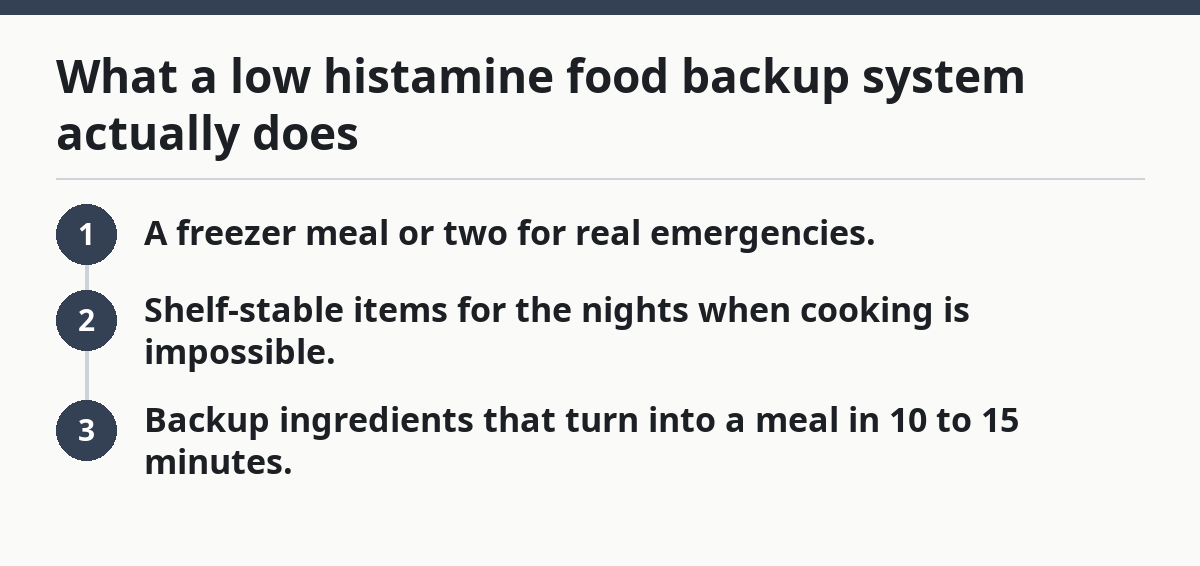
A useful backup system usually has three layers:
- A freezer meal or two for real emergencies.
- Shelf-stable items for the nights when cooking is impossible.
- Backup ingredients that turn into a meal in 10 to 15 minutes.
That mix matters because not every busy week looks the same. One week you have 20 minutes and a stove. Another week you have 0 energy and a microwave. The system should cover both.
What should go in a low histamine backup system?
A low histamine backup system should include foods you can eat plain, food you can combine fast, and food you can freeze without losing the plot. Not every item belongs in every tier.
Think in terms of emergency meals, backup ingredients, and fast assembly. A plain protein, a tolerated carb, and a safe fat or sauce are usually enough to make one meal feel finished.
Use the foods your own tolerance already allows, but keep the structure simple:
- 1 or 2 freezer meals you can reheat without prep
- 3 to 5 shelf-stable items that need little or no cooking
- 2 to 4 backup ingredients that can become dinner fast
- 1 refrigerator bin for the newest “use first” foods
A shelf-stable fallback can be as plain as rice cakes, a tolerated grain, or a canned food you already know works for you. A freezer reserve can be soups, cooked portions, or full meals packed in single servings.
A lot of generic articles get this wrong by turning it into a pantry shopping spree. That backfires. You end up with 20 items that sound safe but never become a meal on a tired night. Better to keep fewer than 10 core backups and use them often.
How do I set up the system step by step?
You set it up by assigning a place, a trigger, and a short refill list. Use a freezer, a refrigerator bin, and one paper or phone shopping list so the system stays visible.
Start with the container, not the food. When the storage spot is clear, the food is easier to count and harder to forget. That is the whole trick.
Set the place
Choose one freezer shelf or bin, one refrigerator bin, and one pantry shelf for backup food only. The result is a system you can scan in under 30 seconds.
Label the food
Write the food name and date on each container with a freezer-safe label or masking tape. The result is no guessing when a container gets pushed behind something older.
Portion the meals
Pack backup meals in single servings or the amount you actually eat in one sitting. The result is less waste and less “I’ll save the rest” drift.
Build the refill list
Write down the 5 to 10 items that keep the system alive, then keep that list on your phone. The result is a shopping list you can use in under 2 minutes.
Set the trigger
Decide that when you have only 2 backup meals left, or when the refrigerator bin is empty, you restock. The result is a clear threshold instead of a vague hope.
Use the oldest first
Move the oldest labeled meal to the front each time you add new food. The result is rotation without having to think hard about it.
A simple setup like this is often enough:
- 1 freezer shelf
- 1 refrigerator bin
- 1 pantry shelf
- 1 refill list
- 1 trigger point
The best part? This works even when your schedule changes every week. It is built for inconsistency.
How many backup meals do I need?
You need enough backup meals to cover the number of nights you are most likely to lose, plus one more. That usually means thinking in 2-night, 3-night, or 5-night blocks instead of trying to stock a month of food.
Do not build a system around your best week. Build it around the week when work runs long and grocery shopping slips. If you are alone, a small reserve may be enough. If you feed other people, the backup count has to reflect everyone’s portions.
A practical way to think about it:
- 2 meals covers a short disruption.
- 3 to 5 meals covers a busy stretch.
- More than that starts to look like a deeper pantry plan, not just a backup system.
The truth is, the number matters less than the trigger. If you wait until the freezer looks empty, you are already behind. Set a threshold before that point. A lot of people like “restock when I hit 2 meals left” because it is simple and easy to remember.
On the flip side, overstocking can make the system worse. Too many backup meals sit too long, get buried, and turn into mystery containers. That is how a useful plan turns into freezer clutter.
How do I choose freezer meals that actually help on busy weeks?
You choose freezer meals that reheat well, stay plain, and need no extra decision-making. A good backup meal should be usable in 10 to 20 minutes with minimal cleanup.
A freezer meal for this system is not a project dish. It should be something you can heat from cold, plate from frozen or thawed, and eat without building a whole side dish around it.
Look for meals that meet these conditions:
- Reheat evenly in a pan, oven, or microwave
- Freeze in single portions or family portions you use often
- Do not depend on last-minute ingredients
- Stay acceptable after thawing
If a meal needs three garnishes, a sauce you never make, and a perfect thaw, it is not a backup. It is a plan. Those are different things.
A useful test is simple: ask, “Could I eat this on a tired Thursday with one hand busy?” If the answer is no, it probably belongs in the batch-cook plan, not the backup system. That line keeps the system honest.
What shelf-stable fallback should sit in the pantry?
Your shelf-stable fallback should be the food that still works when the freezer is empty and the fridge is too full to think straight. Keep items that need little prep, not items that only look prepared.
A pantry fallback is the meal you make when there is no emotional energy left. That means quick-cook grains, tolerated crackers or rice cakes, and other basics that can be assembled with a protein or vegetable you already trust.
A good pantry fallback usually has these traits:
- It can be eaten plain if needed.
- It can turn into a meal with one or two additions.
- It does not need a long ingredient list.
- It survives a busy week without much attention.
Put the shelf-stable food in one visible spot, not spread across three cabinets. When you have to hunt for it, you are less likely to use it. A single pantry shelf works better than a scattered stash.
The best pantry backups are boring in the right way. They are not exciting. They are the food that keeps dinner from failing when the fridge bin is empty and the freezer meal is still frozen solid.
How do I keep the system from breaking down?
You keep it alive by rebuilding it during the same 15-minute window every week. That short reset is what stops the backup system from becoming dead weight in the freezer.
A broken system usually fails in the same three places: no labels, no trigger, and no refill habit. Once one of those goes, the rest slips too. The fix is not a bigger plan. It is a smaller repeatable one.
Use this weekly reset:
- Check the freezer reserve.
- Move one older meal forward.
- Note what got used.
- Add the missing items to the shopping list.
- Put the refrigerator bin back in order.
If you do that once a week, the system stays visible. If you wait until you are out of food, you are back in panic mode.
A good backup system also has a “do not buy” rule. If an item needs special prep, a new container, or a fresh recipe search, it does not count as backup food. That rule keeps the reserve useful instead of crowded.
For food-safety guidance on frozen storage and leftovers, the USDA Food Safety and Inspection Service has practical storage advice, and the Academy of Nutrition and Dietetics has plain-language meal planning resources. Both are useful references if you want a second check on storage habits.
What mistakes cost you the most?
The biggest mistake is treating backup food like a wish list instead of a working system; if you are unsure what is safe for you, consult a qualified clinician or dietitian, and the USDA Food Safety and Inspection Service plus the Academy of Nutrition and Dietetics offer helpful storage and planning guidance.
Here are the common failures and what they cost:
- No labels: you waste food because you cannot tell what is inside.
- Too many options: you freeze food, but you still cannot choose dinner.
- No threshold: you find out you are out of backup after the bad week starts.
- No rotation: food sits too long and gets buried.
The fix is boring but effective. Keep the list short, keep the labels clear, and keep the trigger visible. A system with 6 reliable items beats a pantry full of maybe-food every time.
This is also where a lot of people overbuild. They want a perfect reserve for every possible day. That turns into clutter. A backup system is supposed to reduce decisions, not add them.
FAQ
What should I keep as backup low histamine food?
Keep a small mix of freezer meals, shelf-stable pantry items, and backup ingredients you already tolerate. The best backup food is plain, easy to reheat, and simple enough to use when you are tired. A refrigerator bin for the most recent items makes the system easier to use.
How many backup meals do I need?
Start with enough meals to cover a short stretch, then add one extra. For many people, 2 to 5 backup meals is enough for busy weeks, as long as they are easy to reheat and clearly labeled. The right number is the one that matches your real week, not your ideal one.
How do I avoid running out of safe food?
Set a refill trigger before the reserve is empty. A good rule is to restock when you hit your last 2 backup meals or when the refrigerator bin is empty. Keep the shopping list on your phone so you can replace what you used without rebuilding the plan from scratch.
What’s the easiest place to start?
Start with one freezer shelf, one fridge bin, and one short refill list. That setup is enough to keep backup food visible and usable. Once that works, add more only if your week really needs it.
Drafted with AI; not yet reviewed by a person.