Last updated: November 19, 2026
Quick Answer: Choose a plain protein, a plain starch, and one simple vegetable, and keep the order to 2 or 3 changes if you can. How to Choose Low Histamine Ingredients When Eating Out or Ordering Takeout is easiest when you start with the simplest dish on the menu and remove the usual troublemakers: aged, fermented, cured, slow-cooked, and heavily sauced foods. At a restaurant or with takeout, a practical approach is usually a plain protein, a freshly cooked starch, and one or two vegetables, then a short list of changes you can say out loud.
What low histamine means in a restaurant order
Low histamine ingredients at restaurants are the freshest, least processed foods that have had the fewest chances to age, ferment, or sit under heat lamps. That usually means plain grilled meat or fish cooked to order, plain rice or potatoes, and simple vegetables without marinades or sauces.
A restaurant menu hides histamine risk in the details. “Chicken” can mean grilled chicken with lemon butter, a soy-based glaze, or a spice rub made earlier in the day. “Vegetables” can mean a steamed mix, but it can also mean pickled onions, balsamic drizzle, or a pre-made dressing. The ingredient list matters more than the dish name.
Because histamine tends to rise in foods that are aged, cured, fermented, smoked, pickled, or left sitting after cooking, a deli sandwich, sushi roll, or sauce-heavy pasta usually causes more trouble than a plain burger patty with rice and broccoli. It is also why takeout is often harder than dine-in: even a 15- to 30-minute wait can turn a freshly made meal into a lukewarm one that has sat in a closed container. A review in Nutrients and the Cleveland Clinic both advise people with histamine intolerance to work with a qualified clinician because triggers and tolerance vary.
A useful rule is to build around foods that are easy to verify, while still checking your own tolerance with a clinician if you need stricter guidance:
- plain rice, usually white rice
- potatoes, baked or boiled
- simple vegetables such as carrots, zucchini, green beans, or lettuce
- freshly cooked chicken, turkey, or beef
- eggs, if you tolerate them and the kitchen can cook them plainly
Foods that often need extra caution include tomatoes, spinach, avocado, eggplant, vinegar-heavy dressings, soy sauce, miso, aged cheese, cured meats, and fish that is not clearly cooked fresh. Dairy can be a problem for some people, especially aged cheese; a plain buttered item may still be easier than a creamy sauce, but the butter itself is not ideal for everyone.
For a broader ingredient framework beyond restaurants, the hub page on [histaminefriendlyfoods ingredient selection] is the better place to start; this page stays focused on ordering.
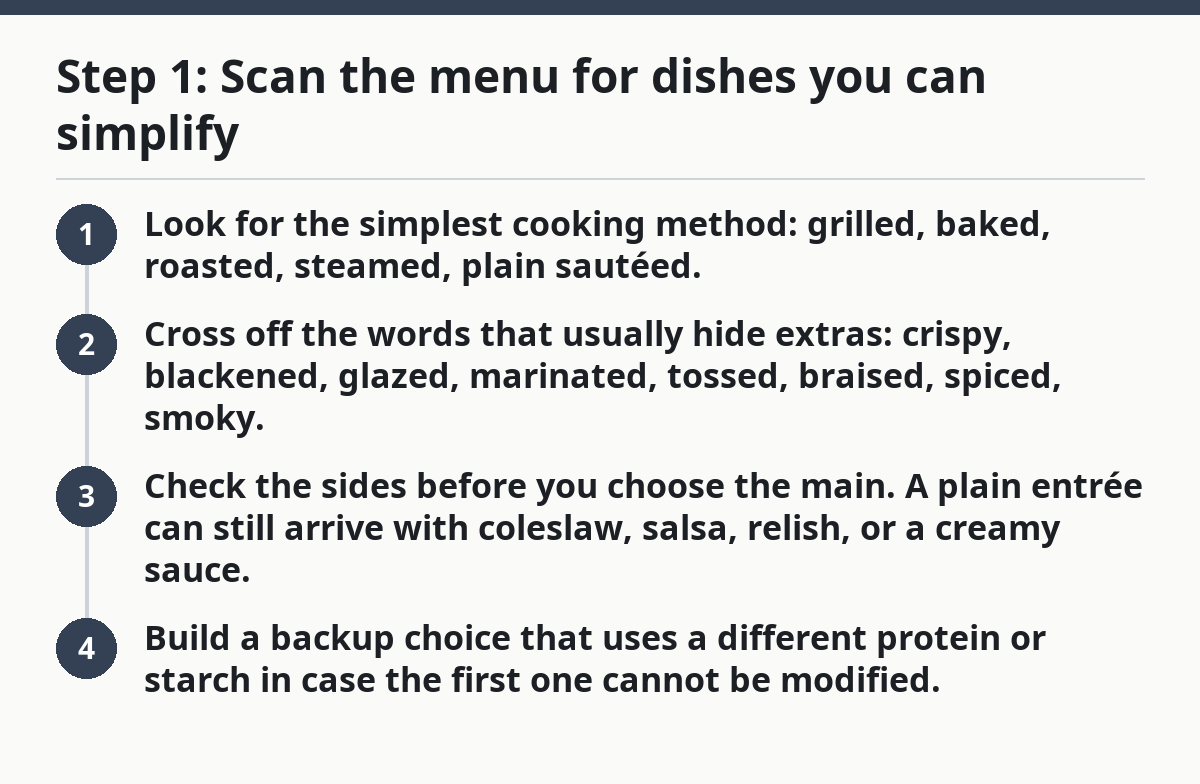
Step 1: Scan the menu for dishes you can simplify

Start by choosing the most stripped-down main dish on a menu with at least 3 ingredients you recognize and can name. When that works, you should be looking at a bowl, plate, or entrée that already has a plain protein, a starch, and a vegetable component.
Read menus in this order:
- Look for the simplest cooking method: grilled, baked, roasted, steamed, plain sautéed.
- Cross off the words that usually hide extras: crispy, blackened, glazed, marinated, tossed, braised, spiced, smoky.
- Check the sides before you choose the main. A plain entrée can still arrive with coleslaw, salsa, relish, or a creamy sauce.
- Build a backup choice that uses a different protein or starch in case the first one cannot be modified.
A plain grilled chicken breast, baked potato, and side of steamed carrots is a cleaner order than a “healthy bowl” with quinoa, pickled onions, and tahini dressing, even if both sound light. The bowl may still be fine for some people, but it has more moving parts and more hidden ingredients.
The number to keep in mind is 2 or 3 modifications. If a dish needs more than that, it usually stops being a simple restaurant order and starts becoming a special request the kitchen may not execute well. At that point, it is better to switch to a more basic menu item than to keep repairing the original one.
This is also where you decide what not to order. Skip dishes that depend on a sauce for their identity: stir-fries, pasta with red sauce, curry, ramen, barbecue, most tacos, and anything labeled “house special” without ingredient details. If the menu uses broad labels like “chef’s blend” or “signature marinade,” that is a signal to keep looking.
What should I ask a restaurant about ingredients?
Ask one direct question about the ingredient list, one about sauces or marinades, and one about how the food is prepared. That gives you the facts you need without sounding accusatory or overwhelming the server.
A short script works best:
- “Can you tell me which ingredients are in this dish?”
- “Is the chicken or fish marinated, or cooked plain?”
- “Can I get it without sauce, dressing, or garnish?”
- “Is the kitchen able to make it fresh to order?”
If you need a replacement, name the substitute instead of only saying no. “No tomato sauce” is clearer when followed by “with olive oil” or “with steamed vegetables instead.” If breaded food is the issue, ask for grilled or roasted. If a dish comes with a side you do not tolerate, ask for rice, potatoes, or plain vegetables if the restaurant offers them.
A good answer sounds specific, not vague. “It comes with garlic herb butter” tells you there is a problem. “It’s seasoned” does not. “The salmon is rubbed with a spice mix and finished with lemon” is more useful than “it’s pretty simple.” If the server has to check with the kitchen, that is normal; a confident yes or no after checking is better than guessing.
One trade-off is social friction. These questions take 30 seconds to ask, and not every place will be patient if the menu is very casual or very busy. That is the cost of eating out with a tighter ingredient rule. If the staff seems rushed or unsure, choose the plainest item on the menu or order elsewhere.
Which sauces and marinades are the biggest problem?
Sauces and marinades are usually the first place histamine risk hides because they often contain vinegar, soy sauce, citrus, wine, fish sauce, tomato, aged cheese, or chili-heavy seasoning. If the dish depends on the sauce to taste complete, it is usually not the right order.
A reliable way to think about it is by category:
- Cream sauces: can be risky because they may include aged cheese or long-held dairy. A plain butter or cream item may still work for some people, but it is not a safe default.
- Tomato-based sauces: often a poor fit because tomato is a common trigger food and sauces are usually simmered for a long time.
- Soy-based sauces: soy sauce, teriyaki, hoisin, and miso often rely on fermentation.
- Vinegar-based sauces: vinaigrettes, barbecue sauce, and pickled garnishes often bring in vinegar or fermented ingredients.
- Marinades: these are a problem because the protein has absorbed the sauce before it reaches the pan.
The cleanest request is usually “plain, no marinade, sauce on the side” or “dry seasoning only.” Even then, a side sauce can still be made with ingredients you want to avoid, so it helps to ask what is in the sauce before you accept it.
A useful substitution is fat plus salt instead of a complex sauce. Olive oil, butter if tolerated, or a plain pan sauce made from the cooking juices may be easier than a bottled dressing. For vegetables, ask for steam or roast without glaze. For starches, plain rice or a baked potato is usually easier than fries, because fries may be cooked in shared oil and seasoned after frying.
The drawback is taste. Removing the sauce can make a dish bland, and some restaurants use sauce to hide a plain base that is not very fresh. Even so, the simplest order may also be the least exciting one.
How to handle fresh preparation requests without making the order impossible
Requesting fresh preparation matters because a food that sits under a heat lamp for 20 minutes is a different risk than one cooked directly for you. Ask for the dish to be made fresh, but keep the request short and specific so the kitchen can actually comply.
Use requests like these:
- “Please cook it fresh, not from a prepped tray.”
- “Can you leave the marinade off and season it simply when it goes on the grill?”
- “No garnish, no sauce, and no dressing.”
- “Can the vegetables be steamed or roasted plainly?”
- “Please pack the sauce separately if it must come with the dish.”
The result you want is a plate with visible simplicity: plain protein, plain starch, plain vegetables. If the restaurant can state exactly how the dish is cooked, that is a better sign than a vague promise that it is “light” or “clean.” A dish with 4 visible ingredients is usually easier to judge than one with 10.
For takeout, freshness matters even more. Ask for the sauce to be packed separately, then reheat or plate the food as soon as you get home. A container of hot, closed food is not the same as a plated meal eaten right away, and leftovers are usually a poor choice for a stricter low histamine approach. If you know a dish will sit for 30 minutes or more before you eat, choose one with the fewest liquid ingredients and the fewest toppings.
This is where some restaurant styles are better than others. A build-your-own bowl place, a simple grill, or a diner with plain eggs, potatoes, and toast is easier to handle than a tapas bar or a noodle shop. That does not make the latter impossible, but it does make the order more fragile.
What are the safest takeout choices when you need low histamine ingredients?
The safest takeout choices are the simplest dishes with the fewest sauces, garnishes, and leftovers in the container. A plain protein with a starch and a cooked vegetable is usually safer than mixed dishes, bowls, or anything layered with dressings.
Good candidates often include:
- grilled chicken or turkey with rice
- plain burger patty with a plain bun or potatoes, if the meat is fresh and not seasoned heavily
- omelet or scrambled eggs with toast, if eggs work for you
- roasted chicken with plain vegetables
- baked potato with salt and olive oil
- simple stir-fry only if it can be made without soy sauce, vinegar, chili paste, or pre-made marinade
The biggest takeout mistake is assuming a “safe-looking” dish is safe because it sounds healthy. A salad can be one of the worst options if it includes tomatoes, cheese, pickles, nuts, citrus, and dressing. A grain bowl can hide sesame dressing, fermented condiments, or pickled toppings. Even soup can be risky because broth often sits, concentrates, and contains multiple ingredients you cannot separate.
Use a 2-question test before you place the order:
- Can this dish be made with no sauce or marinade?
- Can it be cooked fresh and packed separately from anything wet or acidic?
If the answer to either is no, move to a different dish. That is not being picky; it is protecting the whole order.
There is one honest limitation here: takeout is often less reliable than dining in. Heat, time, and packaging all work against the ingredient choices you made. If your pattern is highly sensitive, the best low histamine restaurant order may still be a small, very plain meal rather than a full dinner.
Common ordering mistakes that turn a safe dish into a risky one
The most common mistake is trusting the menu name instead of the ingredient list. “Roasted chicken” sounds plain, but it can arrive with lemon, garlic, spice rub, or a pre-made glaze. That mistake costs you clarity, and the fix is to ask about the cooking method before you order.
A second mistake is forgetting about the sides. A safe-looking entrée can come with salsa, slaw, pickled onions, or a sauce hidden under the protein. The fix is to name the side substitutions at the time you order, not after the food arrives.
A third mistake is choosing “fresh fish” without asking how fresh it is. Fish is one of the easiest foods to make sound safe and one of the easiest to complicate. If the restaurant cannot tell you it is cooked to order and simply seasoned, skip it.
A fourth mistake is assuming gluten-free or dairy-free means low histamine. Those labels help some diners, but they do not remove vinegar, tomatoes, soy, fermented condiments, or aged foods. A gluten-free teriyaki dish is still a teriyaki dish.
A fifth mistake is asking for too many changes at once. If you request a protein substitution, sauce removal, side substitution, and special cooking method all at once, the order can become muddled. It is usually better to pick one base dish that is already close to what you need, then make 1 to 3 changes.
Can I trust restaurant ingredients if the staff sounds unsure?
No, you should treat uncertainty as a reason to simplify the order or choose a different place. If staff cannot say whether a sauce contains vinegar, soy, or tomato, the ingredient is not reliably controlled enough for a stricter low histamine order.
A restaurant does not need to be perfect to be usable. It does need to answer plainly about the item you are ordering. If the answer stays vague after a quick check, the dish may still be fine for someone else, but it is not a dependable choice for this goal.
The safest default is still the same: one plainly cooked protein, one plain starch, and one simple vegetable, with sauces and marinades removed or separated. If you can keep the order that simple, you make the kitchen’s job easier and your own decision clearer.
Key takeaways
- The easiest low histamine restaurant orders are plain, freshly cooked, and easy to describe in a single sentence.
- Menu words like glazed, marinated, smoky, braised, and tossed usually mean hidden ingredients.
- Sauces, marinades, and garnishes cause more problems than the main protein itself.
- Takeout is less forgiving than dine-in, so choose dishes that stay simple even after transport.
- If the kitchen cannot tell you what is in the dish, the dish is too uncertain.
What should I ask a restaurant about ingredients?
Ask about the sauce, the marinade, and the cooking method before you order.
Drafted with AI; not yet reviewed by a person.