Last updated: November 19, 2026
Key Takeaways
- Start with a short ingredient list that is plain, fresh, and easy to read.
- Rice flour and oat flour are the easiest everyday flours to begin with.
- Baking soda and baking powder are the main leaveners, and they are not interchangeable.
- Yes, but only if the ingredient list fits your tolerance level.
Simple ingredients win here. Low histamine baking ingredients are usually just rice flour or oat flour, baking soda or a carefully chosen baking powder, plus sweeteners like maple syrup. No need for a mystery blend.
What to use first when you want low histamine baking ingredients
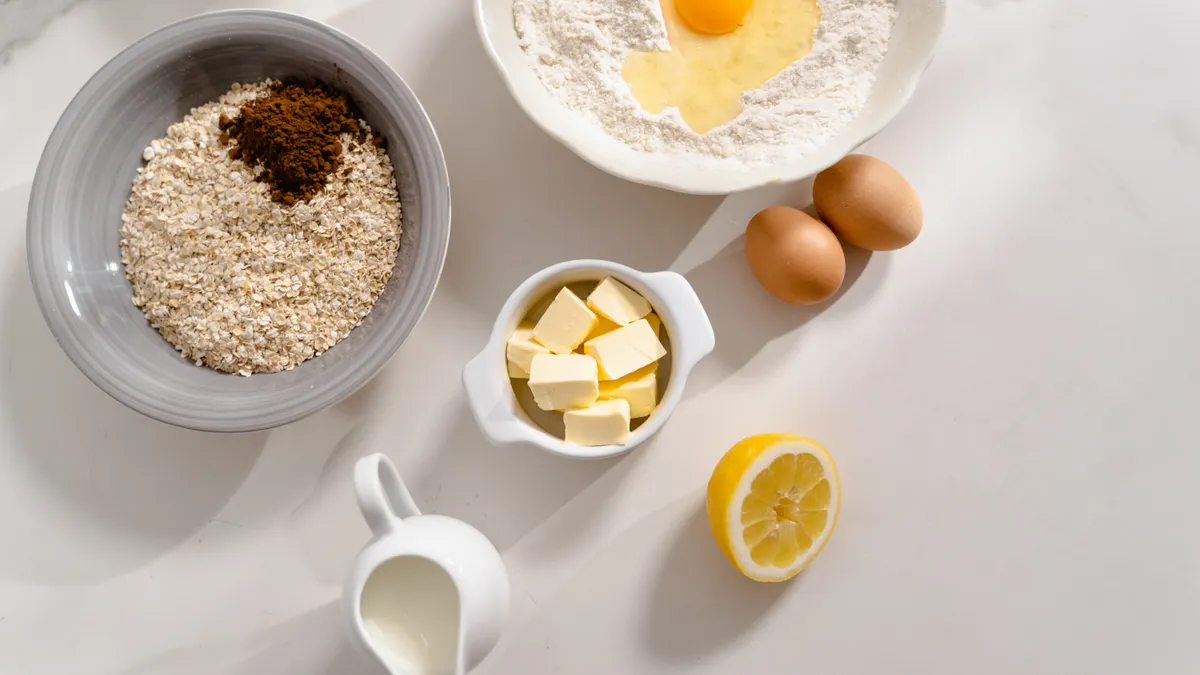
Start with a short list of baking ingredients that stay plain, fresh, and easy to read on the label. For most low histamine baking, that means rice flour, oat flour, tapioca or arrowroot starch, baking soda, cream of tartar if tolerated, maple syrup, and a binder such as ground flaxseed or psyllium husk.
The point is not to hunt down a magical “histamine-free” flour. It is to steer clear of ingredients that often cause trouble because of fermentation, long storage, or add-ins such as chocolate, vinegar, or flavorings. That is why plain white rice flour often behaves better than a seasoned gluten-free blend packed with gums, dried milk, or preservatives.
Keep the list short. Seriously. A basic muffin batter can work with 3 to 6 ingredients, not 12. The shorter the lineup, the easier it is to spot what your body handles and what it rejects.
This page is about baking ingredients, not finished recipe ideas or broader pantry swaps. Want the bigger system behind these choices? The hub on low histamine ingredient selection and swaps is the next stop after this.
One honest limitation matters here: “low histamine” is not the same as “safe for every sensitive eater.” Eggs, dairy, gluten, and even oats can be fine for some people and a problem for others. If you react to multiple foods, a food-allergy clinician or registered dietitian can help sort out whether the issue is histamine, allergy, intolerance, or something else.
Which flours are easiest to bake with on a low histamine diet?
Rice flour and oat flour are the easiest everyday flours to start with because they are mild, neutral, and widely available. White rice flour is especially useful in cakes, quick breads, and pancakes since it brings a light flavor and none of the strong taste that some nut or seed flours carry.
Rice flour comes in a few forms. Fine white rice flour gives the smoothest crumb. Brown rice flour brings more flavor and a little more grit, so it suits heartier bakes better than delicate sponge cakes. Both show up often in gluten-free baking, but neither has gluten on its own, so they need help from starch, eggs, or a binder.
Oat flour tends to make baked goods softer and less dry. It works well for cookies, muffins, and quick breads, yet it is not always the first pick if you want maximum predictability. Oats are often tolerated by sensitive eaters, but they can also be cross-contaminated with gluten unless the package says certified gluten-free. If gluten is an issue, that label matters.
Two other flours deserve a place in the rotation: sorghum flour and buckwheat flour. Sorghum behaves well in blends and gives structure. Buckwheat has a stronger, earthier taste, so it can overpower delicate vanilla-style bakes. Smell or flavor sensitivity? Then buckwheat may be the wrong fit.
Nut flours are the tricky category. Almond flour is popular in low-carb baking, but nuts are common allergens and can be too heavy for some people with histamine issues. Coconut flour is not a simple swap either; it drinks up a lot of liquid and can leave a batter dry and dense.
Low histamine baking ingredients for lift: baking powder, baking soda, and what they do
Baking soda and baking powder are the main leaveners for low histamine baking, and they are not interchangeable. Baking soda needs an acid to work. Baking powder already contains both the base and the acid, so it can rise on its own once moistened and heated.
Baking soda works best when the batter already includes an acidic ingredient, such as lemon juice or buttermilk, but those ingredients are often not ideal for low histamine eating. That creates a familiar problem: soda on its own can leave a soapy taste if there is not enough acid to balance it. In plain-ingredient baking, that off-note shows up fast.
Baking powder is usually the easier choice, though it still deserves a close look. Many baking powders are double-acting and contain sodium bicarbonate plus acid salts, often with starch. That is fine in principle, but some people prefer simpler formulas with fewer additives. A label that lists sodium bicarbonate, a starch such as cornstarch, and an acid salt is normal. Need to avoid corn? Check the starch source before you buy.
When a recipe depends on eggs for rise, the leavener load can stay modest. Without eggs, the batter usually needs more careful balancing. A quick bread with 1 teaspoon baking powder plus 1/4 teaspoon baking soda for about 2 cups, or roughly 240 g, of flour mix is a common starting point, but the exact amount depends on the rest of the formula.
A simple method helps when you are building a recipe from scratch:
- Choose a base flour blend of about 2 cups, or 240 g, of flour plus starch.
- Add 1 teaspoon baking powder, then decide whether you need 1/4 teaspoon baking soda based on whether the batter has any acid.
- Mix dry ingredients first so the leavener is distributed evenly.
- Add liquid and stir only until combined; overmixing can make rice- or oat-based batters heavy.
- Bake right after mixing at the recipe temperature, usually around 175°C to 190°C, or 350°F to 375°F, so the leavening starts before the batter sits too long.
Who is this not for? If you need a very tall, airy crumb like a classic layer cake, low histamine baking with gluten-free flours can be frustrating. You may get a tender result, but not the same structure as wheat-based baking without a much more engineered formula.
Can you trust baking powder on a low histamine diet?
Yes, but only if the ingredient list is simple enough for your tolerance level. Baking powder is often the most practical low histamine leavener because it does not depend on fermented ingredients, yet it still varies by brand.
Watch the starch carrier and any added acids. Some formulas use cornstarch; others may use rice starch or another starch. If corn bothers you, that matters. If you are very sensitive to additives, a shorter label beats a long one with flavorings or anti-caking extras. The label can go sideways fast.
Cream of tartar can also appear in low histamine baking because it helps activate baking soda. It is not a flavoring in the usual sense, but it is still an added acid, and not everyone tolerates it. If a recipe uses 1/2 teaspoon cream of tartar with 1/4 teaspoon baking soda, that is a standard baking relationship, not a histamine rule. Your own tolerance decides whether it belongs in your kitchen.
Yeast is different. It is a living leavener and can be a poor fit for people trying to keep histamine load low, especially in slow-fermented doughs. That does not mean every yeast bread is automatically a problem, but this page is about ingredients that are easier to control. Baking soda and baking powder give you that control in a 30 to 60 minute bake, not a long rise.
The trade-off is texture. Chemical leaveners make quick breads, cakes, muffins, and cookies easier than artisan loaves. Want a sandwich bread with a chewy crust and open crumb? A soda-and-powder formula will probably disappoint. For most home bakers on a low histamine diet, that is still a fair exchange.
For ingredient choices that fit into a bigger shopping plan, the professional guidance from the Academy of Nutrition and Dietetics and similar dietetics organizations can be useful for general food-allergy and elimination-diet structure, though the exact baking decisions still come down to personal tolerance.
Sweeteners that are usually easiest to start with
Maple syrup is one of the easiest sweeteners to use for low histamine baking ingredients because it is simple, liquid, and easy to measure. It mixes well into muffins, loaf cakes, and pancakes, and it usually does not bring the fermentation concerns that come with some processed syrups or brown sugar blends.
Honey is a common question, but it is not automatically the better choice. Some people tolerate it, some do not. Molasses can also be too strong in flavor for delicate baking, and dark sweeteners can make it harder to tell whether another ingredient is causing the problem. White sugar is often tolerated by many people, but the issue is less about sweetness and more about the full recipe around it.
Use one sweetener at a time if you want the cleanest starting point. A recipe with 1/4 cup to 1/2 cup maple syrup in a small batch is easier to assess than a recipe that combines maple syrup, honey, and brown sugar. That approach also helps you adjust liquid, since maple syrup adds moisture while granulated sugar does not.
A common mistake is swapping liquid sweetener for sugar cup-for-cup without changing the dry ingredients. Then the batter turns too wet and dense. If you use 1/2 cup maple syrup in place of 1/2 cup granulated sugar, you often need to reduce another liquid slightly or add a little more flour or starch. The exact adjustment depends on the recipe, but the problem is the same: liquid sweetener changes the batter balance.
Avoid flavored syrups, especially those with vanilla extracts, caramel colors, or natural flavors, if you are trying to isolate triggers. One plain ingredient is easier to evaluate than three hidden extras.
Binding ingredients that hold the crumb together
Eggs are the simplest binder in low histamine baking, but they are not universal. Many readers tolerate them, and many do not, so eggs belong in the “use if safe for you” category. One large egg usually adds both structure and moisture, which is why it is so common in quick breads and muffins.
If eggs are not an option, ground flaxseed and psyllium husk are the most useful binders to know. Ground flaxseed can be mixed with water to form a gel, often used in a ratio of about 1 tablespoon flaxseed meal to 3 tablespoons water. Let it sit for about 5 to 10 minutes until thickened. Psyllium husk works differently: it absorbs a large amount of water and gives dough a more bread-like hold, especially in gluten-free recipes.
Tapioca starch and arrowroot starch are not binders in the same way a gel is, but they improve texture and reduce crumbliness. They are often blended with rice flour to make a batter less sandy. A mix of 1 to 2 tablespoons starch per cup, or roughly 120 g, of flour blend is a common starting point in quick breads.
Too much binder makes baked goods gummy. That is especially true with psyllium husk. A loaf with too much psyllium can turn rubbery instead of tender. If you are replacing gluten, start low and increase only if the loaf falls apart.
This is also where a lot of generic advice goes wrong. Many articles say “use a binder” without saying what problem it solves. Eggs help with lift and structure, flax helps with moisture and cohesion, psyllium gives bread-like strength, and starch helps with tenderness. Those are not the same job.
A simple low histamine formula for everyday baking
A workable low histamine baking formula starts with one flour, one starch, one leavener, one sweetener, and one binder. That structure gives you a repeatable base instead of a random pile of substitutes.
Use this as a building block for muffins, small loaf cakes, or soft cookies:
- Combine 1 1/2 cups, or about 180 g, rice flour with 1/2 cup, or about 60 g, tapioca or arrowroot starch.
- Add 1 teaspoon baking powder and 1/4 teaspoon baking soda if the recipe includes an acidic ingredient; otherwise leave out the soda.
- Sweeten with 1/4 cup to 1/3 cup maple syrup, depending on how sweet you want the finished bake.
- Add 1 egg, or if eggs are not an option, use 1 tablespoon ground flaxseed mixed with 3 tablespoons water and rested for 5 to 10 minutes.
- Stir in 1 1/4 to 1 1/2 cups, or 300 to 360 ml, of liquid or moist ingredients, then bake in a preheated oven at 180°C, or 350°F, until the center is set.
That formula is not a finished recipe. It is a starting framework that keeps the ingredient list short and the function of each ingredient clear. You can swap oat flour for part of the rice flour, or use sorghum for a little more body, but make only one change at a time if you are still figuring out your triggers.
The biggest mistake in low histamine baking is chasing “perfect” substitutes all at once. A recipe with rice flour, oat flour, three starches, two sweeteners, and a long list of gums is harder to digest and harder to troubleshoot. Simple wins.
FAQ
What baking ingredients are usually low histamine?
Plain flours such as rice flour and oat flour are common starting points, along with simple starches, baking soda, baking powder, and a mild sweetener like maple syrup. Tolerance still varies, especially with oats, eggs, dairy, and nut-based flours, so a short ingredient list is usually the safest way to start.
Can I bake without yeast on a low histamine diet?
Yes, and that is often the easier route. Baking soda and baking powder can raise quick breads, muffins, cakes, and cookies in 20 to 45 minutes, which avoids the long fermentation that makes yeast-based doughs harder for many sensitive eaters.
Which sweeteners are easiest for sensitive eaters?
Maple syrup is often the easiest place to begin because it is simple, liquid, and easy to measure.
Drafted with AI; not yet reviewed by a person.