Last updated: November 19, 2026
Key Takeaways
- Histamine-friendly eating is a way to reduce flare risk, not to remove histamine entirely from life.
- A low-histamine label helps only when it improves meal choices, not when it increases anxiety.
- The most workable foods are often simple, fresh, and easy to repeat.
- Common triggers are aged, fermented, cured, smoked, or poorly stored foods, especially in sensitive people.
Histamine-Friendly Eating Basics — The Complete Guide starts with one practical goal: reduce the histamine load of meals enough to calm symptoms, without turning every day into a scavenger hunt. For many people, that means choosing freshly cooked foods, avoiding long-stored leftovers, and watching the handful of ingredients most likely to trigger problems. This guide is for the person who needs a clear place to start, not a perfect forever diet, and it uses Histamine-Friendly Eating Basics — The Complete Guide as a practical framework.
What histamine-friendly eating actually means
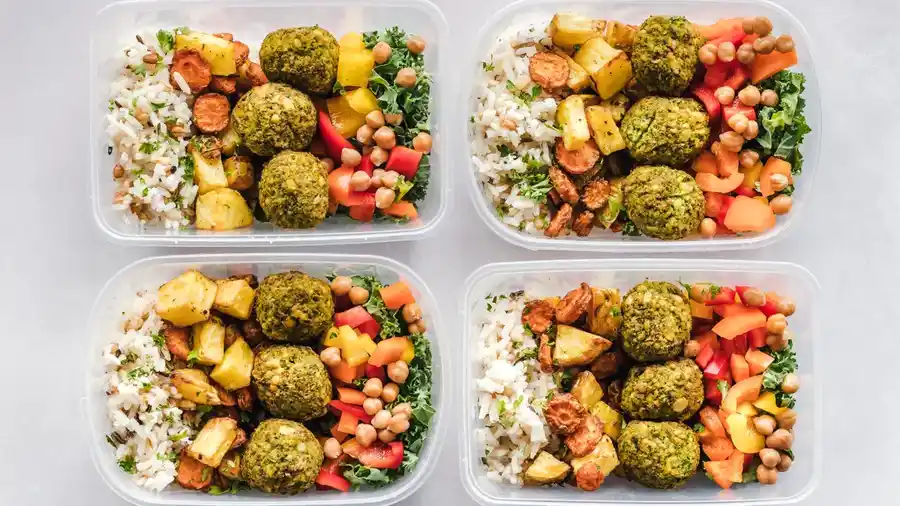
Histamine-friendly eating means eating in a way that lowers the chance of a histamine flare, not eliminating histamine from life. That distinction matters because histamine is a normal compound in the body and in food; the problem is the mismatch between intake, breakdown, and your own sensitivity. The clinical picture is often discussed under histamine intolerance, though the diagnosis is not as clean-cut as celiac disease or a food allergy.
The most useful starting point is usually simple: fresh, minimally processed foods are often easier to tolerate than aged, fermented, cured, smoked, or heavily leftover foods, but individual tolerance varies and guidance from a clinician or dietitian can help. A fish fillet cooked the same day is a different proposition from canned tuna, and a bowl of fresh rice is different from rice that sat in the refrigerator for several days. Time, temperature, and storage matter as much as the ingredient itself. For an overview, the American Academy of Allergy, Asthma & Immunology notes that individual responses vary, and Cleveland Clinic also emphasizes that symptoms and triggers are personal.
A generic article often makes the mistake of presenting a giant forbidden-food list and calling it a plan. That approach fails because tolerance is highly individual. One person may react to tomatoes but handle strawberries; another may tolerate yogurt but not cured meat, so a clinician or dietitian can help interpret patterns. The better rule is to build around a short list of reliable foods, then test carefully. As an external reference point, the Academy of Nutrition and Dietetics’ patient education materials on elimination diets stress structured testing rather than broad, permanent restriction.
For a clinical overview, the American Academy of Allergy, Asthma & Immunology’s patient information on histamine intolerance is a useful starting point, and the Cleveland Clinic’s discussion of histamine intolerance also gives a plain-language overview of symptoms and triggers.
Why the “low-histamine diet” label is only half the story
A low-histamine label is useful only if it leads to better meal choices, not just more anxiety. The real issue is not a single food group; it is the combination of high-histamine foods, histamine-liberating foods for some people, and foods that become riskier as they age in storage.
That is why this topic gets oversimplified. People search for “safe foods,” but the safer question is, “What foods are fresh, simple, and easy to keep consistent?” Fresh chicken breast, plain oats, pears, carrots, rice, zucchini, and olive oil are common starting points because they are easy to prepare without aging, fermenting, or processing. By contrast, foods like aged cheese, salami, sauerkraut, wine, vinegar-heavy sauces, and canned fish are common troublemakers because they either contain more histamine or tend to trigger symptoms in sensitive people. NIH resources on food intolerance and allergy can help distinguish broad sensitivity from true allergy, and that distinction matters before you restrict too much.
This is not a purity contest. If your symptoms are mild, you may not need to avoid every food on every list. If your symptoms are more severe, the first job is to stop guessing. A short elimination phase, usually around 2 to 4 weeks in many diet protocols, can help identify patterns when done with a clinician or dietitian. Because restriction can backfire, especially if food choices shrink too far, professional guidance is wise if you are also dealing with weight loss, anxiety around eating, pregnancy, eating disorders, or multiple medical conditions.
The important trade-off: a stricter plan can give clearer symptom relief, but it also raises the risk of under-eating fiber, calcium, iron, and protein if it is handled carelessly. A good histamine-friendly pattern is narrow enough to be predictable and broad enough to be nutritionally adequate.
The foods that usually work best
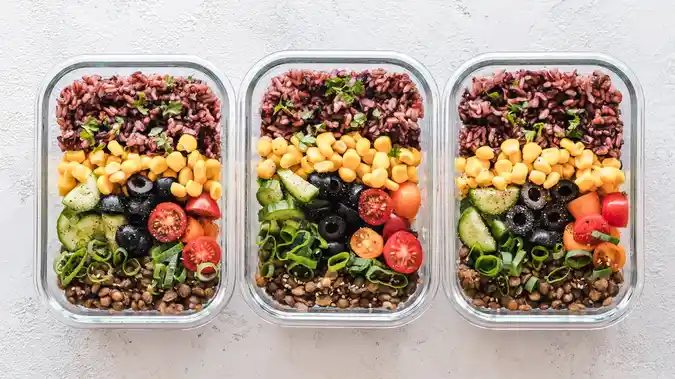
The most workable foods are often simple, fresh, and easy to repeat. That usually means a base of fresh proteins, plain starches, and low-reactivity produce. This section matters because the first few meals determine whether the plan feels workable or impossible.
A practical starting basket looks like this:
- Fresh chicken, turkey, or eggs if tolerated
- Freshly cooked rice, quinoa, oats, or potatoes
- Carrots, cucumbers, zucchini, lettuce, broccoli, and cauliflower
- Apples, pears, blueberries, and melons
- Olive oil, salt, and simple herbs you know you tolerate
- Plain dairy only if you already know it agrees with you, since dairy tolerance varies widely
The reason these foods win is not mystical. They are generally unaged, unfermented, and easy to cook in a way that avoids the storage problem. A baked potato eaten right away is usually a very different choice from a restaurant curry made with multiple sauces, vinegar, and day-old stock.
This is also where people get tripped up by “healthy food” that is not histamine-friendly for them. Spinach, avocado, tomatoes, eggplant, citrus, and bananas are commonly listed as potential triggers in sensitive people, but not everyone reacts to all of them. The same goes for nuts, chocolate, and legumes. Do not assume that a food’s general reputation for health makes it safe in your case.
One useful strategy is to pick 10 to 15 foods that seem most likely to work and build most meals from that short list for a few weeks. Repetition is not boring when the point is symptom control. It is information. Once the baseline is stable, one new food at a time tells you more than a random mixed meal ever will.
Which foods are the usual troublemakers, and why?
The usual troublemakers are foods that are aged, fermented, cured, smoked, or poorly stored, because those conditions tend to raise histamine or make symptoms more likely. This is the section readers need most, because the biggest mistakes happen here, and a clinician or dietitian can help if the pattern is unclear.
Common examples include aged cheese, cured meats like salami or pepperoni, sauerkraut, kimchi, soy sauce, vinegar-heavy condiments, wine, beer, kombucha, canned fish, and leftovers that have sat too long. Not all of these act the same way for every person, but they are common enough triggers that they belong near the top of the suspect list.
The storage issue deserves more attention than it usually gets. Histamine can increase as food sits, even if it looks fine. That is why a meal prepared at home can still become a problem if it is kept too long in the fridge. Fast cooling and short storage are part of the diet, not optional extras. If you cook in batches, freeze portions promptly rather than letting them sit for days.
Here is the more annoying truth: some people react less to the food itself than to the total load. A meal with grilled chicken, tomatoes, vinegar dressing, and a glass of wine can cross a threshold even if each item seems tolerable on its own. That is why symptom tracking needs context. Ask not only what you ate, but how fresh it was, what else was in the meal, and whether the food came from a restaurant, a takeaway container, or your own kitchen.
Do not treat this list as universal law. It is a starting map, not a verdict. If you are highly reactive, however, these foods are sensible first exclusions because they are among the most common offenders and the hardest to control in real life.
How to build a day of eating without feeling restricted
A workable day of eating uses structure, not constant invention. The easiest pattern is one protein, one starch, and one to two vegetables at each meal, with simple seasoning. That sounds plain because plain food is often the point, and it connects naturally to the more stable food choices above.
Breakfast can be oats with pear, or eggs with toast if eggs are tolerated. Lunch can be chicken with rice and zucchini. Dinner can be turkey with potatoes and carrots. Snacks can be apple slices, rice cakes, or a smoothie made from tolerated ingredients only. The point is not culinary brilliance; it is predictable symptom management.
The biggest mistake is trying to “replace” every favorite food at once. That creates a diet full of specialty products, and specialty products are often harder to assess. A shorter ingredient list makes reactions easier to spot. A tomato-free pasta sauce made with a dozen substitutes is still complicated. A plain rice bowl with herbs is easier to read.
For meal planning, the major constraint is freshness. Cook enough for one meal and maybe the next, but not a week’s worth unless you freeze it. Some people tolerate freezing far better than refrigeration for multiple days, because the histamine risk does not have time to climb in the same way. If you depend on leftovers, freezing in single portions is usually a better bet than repeated reheating.
A good rule is to keep meals boring on purpose for 10 to 14 days when symptoms are active. That does not mean nutritionally thin. It means low-variable. Once symptoms settle, a controlled reintroduction phase gives you actual information instead of guesses.
How do I shop and cook for histamine-friendly eating?
Shop for freshness, cook quickly, and store food with less delay than you think you need. That is the shortest answer, and it is the one most likely to save you from accidental flares.
At the store, choose foods with the shortest path from shelf to pan. Buy meats and fish that will be cooked the same day if possible. Pick produce that looks fresh and firm, not overripe. Avoid ingredients with long ingredient panels if you are in a strict phase, because sauces, marinades, and mixed seasonings often hide vinegar, yeast extract, or fermented components.
When cooking, use simple methods: steaming, baking, boiling, sautéing, or pressure cooking. Keep seasoning basic at first. Salt, olive oil, and a few tolerated herbs go a long way. A spice blend may be convenient, but blends often contain paprika, chili, or additives that complicate the picture.
Storage is the part many people underestimate. Cool cooked food promptly, portion it, and freeze what you will not eat soon. If a dish sits in the refrigerator for several days, it can become a problem even if every ingredient was a safe choice in the beginning. That is especially relevant for soups, stews, and protein dishes. A freezer-friendly routine is often more effective than any supplement. The USDA’s food safety guidance on refrigeration and freezing supports this practical approach, and it is useful to keep that guidance in mind while planning meals.
This is where histamine-friendly eating becomes a logistics plan as much as a diet. Batch cooking can still work, but only if the batch is portioned and frozen fast. If your kitchen routine is chaotic, the diet will be too.
A practical shopping list for a strict phase might include fresh chicken or turkey, eggs if tolerated, rice, oats, potatoes, carrots, zucchini, cucumbers, pears, apples, olive oil, and salt. That is not forever food. It is a reset menu.
What about supplements, enzymes, and allergy questions?
Supplements and enzymes can help some people, but they are not a substitute for food strategy. This matters because the supplement aisle often looks like a shortcut when symptoms are bad, yet the evidence is still mixed.
The most discussed product in this area is DAO, or diamine oxidase, an enzyme involved in histamine breakdown in the gut. Some people use it before meals, but results vary, and it should be treated as a tool to discuss with a clinician, not a cure. The evidence is not strong enough to promise that it will solve the problem for everyone, and supplement quality varies by brand. If you are taking prescription medications, have kidney or liver issues, are pregnant, or have mast cell disease or another complex condition, medical guidance is especially important.
It is also worth separating histamine intolerance from food allergy. A food allergy can cause rapid, sometimes severe reactions and needs proper medical evaluation. Histamine intolerance more often looks like flushing, headache, hives, nasal symptoms, digestive distress, or a mix of vague but repeatable complaints. The overlap is why self-diagnosis gets messy. If you have swelling, breathing trouble, throat tightness, or severe reactions, seek urgent medical care rather than trying to manage it with diet alone.
The cleanest approach is to use food as the main lever and supplements, if any, as secondary support. If a supplement makes your diet less clear by adding another variable, it may be more trouble than benefit.
The honest side-by-side
Histamine-friendly eating is best when you want a practical symptom-reduction plan, not a permanent identity. The winning version is structured, simple, and temporary enough to test. The losing version is vague restriction that cuts out food after food without a clear reason.
| Criteria | Strict low-histamine reset | Moderate histamine-aware eating | Winner for this condition |
|---|---|---|---|
| Symptom clarity | Removes more variables, so patterns are easier to spot | Harder to tell which food caused what | Strict reset for active, confusing symptoms |
| Day-to-day flexibility | Low | Higher | Moderate eating for social life and routine |
| Nutrition adequacy | Harder to maintain without planning | Easier to balance fiber, protein, and micronutrients | Moderate eating for longer-term use |
| Risk of accidental flares | Lower if food is fresh and simple | Higher because more foods stay in rotation | Strict reset for severe reactivity |
| Sustainability | Often poor past a short window | Better for months or longer | Moderate eating for maintenance |
| Meal prep burden | Higher, because storage matters more | Lower | Moderate eating for busy households |
| Reintroduction value | Strong, because baseline is cleaner | Weak if too many variables remain | Strict reset for finding triggers |
| Social eating | Difficult | Easier | Moderate eating for restaurants and gatherings |
| Need for professional support | Higher | Lower, though still useful | Strict reset if symptoms are complex |
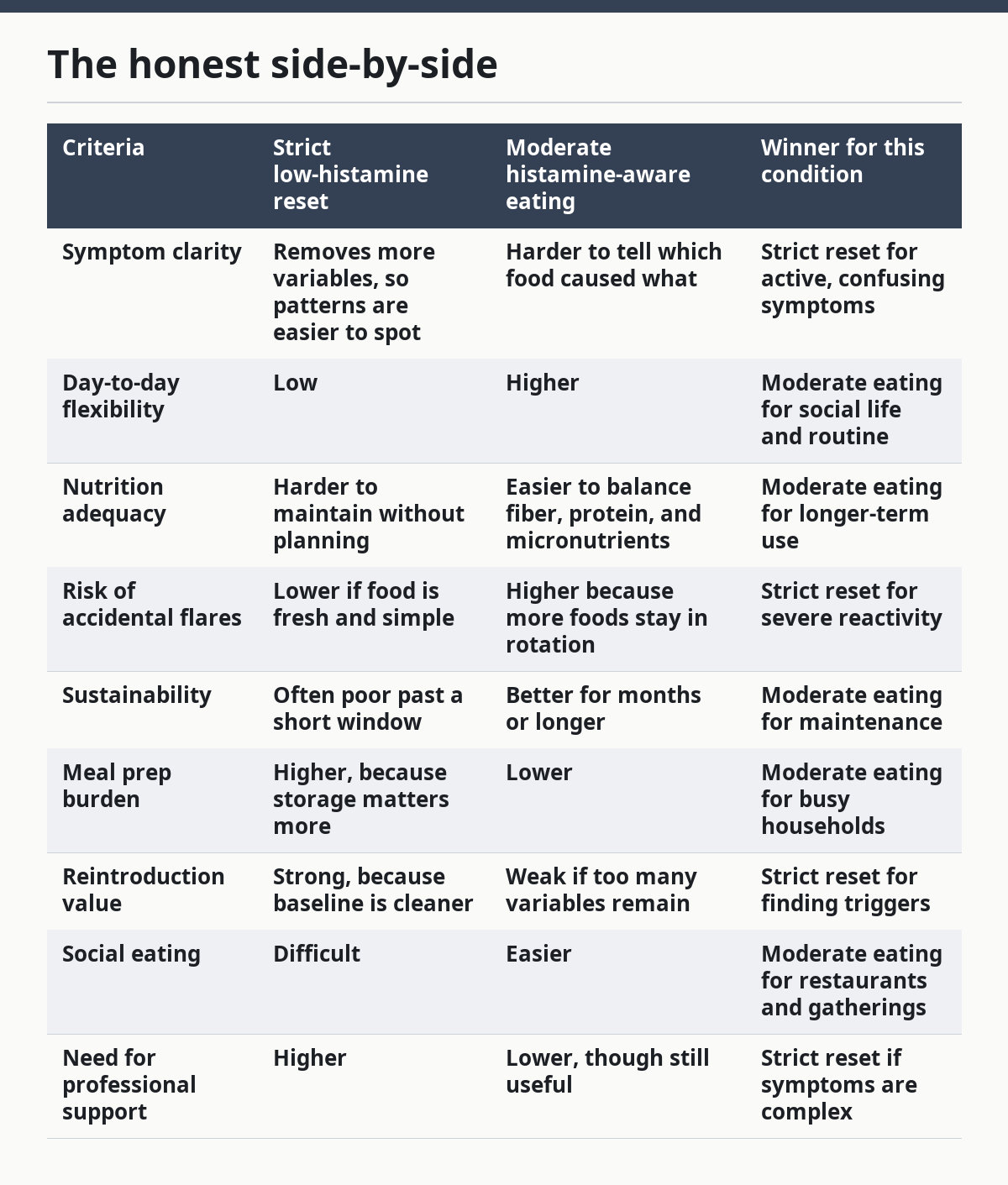
The strict reset wins when symptoms are frequent, severe, or chaotic, because it gives the cleanest baseline. The moderate approach wins when you already know your biggest triggers and want something livable. The wrong move is to stay strict forever without a plan to expand the diet again, because long-term restriction can become nutritionally and emotionally expensive.
When should I choose the stricter path, and when should I back off?
Choose the stricter path when your symptoms are active enough that you cannot tell which foods matter, when leftovers and restaurant meals cause repeated problems, or when you need a short, controlled reset to gather data. A 2- to 4-week clean baseline is often more useful than months of half-rules, and a professional can help you judge whether that window fits your situation.
Back off when the diet starts shrinking too far. If you find yourself relying on only a few foods, losing weight unintentionally, avoiding meals with other people, or feeling fearful about eating, the plan has gone too far. That is the point where a registered dietitian or physician should help widen the menu safely.
The other reason to loosen the plan is time. If symptoms improve and your pattern is clearer, the goal should be reintroduction, not eternal restriction. Add one food at a time, in a planned way, with enough time between trials to tell what happened. A food journal helps, but only if it records the whole meal, storage time, and symptoms, not just a list of ingredients.
This is the part generic articles skip: histamine-friendly eating is not a personality test. It is a method. Methods have phases. The strict phase answers questions; the maintenance phase keeps life normal.
What if the usual plan doesn’t work?
If the usual plan does not work, the most likely issue is not effort; it is that the wrong problem is being treated. Histamine symptoms can overlap with IBS, reflux, food allergy, mast cell disorders, medication side effects, hormone shifts, or stress-related gut symptoms. A diet change that helps one person may do almost nothing for another.
Three common exception scenarios change the verdict:
- Symptoms are severe and immediate. If you get swelling, breathing issues, throat symptoms, or rapid reactions, diet alone is not the right tool. Medical evaluation comes first.
- You already tolerate a broad diet but react mainly to alcohol or fermented foods. In that case, a moderate histamine-aware approach is often enough, and a full strict reset may be unnecessary.
- You are losing weight, getting weaker, or avoiding many foods. The problem has become nutritional risk, not just symptom control. The diet needs professional oversight.
- A supplement seems to “fix” everything. That may mean the supplement is masking a different diagnosis, not that histamine was the whole story.
The honest answer is that histamine-friendly eating is not for everyone. It is wrong for people who need a simple allergy diet, wrong for people who cannot sustain kitchen control, and wrong for anyone using it to avoid getting a proper diagnosis. It is most useful for the person with repeatable symptoms, a willingness to keep meals simple, and enough patience to test foods one at a time.
The verdict: what to do first
Choose the strict reset if your symptoms are frequent, your triggers are unclear, and you need a clean baseline for 2 to 4 weeks. Choose moderate histamine-aware eating if you already know your biggest triggers, need a plan you can sustain, and want fewer restrictions in daily life. Neither if you have severe reactions, unintentional weight loss, or a suspicion of food allergy that has not been evaluated by a clinician. For more general dietary planning, authoritative guidance from NIH and AAAAI can help you and your clinician keep the plan evidence-based.
A simple 7-day starting framework
Start with fresh proteins, plain starches, and a few low-variable vegetables, then keep storage tight and notes brief. The goal is not perfection; it is a readable pattern, and Histamine-Friendly Eating Basics — The Complete Guide works best when the first week stays simple.
A workable first week might look like this:
- Breakfast: oats with pear, or eggs if tolerated
- Lunch: chicken, rice, and zucchini
- Dinner: turkey, potatoes, and carrots
- Snack: apple, cucumber, or rice cakes
- Drinks: water and other plainly tolerated beverages
Keep the food list short enough that you can spot trends by day 3 to day 7. Freeze portions you will not eat immediately. Recheck your symptom log for patterns like headache after leftovers, flushing after tomato sauce, or digestive upset after restaurant meals.
A useful next step is to read clinical guidance from recognized sources such as the American Academy of Allergy, Asthma & Immunology and Cleveland Clinic, then bring your notes to a registered dietitian or physician if the diet needs to become more than a short trial. That is the safest way to keep the plan effective without turning it into a long-term restriction trap.
Drafted with AI; not yet reviewed by a person.