Last updated: November 20, 2026
Quick Answer: Food waste during low histamine meal prep can often be cut by using one shopping list, smaller batches, and a clear leftover plan. Start with a tight plan, buy only what fits it, and freeze any extra cooked food the same day when you cannot use it soon. This guide on How to Stop Food Waste During Low Histamine Meal Prep shows what to buy, what to freeze, and what to skip.
Start with a food waste reduction system, not a full fridge
A food waste reduction system stops waste before the first onion is chopped. It works because it matches your meal plan, your produce storage, and your leftovers to the days you will actually eat them, not to the fantasy version of prep week.
Picture this: you’re staring at a fridge drawer full of herbs, greens, and half-used vegetables, then trying to build low histamine meals around them on a Tuesday night. The fix is one shopping list, one meal plan, one leftover plan before you buy anything. That’s the whole game.
A good system also keeps overlap on purpose. If you buy zucchini for a skillet meal, use the rest in soup or a roast tray within 2 to 3 days. If you buy rice, cook enough for one fresh meal and one frozen backup, not for a week of maybe.
- Write the meal plan first.
- Pull the shopping list from that plan.
- Check what is already in the fridge.
- Buy the missing items only.
The best part for many people is that this does not need fancy gear. A pen, a note app, and a few leftover containers do most of the work.
How do you buy only what you can use?
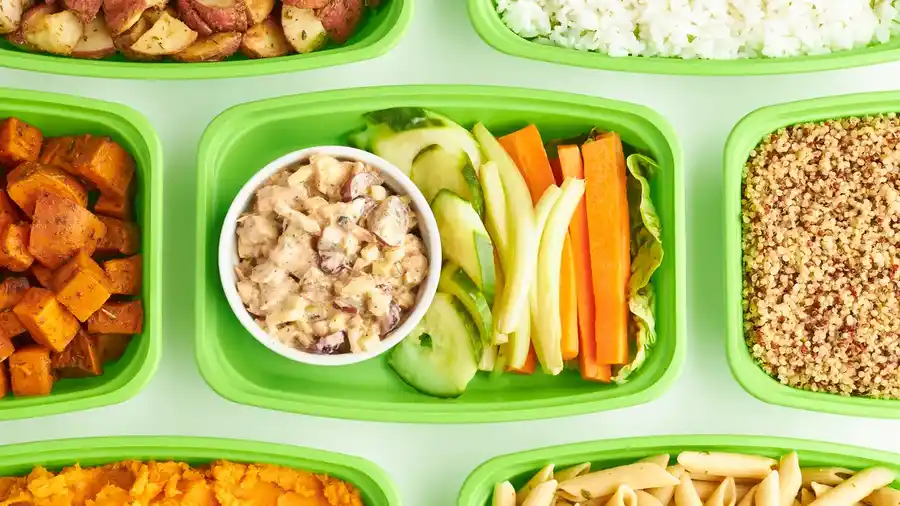
You buy only what you can use by tying every item to a meal and a day. If an ingredient does not land in a specific breakfast, lunch, or dinner, it stays off the list.
Picture this: you’re in the store with a full basket and a low histamine recipe stack in your head. That basket gets expensive fast. The better move is to shop from a list that already names the meal, the portion, and the backup use for each item.
Use this buying rule: every fresh item should have a first use and a second use. For example, a bunch of parsley can top potatoes on day one and go into a dressing or soup on day two. A bag of carrots can serve raw, roasted, or simmered. This is how you cut waste without eating the same plate three nights in a row.
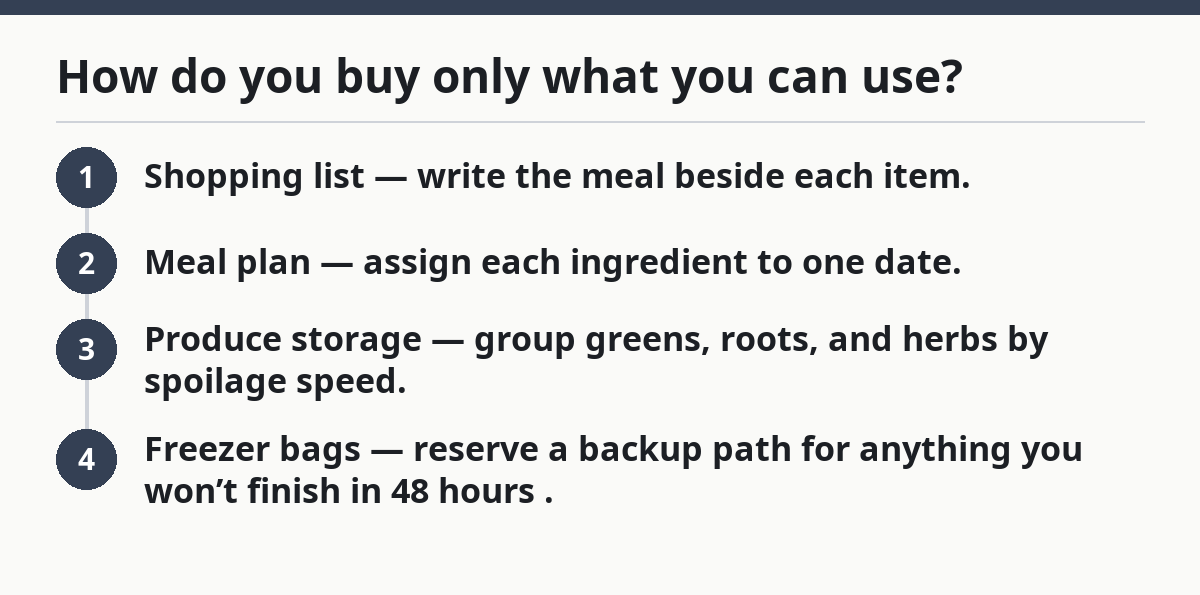
- Shopping list — write the meal beside each item.
- Meal plan — assign each ingredient to one date.
- Produce storage — group greens, roots, and herbs by spoilage speed.
- Freezer bags — reserve a backup path for anything you won’t finish in 48 hours.
A generic cart creates waste because low histamine prep punishes “I’ll use it later.” Later is where herbs rot, cucumbers soften, and a pack of chicken gets forgotten. USDA FoodKeeper can help you check storage times, and the USDA FoodKeeper app is a useful reference.
Portion sizing that keeps leftovers useful, not risky
Portion sizing keeps leftovers useful by making each batch small enough to finish or freeze. A tray of food that feeds 2 meals is safer for waste control than a pot that feeds six and sits there waiting.
Because of that, think in 2-bowl and 4-bowl batches, not in giant casserole logic. Low histamine prep works better when the food gets eaten while it still fits your plan.
Start with the number of people and the number of meals you can honestly cover. If you cook for one person, aim for one fresh dinner and one backup lunch from the same base. If you cook for two, make one extra portion only when you know it will be eaten the next day or frozen right away.
- Use a 1-meal buffer.
- Split cooked food into shallow portions.
- Leave one container empty for the next day’s overlap.
- Freeze the extra portion the same day if it is not scheduled.
This is also where a lot of waste starts: oversized pans, oversized cuts, and “just in case” servings. The cost is simple. Too much food becomes leftovers you don’t trust, and then it becomes trash.
What should I do with extra cooked food?
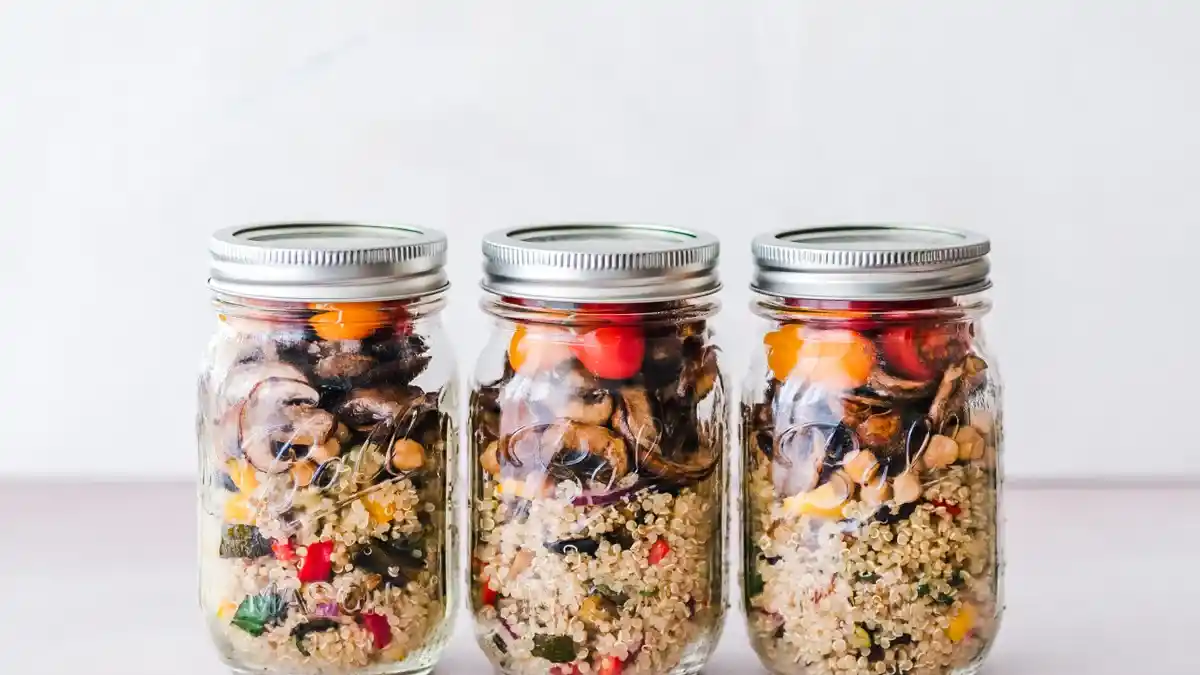
You should either plan to eat extra cooked food within 1 day or freeze it in a labeled container. That is the cleanest way to stop it from becoming forgotten fridge food.
Picture this: you’ve cooked rice, vegetables, and a protein, but the last serving has no home on the calendar. Now you need a fast decision, not a hopeful one. The rule is simple: if there is no meal slot, the food moves to the freezer or the compost bin, not the back of the fridge.
Use leftover containers that stack, seal well, and show you what is inside without a deep hunt. Glass containers with tight lids work well for some kitchens; freezer bags are better when you need flat, space-saving portions. If you use freezer bags, squeeze out extra air and label them with the food and date.
- Move leftovers into single-meal portions.
- Label each container before you chill your plan.
- Put the oldest portion in front.
- Keep one container as the “eat next” box.
If you are managing a medical diet, treat extra cooked food as a planned meal or a frozen backup only if that fits your guidance from a clinician or dietitian. USDA FoodKeeper is a helpful source for storage timing, but it does not replace individualized medical advice. Here’s the catch: extra cooked food is not automatically waste, but unplanned leftovers usually are. The fix is a clear stop rule. If you can’t name the next meal, don’t let it linger.
Use ingredient overlap so one shop covers three meals
Ingredient overlap cuts waste by making the same produce, starch, or protein work in more than one dish. A bunch of carrots, a bag of rice, and a head of lettuce should not each serve only one plate.
Picture this: you open the fridge on day three and find three half-used items that don’t look like a full meal. Overlap avoids that dead zone. You buy one ingredient and assign it to a few different textures and uses so it disappears on purpose.
The smartest overlap choices are the ones that tolerate change. Carrots can be raw, roasted, or simmered. Zucchini can be sautéed or added to a soup. Rice can become a base for dinner or a cold side if your plan allows. If a recipe needs an allergen like egg or dairy, the easy substitution is often a simple starch binder or a plant-based milk, as long as it fits your low histamine plan.
A few overlap rules help:
- Pair one fast-spoiling item with one slow-spoiling item.
- Use herbs within 2 to 4 days.
- Use roots and squash later in the week.
- Keep one frozen backup meal for the item you did not finish.
This is where a lot of generic meal prep advice misses the point. Low histamine prep is not just about cooking; it is about timing the foods that spoil quickly so they have a job before they wilt. The Academy of Nutrition and Dietetics offers practical food safety guidance that can support this kind of planning, and EatRight is a useful place to start.
How should you handle produce storage during prep week?
You should sort produce by spoilage speed and use the most fragile items first. Herbs, leafy greens, and cut fruit need attention early, while carrots, potatoes, and squash usually buy you more time.
Picture this: your counter has tomatoes, greens, and a bag of carrots after one grocery run. If you treat them all the same, the softest items lose value first. Set the order now, and waste drops without more cooking.
A simple produce storage plan works like this:
- Produce storage — place leafy greens where you can see them.
- Shopping list — mark fast-spoiling items for days 1 and 2.
- Meal plan — assign roots and squash to later meals.
- Freezer bags — save chopped extras only if you will use them soon in soup or a skillet.
Do not wash everything at once if that shortens shelf life in your kitchen. Do not bury herbs under heavier produce. And do not buy more delicate produce than you can use before the weekend. A food waste reduction system depends on this kind of order, not on willpower.
If you want a broader system for the rest of the process, the hub on [low histamine meal prep and cooking systems] can sit next to this page without repeating it.
Freeze backup meals before the fridge turns into a graveyard
Freeze backup meals before the fridge turns into a graveyard by portioning one extra serving during prep and labeling it clearly. A freezer is your waste shield when your schedule changes.
Picture this: you planned three meals, then one got skipped. Without a backup, the food hangs around until it is too old to be useful. With a backup, that meal has a second life in 1 flat bag or container instead of becoming a mystery container at the back of the shelf.
Use freezer bags for flat portions when space is tight, and use rigid containers when you need something that won’t crush soft food. Keep the label simple: food name, date, and meal count. If the meal includes a common allergen like egg, soy, or dairy, write that on the label so you don’t grab the wrong container later.
- Freeze the extra serving the same day.
- Keep flat bags upright until set.
- Store one backup near the front.
- Rotate old backup meals first.
The trade-off is clear. Freezing does not fix a poorly planned batch, but it does rescue the exact amount you could not use in time. USDA FoodKeeper also notes that freezing is a reliable way to extend storage for many foods, which supports this backup approach.
Common mistakes that create waste fast
A common mistake is to shop like every ingredient will get used perfectly. That almost never happens, and low histamine prep makes the mistake more expensive because timing matters.
Picture this: you buy three vegetables, a protein, and a pile of extras, then end up with half-used produce and no next move. The cost is not just money. It is cooking time, storage space, and one more meal you have to think about later.
The main mistakes are easy to spot:
- Buying for a full week when your fridge handles only 3 days of fresh food.
- Cooking oversized batches that leave no plan for leftovers.
- Mixing new food with old food so nothing gets eaten first.
- Ignoring ingredient overlap, so every meal starts from zero.
- Putting a backup meal in the freezer without a label.
The fix is not more effort. It is less guessing. Use a shopping list that follows the meal plan, keep portion sizes small, and make the freezer your backup lane instead of a dumping ground.
Key Takeaways
- Match each purchase to a meal before you leave the store.
- Keep batches small enough to finish or freeze the same day.
- Treat extra cooked food as a planned meal or a frozen backup, not a maybe.
- Build overlap into your ingredients so one shop covers more than one dish.
- Put fragile produce on the early part of the menu and keep backups visible.
How do I buy only what I can use?
Buy only what you can use by linking each item to a specific meal and day. If an ingredient has no place on the calendar, leave it out of the basket. A short shopping list with planned overlap does more for waste than a longer list with hope attached. The USDA FoodKeeper app can help you check how long some foods keep.
What should I do with extra cooked food?
Either eat extra cooked food soon or freeze it in a labeled single-meal portion. If you do not have a next meal for it, move it out of the fridge before it turns into forgotten leftovers. Flat freezer bags work well for space; rigid containers work better for delicate food. If you need diet-specific advice, consult a registered dietitian or other clinician.
How do I keep produce from spoiling during prep week?
Keep produce from spoiling by using the most fragile items first and storing them where you can see them. Use herbs and leafy greens in the first 2 to 4 days, then move to roots and squash later. A visible, dated order is the simplest way to cut waste.
Drafted with AI; not yet reviewed by a person.