Last updated: November 19, 2026
Key Takeaways
- Opened produce, sauces, and mixed condiments need the most care because they spoil quickly and can add moisture to the fridge.
- Choose a container that matches the food’s shape, moisture level, and how often you open it.
- Opened low histamine ingredients should be used promptly, and the safest window depends on the food, the seal, and how cold your fridge stays.
- The most common mistakes are warm storage, loose sealing, and no label.
Opened low histamine ingredients in the fridge go bad fastest when they sit in the wrong container, at the wrong temperature, or without a date. Store them in clean, airtight containers, refrigerate them at 4°C / 40°F or colder, and label them the day you open them. The steps below show exactly what to do with half-used produce, opened dry goods, and condiments. For food safety basics, the FDA recommends keeping your refrigerator at or below 40°F (4°C), and the USDA FoodKeeper app gives storage guidance by food type.
How to store opened low histamine ingredients in the fridge
Opened low histamine ingredients last longer when you move them into the smallest clean container that fits, seal them tight, and put them back in the coldest part of the fridge right away. That is the whole game. A loose lid and a warm shelf can turn a safe-looking ingredient into a gamble by tomorrow.
Picture this: you’ve got half a lemon, a jar of tahini, and a box of washed greens on the counter after dinner. The right move is container, label, fridge—not “I’ll deal with it later.” Low histamine storage is mostly about slowing spoilage and stopping cross-contact with leftovers, drips, and old crumbs.
- Choose a clean storage container, resealable bag, or jar lid that matches the food and closes fully.
- Portion the opened ingredient into the smallest container that fits without crushing it or leaving a lot of air space.
- Seal the container tightly, pressing out excess air from resealable bags before closing them.
- Label the container with the opening date and the ingredient name using a fridge-safe label or tape.
- Chill the food in the main fridge at 4°C / 40°F or colder, not in the door if the shelf space is available.
- Check the ingredient before each use for off smells, slime, mold, gas, or a sour note that does not belong.
The cleanest setup is not fancy. A plain glass container with a tight lid, a freezer-grade resealable bag, or the original jar with a clean lid can all work if the seal is solid and the food is dry enough for that container. Wet food in a weak seal spoils faster. The USDA FoodKeeper app is useful here because it shows how storage changes by food type.
Which opened ingredients need the most care?
Opened produce, sauces, and mixed condiments need the most care because they lose quality fast and spread moisture into the fridge. Dry goods can usually wait longer, but only if the bag, jar, or tub stays shut and free of damp air. That difference matters when you are trying to keep a low histamine kitchen calm and predictable.
Picture this: you cut a cucumber, open a jar of coconut yogurt, and scoop out a spoon of mustard. Each one behaves differently in the fridge, so treat them by food type and, if you have a medical reason to be extra cautious, follow advice from a registered dietitian or clinician. The fix is to store by food type, not by habit. A produce wrap that works for herbs may be wrong for a wet sauce.
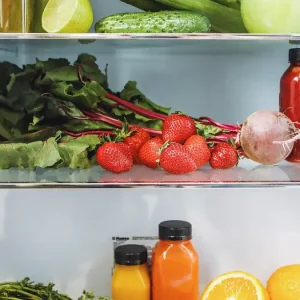
- Half-used produce: wrap cut surfaces tightly or move the pieces to a lidded container. Lettuce, cucumber, melon, and herbs all lose moisture fast once cut.
- Opened dry goods: keep oats, rice, flours, and seeds in dry, sealed containers if you refrigerate them. Any dampness can clump them or invite spoilage.
- Condiments: return jars and squeeze bottles to the fridge after each use. Mayo, mustard, pickles, and sauces keep best when the rim stays clean.
- Dairy and dairy alternatives: use a clean spoon every time. A crumb or splash from a used spoon shortens the life of yogurt, kefir, or plant-based versions.
- Nut and seed spreads: stir only with a clean utensil. Peanut, almond, or tahini jars can pick up moisture and crumbs fast.
Here’s the catch: the original packaging is not always the best choice once a container has been opened, especially if it is flimsy or hard to reseal. Cardboard cereal boxes, flimsy produce bags, and loose jar caps let in too much air. For low histamine storage, a tighter seal usually beats a prettier package.
What container should I use for each ingredient?
Use the container that fits the food’s shape, moisture level, and how often you open it. Glass jars, rigid plastic tubs, resealable bags, and produce wraps all have a job; none of them works best for every food. The wrong container can bruise produce, trap condensation, or let odors move through the fridge.
Picture this: you’ve got a cut bell pepper, a half-used block of cheese, and a jar of olives. One wants a dry lid, one wants a tight wrap, and one wants a jar that can handle brine. The container should protect the ingredient, not just hold it. A good seal matters more than a matching set.
| Container / Option | Best For | Core Spec | Standout Feature | Action |
|---|---|---|---|---|
| Glass container with lid | Cut produce, sauces, leftovers from opened jars | Rigid, airtight lid | Easy to see the contents and wipe clean | Use for wet or aromatic foods that need a firm seal |
| Resealable bag | Herbs, sliced fruit, extra pieces of produce | Press-to-close seal | Low air space when flattened | Press out air before closing and store flat |
| Jar lid | Opened jars of condiments or spreads | Threaded closure | Keeps the original container in use | Wipe the rim before resealing |
| Produce wrap | Cut herbs, avocados, citrus halves, cheese | Direct wrap against cut surface | Helps slow drying | Wrap tightly before placing in a container |
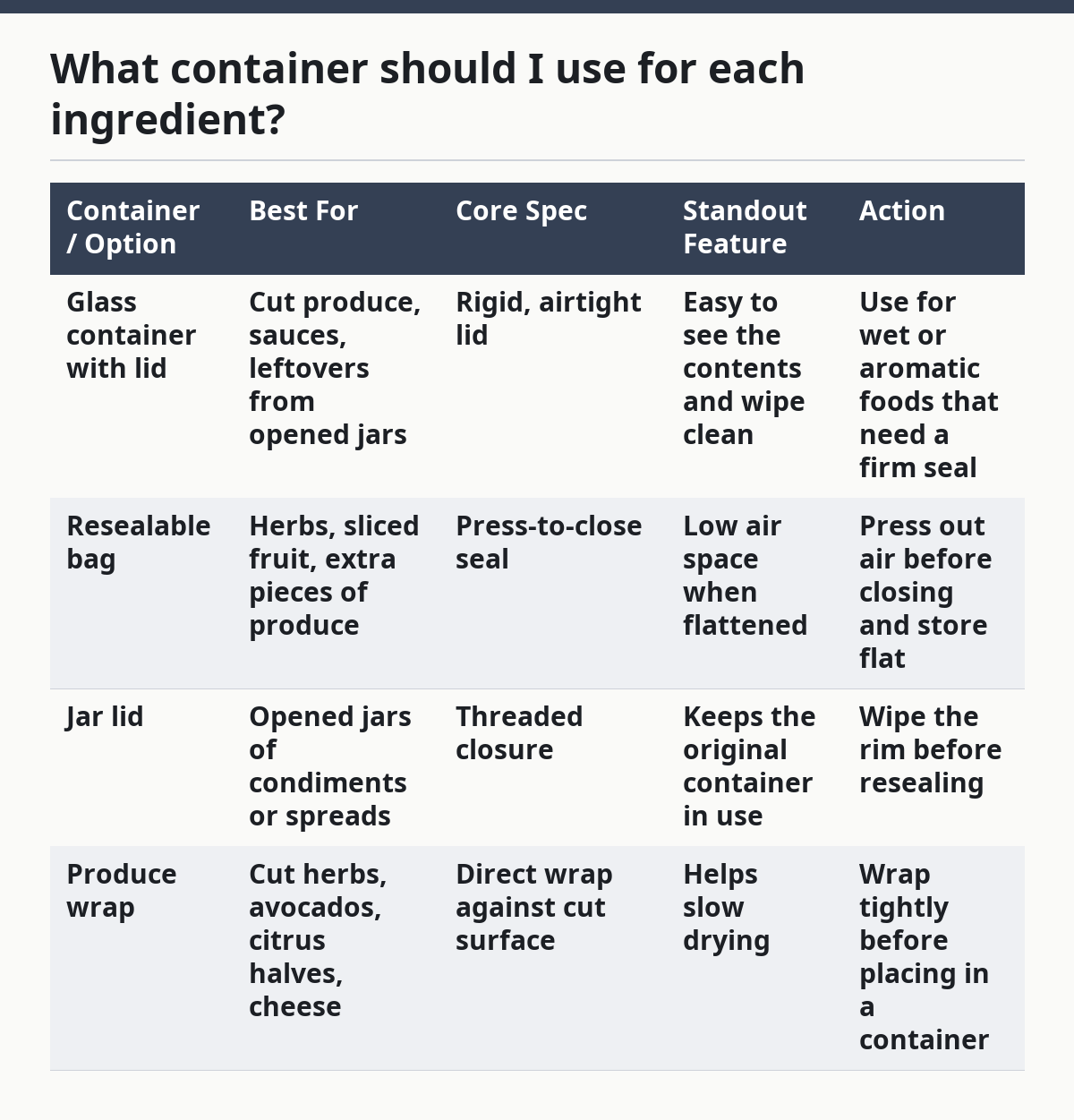
A rigid tub is not always best. Soft herbs often do better in a lightly wrapped bundle with a dry paper towel, while a cucumber half usually needs a container that stops it from drying out. In contrast, oily spreads and brined foods can leave smells on thin plastic. That is why lid quality matters so much.
How long can opened low histamine ingredients stay in the fridge?
Opened low histamine ingredients should be used as soon as possible, and the safest window depends on the food, the seal, and how cold your fridge stays. There is no single number that fits every ingredient without guessing. A clean, cold fridge and a tight seal stretch freshness; warm shelves and repeated opening shorten it. The FDA and USDA both stress that temperature control matters more than appearance alone.
Picture this: you have three opened foods from different meals, and none of them looks obviously spoiled yet. That does not mean they are equal. A jar of mustard, a cut peach, and a tub of hummus age at different speeds. The label helps you keep the timeline straight.
- Date the container the day you open it.
- Use older items first if two ingredients compete for the same recipe.
- Keep the fridge cold at 4°C / 40°F or colder.
- Throw out anything with mold, slime, fizzing, a broken seal, or a smell that has turned sharp or sour.
- Do not “test” risky food if you already see spoilage; that is not worth it.
The truth is, the fridge slows spoilage, but it does not reset the clock. Low histamine eaters often do better with smaller containers and smaller buys, because a half-empty jar can sit around long enough to become a problem. That is a storage issue, not a recipe issue.
What are the most common storage mistakes?
The most common mistakes are warm storage, loose sealing, and no label. Those three errors waste food fast, and they are easy to make after a long day. A low histamine fridge plan only works if the same simple habits happen every time.
Picture this: you move ingredients around until the shelf looks tidy, but the date is missing and the lid is crooked. The fridge may look organized, but the food is still exposed. Organization without sealing is just decoration. Here’s what usually goes wrong:
- Leaving food in the original open package. This costs freshness because air and moisture move through the package. Move the ingredient into a tighter container.
- Using a dirty spoon. This can add crumbs, moisture, or old food back into the jar. Use a clean utensil every time.
- Storing cut produce loose in the fridge. This dries out the cut edge fast. Wrap or box it up.
- Ignoring fridge temperature. If the fridge runs too warm, spoilage speeds up. Keep it at 4°C / 40°F or colder.
- Skipping the date label. You lose the simplest cue for what should be used first. A tape label solves that in seconds.
On the flip side, do not overpack the fridge so tightly that cold air cannot move. Crowded shelves can leave one container warmer than the rest. A small gap around the storage box is better than wedging it between takeout tubs and milk cartons.
What should I label, and how?
Label every opened ingredient with the name and the opening date, and use a label that sticks in the fridge without smearing. That is enough for most kitchens. A label is not busywork; it keeps you from guessing whether that jar was opened yesterday or last week.
Picture this: two almost identical tubs sit in the fridge, and both have a spoon mark on the lid. Without a label, you are forced to smell, poke, and hope. With a label, you can grab the older one first and move on. That saves food and removes stress.
Use labels, painter’s tape, or freezer-safe marker if the fridge is humid. Write the item name in plain words—“cilantro,” “sliced cucumber,” “opened tahini”—and the date you opened it. If the ingredient has been moved into a new container, label that container too. The original package is easy to lose once a shelf gets busy.
A good label also helps if you keep separate foods for different people or different tolerance levels. If one jar is meant for immediate use and another is a backup, mark that clearly. Confusion is expensive in a low histamine kitchen. Waste is, too.
How to keep storage simple with a low histamine fridge routine
Keep the routine simple by grouping opened foods by type and checking them before each meal. You do not need a complicated system. You need the same few moves repeated the same way: seal, label, chill, and use first what is oldest.
Picture this: you open the fridge for breakfast and want a fast answer, not a scavenger hunt. A clear storage routine gives you that answer in seconds. The best part is that it works with ordinary tools—containers, resealable bags, jar lids, produce wraps, and labels—without buying a new kitchen setup.
Use this routine:
- Put half-used produce on one shelf or bin.
- Keep condiments together so lids stay clean and easy to spot.
- Store opened dry goods in dry, sealed containers away from drips.
- Check labels once a day and move the oldest food to the front.
- Clean rims, lids, and containers before refilling them.
If you want the bigger freezer-and-storage picture, the hub on low histamine freezer and storage organization ties these habits together without turning your kitchen into a project. This page is the fridge piece of that system—the daily one.
When should I throw an opened ingredient away?
Throw an opened ingredient away when the seal fails, the smell changes sharply, or you see mold, slime, bubbles, or discoloration that does not belong. In a low histamine kitchen, the goal is not to rescue questionable food. The goal is to avoid guessing.
Picture this: a container looks mostly fine, but the lid is puffed and the smell turns sharp when you open it. That is not a “maybe.” It goes out. A fridge can slow spoilage, but it cannot undo it. If you are unsure and the food has already sat past a reasonable fridge interval for that type, discard it instead of trying to stretch it one more meal.
How should I store half-used ingredients?
Store half-used ingredients in the smallest clean container that fits them, then seal and label them right away. Cut produce should be wrapped or boxed so the cut side is protected from air. Condiments and spreads belong back in the fridge with clean lids and clean utensils, not on the counter between uses.
What is the best way to keep opened foods fresh?
The best way to keep opened foods fresh is to limit air, moisture, and temperature swings. Use airtight containers, press air out of resealable bags, and keep the fridge at 4°C / 40°F or colder. Small containers help because less empty space means less air around the food.
Do opened ingredients need labels?
Yes, opened ingredients need labels if you want a low-stress system that actually works. Write the ingredient name and the opening date on the container or a strip of tape. Labels keep older food from getting lost behind newer food and make it easier to use things before they fade.
Drafted with AI; not yet reviewed by a person.