Last updated: November 19, 2026
Key Takeaways
- Cool the meal, separate wet and dry parts, and return it to cold storage fast.
- You need cooled food, one leakproof container, one insulated lunch bag, and one ice pack.
- Cool, separate, seal, and chill the meal with the ice pack beside it.
- Separate containers help keep the meal colder, drier, and easier to check before eating.
A same-day packed meal for low histamine eating needs three things: cold food, separate containers, and a fast path from fridge to lunch bag. This guide to How to Pack a Low Histamine Meal for Same-Day Eating shows the packing order for cooked chicken, rice, cut vegetables, an insulated lunch bag, an ice pack, and a leakproof container. It also shows what usually goes wrong. The USDA says to refrigerate perishables within 2 hours, or within 1 hour if the temperature is above 90°F. USDA, FDA
Pack it cold, separate, and fast
Picture this: you’re standing at the fridge with lunch to pack, and you need it ready in 5 minutes, not 30. The practical answer is to chill the food first, keep wet and dry parts apart, and move the bag back to cold storage right away. That’s the whole job.
A workable method is to cook, cool, portion, seal, chill, and pack with an ice pack. If the meal will sit out more than a short break before eating, choose another food plan. Low histamine eating is less forgiving than a typical lunch. The FDA also advises using an insulated lunch box with a frozen gel pack or frozen juice box for cold foods. FDA
Here’s the catch: a “healthy” packed meal can still go wrong if warm rice sits beside juicy chicken in one box. Histamine concerns are about freshness and time as much as ingredients. Keep reading for the order that makes the meal work instead of guessing. The USDA notes that food in the danger zone, 40°F to 140°F, should not sit there for long. USDA
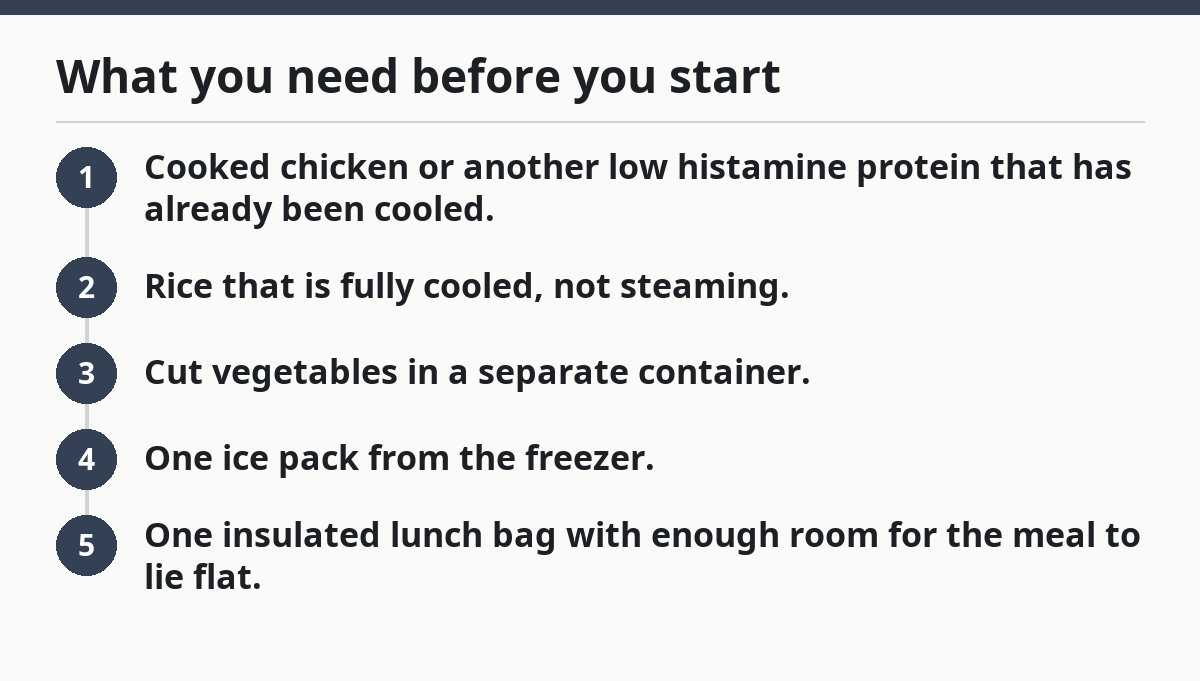
What you need before you start
You need a fully cooled meal, one leakproof container, one insulated lunch bag, and one ice pack. If the food is still warm, stop there and cool it first in shallow portions so steam leaves fast.
Use containers that close tightly and don’t slosh when tipped. A separate small container for cut vegetables helps keep them crisp and away from meat juices. If you want the meal to taste fresh at lunch, this separation matters more than fancy ingredients.
Set out these items before you open the fridge:
- Cooked chicken or another low histamine protein that has already been cooled.
- Rice that is fully cooled, not steaming.
- Cut vegetables in a separate container.
- One ice pack from the freezer.
- One insulated lunch bag with enough room for the meal to lie flat.
Now, you might be wondering why the setup matters so much. Because the minute you start hunting for lids and bags, the food warms up. That extra minute or two is how a careful lunch turns into a sloppy one. The FDA advises keeping cold foods at 40°F or below. FDA
How do you pack a low histamine meal for same-day eating?
You pack it by cooling the food first, separating the parts, sealing everything tightly, and putting the ice pack against the meal before the bag goes back into cold storage. That order is often the safest, simplest answer for same-day eating.
Follow this packing sequence
-
Cool the food completely.
Put the cooked chicken and rice into shallow containers until they are no longer warm to the touch. You should see no steam when you lift the lid. If steam is still visible, wait. -
Portion the meal into one serving.
Pack only what you plan to eat that day. A single serving cools faster and stays easier to handle than a large bulk container. The result should be a compact lunch, not a warm block. -
Separate wet and dry parts.
Keep chicken, rice, and cut vegetables in their own containers or compartments. The vegetables should look dry and crisp, not wet from meat juices. This cuts odor, keeps texture better, and makes the meal less messy. -
Seal each container tightly.
Close every lid until it clicks or locks into place, if the container has that feature. Give the container a gentle tilt over the sink or counter. If nothing leaks, the seal is doing its job. -
Place the ice pack beside the food.
Put the ice pack directly next to the meal inside the insulated lunch bag, not loose at the bottom where it can shift away. The bag should feel cool on the side closest to the pack when you close it. -
Put the lunch bag back in the coldest available spot.
A fridge is best if the meal is waiting at home. If it has to go with you, keep the bag closed until lunch. The food should stay cold to the touch when you open it. -
Eat it the same day.
This method is for same-day eating, not storing a lunch for later in the week. The food should still smell clean and normal at mealtime, with no sour or off odor.
That sequence works because it reduces time in the warm zone and keeps each part where it belongs.
Why container separation matters more than fancy recipes
Container separation keeps the meal colder, drier, and easier to judge before you eat it. A mixed bowl looks tidy, but it hides leaks, softens vegetables, and lets juices sit against food that should stay dry.
Picture this: you open your lunch bag and find rice stained by chicken juices and vegetables gone limp. That’s the cost of one big container. A separated meal is easier to inspect, and if one part looks off, you can see it right away.
For example, use this rule:
- Protein in one box.
- Rice in one box.
- Cut vegetables in one box.
If your container has dividers, fine—just make sure the divider is solid enough that liquids don’t cross over. If it isn’t, check with a food safety professional or follow an authoritative storage guide and treat it like three separate boxes instead. A divider that leaks is worse than no divider at all.
This setup also helps with odor control. Strong-smelling foods spread in a shared box and can make the whole lunch seem old, even if it isn’t. Tightly sealed separate containers keep smells where they belong.
The truth is, low histamine packing often looks boring. That is a good sign. Plain containers and plain foods are easier to cool fast and judge honestly.
How cold should the meal stay until lunch?
It should stay cold enough that the food still feels chilled when you open the bag, not lukewarm or warm. The meal should go from fridge to bag with no long pause on the counter.
Use the ice pack against the food, not just near it. If the bag has empty space, fill it with another cold item or a folded clean cloth to keep the containers from sliding around. Less movement means less warming and fewer leaks.
A few habits make a big difference:
- Keep the insulated lunch bag zipped.
- Do not leave the bag in a hot car.
- Do not open the bag again and again just to check.
- Place the ice pack on the same side as the most perishable item.
If the meal is going to be eaten much later than planned, this page is not the right tool. Same-day packing is for short storage, not all-day holding. For that, the site’s hub on low histamine meal prep tips covers the bigger planning picture.
Another practical point: if lunch is delayed by hours, plan around food safety guidance instead of guessing. The FDA and USDA both stress keeping cold food cold and limiting time in the danger zone. FDA, USDA
Common packing mistakes that waste a good meal
The biggest mistake is packing food before it cools, because trapped steam warms the container and shortens the cold window. The next mistake is mixing juicy foods with dry ones, which makes texture worse and raises the chance of leaks.
Picture this: you rush the lunch, toss warm rice into a bag, and head out. By noon, the rice smells flat and the vegetables are soft. That meal still looked fine at 8 a.m., but it wasn’t packed for the real day.
Watch for these errors:
-
Warm food in a sealed container.
Cost: trapped heat. Fix: cool it in a shallow layer first. -
One loose container with everything mixed.
Cost: soggy texture and harder cleanup. Fix: split chicken, rice, and vegetables. -
No ice pack or a melted one.
Cost: the bag warms too fast. Fix: use a fresh frozen pack and keep the bag closed. -
Too much food for one container.
Cost: slower cooling and awkward eating. Fix: pack one serving in a flat, small container. -
A bag that is not insulated.
Cost: the food loses cold fast. Fix: use an insulated lunch bag with room for an ice pack.
One more honest limit: this method is for same-day eating, not for food safety guesswork. If a meal has sat warm for a while, don’t try to rescue it by re-chilling it in the bag. Start over.
A simple same-day lunch build that works
A simple build is cooked chicken, rice, and cut vegetables packed in separate containers inside an insulated lunch bag with one ice pack. That is the cleanest version of the job and the easiest one to repeat.
Picture this: you want lunch to be dull in the best way possible—no spills, no mystery smell, no last-minute scrambling. This is the model. It uses the foods named in this article and keeps them in the right order.
A good same-day setup looks like this:
- Chicken: fully cooked, fully cooled, sealed in its own leakproof container.
- Rice: cooled flat in a second container so it does not steam itself soggy.
- Cut vegetables: dry, crisp, and kept apart from the protein.
- Ice pack: frozen solid and placed right beside the containers.
- Insulated lunch bag: zipped shut and kept out of heat.
If you’re building lunch from leftovers, only use food that went into the fridge promptly and still looks clean, smells normal, and feels cold. If any part seems questionable, leave it out. The FDA says to discard perishable food left out for more than 2 hours, or 1 hour above 90°F. FDA
That is the honest line on same-day low histamine packing: plain food, fast cooling, separate containers, and a bag that stays cold until the meal is eaten. Anything more complicated is usually just a way to make the lunch worse.
Can I pack lunch the night before?
Yes, if the food is fully cooled first and stays refrigerated overnight. The meal should be packed into leakproof containers, then kept cold until you leave. If the food is still warm when it goes into the container, that is the part that causes trouble.
Do I need an insulated bag for same-day meals?
Yes, if the meal will leave the fridge before you eat it. An insulated lunch bag gives the ice pack a chance to do its job and helps the food stay cold longer. A regular bag does not hold cold well enough for same-day packing.
How do I keep a packed meal cold until lunch?
Use a frozen ice pack beside the food, keep the bag closed, and store it in the coldest place available until lunch. The meal should start cold and stay separated so heat does not spread from one part to another.
Drafted with AI; not yet reviewed by a person.