Last updated: November 19, 2026
Quick answer: Yes — you can freeze cooked rice, meat, and vegetables separately, and that is usually the better move if you want flexible meals later. This guide shows how to portion, freeze, thaw, and reheat each part without turning dinner into mush. For the topic Can You Freeze Cooked Rice, Meat, and Vegetables Separately?, the short version is simple: separate portions usually thaw faster and are easier to use.
Key takeaways
- Cooked rice, cooked chicken, and roasted vegetables all freeze well on their own if they’re cooled fast and packed right.
- Portion first, then freeze. Smaller bags and containers thaw faster and waste less food.
- Label tape matters more than people think. Without it, rice and meat become mystery bricks in 2 weeks.
- Texture changes are real: rice dries out, chicken can go stringy, and vegetables soften.
- Thaw in the fridge when you can; reheat from frozen only when the pieces are already in small portions.
Can you freeze cooked rice, meat, and vegetables separately?
Yes, and freezing them separately is the cleaner choice for low-histamine meal prep and ordinary weeknight cooking alike. Separate frozen meal components let you mix and match later, which means you’re not stuck with one full meal if you only want extra rice or a smaller serving of vegetables. In the context of Can You Freeze Cooked Rice, Meat, and Vegetables Separately?, this is the core advantage: one freezer, three usable parts.
Picture this: you’ve got leftover cooked rice, cooked chicken, and roasted vegetables after dinner. You don’t want the same bowl three nights in a row, but you also don’t want to toss good food. Freezing each component on its own gives you a pantry-style freezer with actual options.
Here’s the catch: the foods do not freeze the same way. Rice dries out, meat can lose moisture, and vegetables often go softer after thawing. That does not make the method bad. It just means each piece needs its own packing style.
- Cooked rice: best in flat freezer bags or small portion containers.
- Cooked meat: best in sealed portions with as little air as possible.
- Cooked vegetables: best when already roasted, steamed, or blanched and fully cooled.
For people following the low histamine meal prep tips hub, this approach fits the “build meals from pieces” idea without forcing one giant batch. A rice container, a chicken portion, and a bag of vegetables can all come together later in about the same amount of time it takes to reheat one leftover plate.
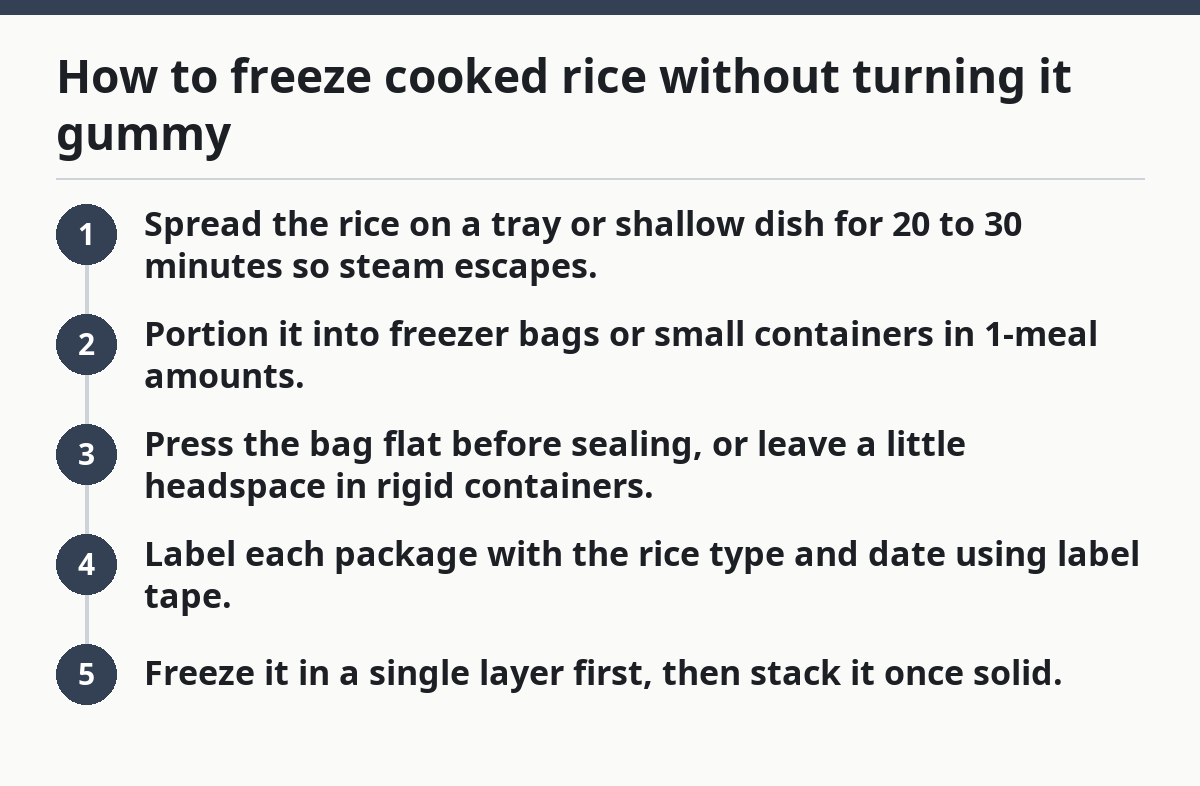
How to freeze cooked rice without turning it gummy
Cooked rice freezes well if you cool it quickly, portion it small, and keep out extra air. The biggest mistake is shoving a hot pot into the freezer. That raises the freezer temperature and leaves the rice wet, clumped, and partly icy.
Picture this: you’ve got a pot of plain rice on the counter and want to save half for next week. The goal is not perfection. The goal is cool fast, pack tight, freeze flat. That keeps the grains from merging into one hard block.
- Spread the rice on a tray or shallow dish for 20 to 30 minutes so steam escapes.
- Portion it into freezer bags or small containers in 1-meal amounts.
- Press the bag flat before sealing, or leave a little headspace in rigid containers.
- Label each package with the rice type and date using label tape.
- Freeze it in a single layer first, then stack it once solid.
A flat freezer bag is handy because it thaws faster than a deep container. A portion container is better if you know you’ll reheat the rice straight in the box. If you make rice often, keep the portions consistent so you’re not guessing later.
- Best move for texture: cool before freezing.
- Best move for speed: freeze in a thin layer.
- Best move for clarity: write “rice” and the date on label tape.
The truth is, rice is one of the easiest components to save, but it also shows sloppy packing fast. If you trap steam, the thawed rice can go wet on the outside and dry in the middle. That is fixable in reheating, but it starts with the freeze.
How should you freeze cooked meat for later meals?
Cooked meat freezes best in small, airtight portions that match how you plan to eat it later. A whole roast or big pile of shredded chicken can freeze, but it thaws unevenly and often leaves you with more than you need.
Picture this: you have cooked chicken from dinner and want it ready for lunches. The smart move is to separate it into single-meal portions before freezing, so you can thaw one bag at a time instead of breaking off chunks from a frozen block.
Cooked chicken is the easiest example, but the same rule fits most cooked meats:
- Slice or shred while the meat is cool enough to handle.
- Pack in shallow portions.
- Press out air from freezer bags.
- Use portion containers if the pieces are sauced or fragile.
The main issue is texture. Lean meat can dry out after freezing and reheating, especially if it was already cooked close to done. Dark meat, sauced meat, and braised meat usually handle freezing better than plain dry cuts. That is one reason shredded cooked chicken often does better than sliced breast meat in meal prep.
A few practical trade-offs are worth naming:
- Freezer bags save space and thaw faster.
- Portion containers protect shape better.
- Sauces help meat stay moister, but they can also hide how much food is in the container.
If you want the cleanest result, freeze the meat as soon as it is fully cool and cut into portions that match one lunch or one dinner. Frozen meat in a 1- or 2-serving pack is easier to thaw safely than one giant block.
Which vegetables freeze well on their own?
Roasted vegetables, steamed vegetables, and blanched vegetables freeze well separately; watery raw vegetables usually do not. The best freezer choices are often the ones that already lost some moisture during cooking.
Picture this: you have a tray of roasted carrots, zucchini, and onions left from Sunday dinner. If you pack them into a freezer bag after they cool, you can pull out a side dish later without dragging the whole meal with them.
Roasted vegetables often give good results because some moisture has already cooked off. Steamed broccoli or green beans can work too, but they may soften more after thawing. Very watery vegetables can turn limp, which is fine in a soup or skillet but not great if you want crisp edges later.
Use these rules:
- Cool vegetables fully before packing.
- Freeze in small, shallow portions.
- Keep sauces separate if you want more control over texture.
- Label the bag with the vegetable name, not just “veg mix.”
One useful habit is to freeze like-for-like vegetables together. Roasted carrots in one bag, broccoli in another, peppers in a third. Mixed bags are fine, but separate bags give you more control when one vegetable thaws better than the others.
The honest limit is simple: vegetables are the least forgiving of the three components. They can still be worth freezing, but the reheated result is usually best in a bowl, hash, omelet, or side dish rather than as a crisp roast on its own.
What is the best way to portion and label freezer meals?
The best way to portion and label freezer meals is usually to match each container to one meal and mark it clearly with label tape. If you skip that step, the freezer turns into guesswork, and guesswork wastes food. For Can You Freeze Cooked Rice, Meat, and Vegetables Separately?, the label is what keeps the system usable.
Picture this: three weeks from now, you open the freezer and find a plain white container with no note. It could be chicken, rice, or cauliflower. That is where good labeling can save you time and, if you have dietary concerns, it is worth checking a professional source such as USDA Freezing and Food Safety before you rely on memory alone.
A simple system works best:
- Use one portion container or freezer bag per component.
- Keep rice in one size, meat in another, vegetables in a third.
- Write the food name and date on label tape before freezing.
- Stack flat bags until solid, then file them upright like folders.
If you keep everything in the same container size, you can build meals faster later. For example, one rice portion plus one chicken portion plus one vegetable portion can make a full plate without digging through the freezer.
There’s also a quality issue here. Smaller portions thaw more evenly, and they reheat with less damage. A large lump of rice or chicken can warm on the outside while the center stays cold. Small packs solve that.
- Best for speed: flat freezer bags.
- Best for structure: rigid portion containers.
- Best for memory: label tape with food name and date.
A lot of people freeze food separately and still lose control because they don’t label the pieces well enough. That is the part that makes the system work or fail.
How do you thaw and reheat frozen rice, meat, and vegetables safely?
Thawing in the fridge is often the safest, cleanest way to handle frozen meal components, and reheating from frozen works best for small portions. If you can plan ahead, move the food to the refrigerator the night before. That gives you the least drama and the best texture.
Picture this: you want dinner ready after work. You pull a rice pack, a chicken portion, and a bag of vegetables from the freezer in the morning or the night before. By evening, they’re ready to heat without a race against the clock.
Use this order:
- Move the food from freezer to fridge when possible.
- Reheat rice until steaming hot.
- Reheat meat until hot all the way through.
- Warm vegetables last, so they don’t go overcooked.
- Combine everything only at the end.
If you must cook from frozen, keep the portions small and use gentle heat. A microwave works for rice and many meats in short bursts. A skillet helps vegetables regain some texture. Oven reheating can work too, but it takes longer and often dries out lean meat.
The main thing to avoid is repeated thawing and refreezing. That hurts texture and makes meal planning messy. Once a portion is thawed, use it soon. If you need backup food, keep the rest frozen.
For readers building a low histamine freezer system, this method keeps meals flexible without freezing full recipes. That is the whole advantage: rice, chicken, and vegetables stay separate until the last minute.
Common mistakes that ruin frozen meal components
The most common mistakes are freezing hot food, using oversized containers, and skipping labels. Each one costs you quality, time, or both.
Picture this: you did the work, packed the food, and still end up with icy rice, dried chicken, or mystery vegetables. That usually comes from the packing step, not the freezer itself.
Here are the failures I see most:
- Freezing while food is still steaming. Cost: wet ice crystals and poor texture.
- Packing too much into one bag. Cost: slow thawing and uneven reheating.
- Leaving air in the bag. Cost: freezer burn and dry edges.
- Mixing all components together too early. Cost: soggy vegetables and dull texture.
- Forgetting the label. Cost: food gets ignored until it’s too old to want.
The fix is boring, but it works: cool first, portion second, seal tightly, label clearly. A 5-minute setup saves more food than any fancy container system. If you want crisp vegetables or tender meat later, the freeze has to start clean.
One more thing: don’t expect every component to reheat the same way. Rice likes moisture, meat likes gentle heat, and vegetables usually need the shortest warm-up. That difference is normal. It is not a failure.
FAQ
Should I freeze meal components together or separately?
Separate is usually better if you want flexibility and better control over texture. Rice, meat, and vegetables all thaw at different speeds, so keeping them apart lets you reheat each piece the way it likes best. Together works only when you already know the meal will be eaten as one bowl.
What foods freeze best as separate portions?
Cooked rice, cooked chicken, and roasted vegetables are strong candidates for separate freezing. These foods already have enough structure to hold up in a freezer bag or portion container. Soupy, watery, or heavily dressed foods usually lose more texture when frozen on their own.
How do I thaw frozen meal parts safely?
Thaw frozen meal parts in the refrigerator when you can, then reheat them until hot all the way through. Small portions thaw faster and are easier to handle than large blocks. If you’re short on time, reheat from frozen in small batches and avoid leaving food at room temperature for long.
Drafted with AI; not yet reviewed by a person.