Last updated: November 19, 2026
Key Takeaways
- Fridge first, cold water second, microwave last is the most practical thawing order.
- Refrigerator thawing helps frozen soup, frozen rice, and frozen cooked vegetables keep a smoother texture.
- Cold water thawing is a good faster option when you need food ready in a few hours.
- Microwave defrost is the fastest thawing method, but it is easiest to overdo.
Frozen low histamine food needs a slow thaw for delicate dishes and a cold, quick thaw for everything else.
This guide shows exactly when to use the refrigerator, cold water, or the microwave so How to Thaw Frozen Low Histamine Food Without Ruining Texture keeps frozen soup, frozen rice, and frozen cooked vegetables in better shape.
The safest thawing order for frozen low histamine food
Picture this: you’ve got a sealed container of frozen soup or a flat pack of rice, and you need dinner to stay smooth, not watery or grainy. The right thawing order is fridge first, cold water second, microwave last. That order protects texture and keeps the food cold long enough to reduce waste.
Here’s the catch: low histamine meals often include soft foods that break down fast. A broth-heavy soup can separate, cooked rice can turn dry on the edges, and vegetables can go limp if they sit warm too long. Use the method that matches the food, not just the clock.
For broader meal planning, the hub on [low histamine meal prep tips] should sit beside this page.
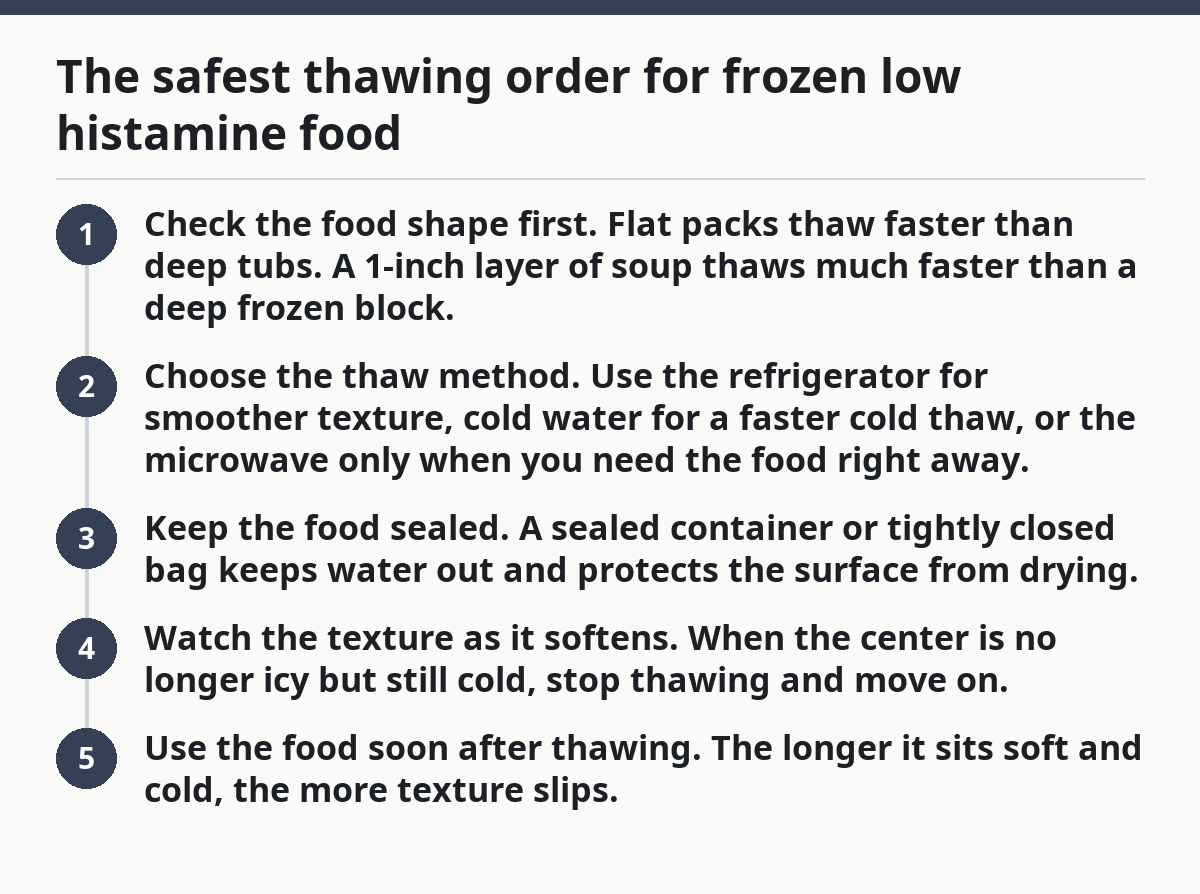
- Check the food shape first. Flat packs thaw faster than deep tubs. A 1-inch layer of soup thaws much faster than a deep frozen block.
- Choose the thaw method. Use the refrigerator for smoother texture, cold water for a faster cold thaw, or the microwave only when you need the food right away.
- Keep the food sealed. A sealed container or tightly closed bag keeps water out and protects the surface from drying.
- Watch the texture as it softens. When the center is no longer icy but still cold, stop thawing and move on.
- Use the food soon after thawing. The longer it sits soft and cold, the more texture slips.
You do not need a perfect system. You need the right method for the food in front of you.
How do you thaw frozen low histamine food in the fridge?
Refrigerator thawing gives the most even texture for frozen soup, frozen rice, and frozen cooked vegetables because the food warms slowly and evenly. Use this when you can wait several hours or overnight.
Picture this: you pull a sealed container from the freezer before bed and want it ready by lunch. The refrigerator is the safest choice for texture because it keeps the food cold while ice melts at a controlled pace. A shallow container works better than a deep one, and a flat frozen portion thaws more evenly than a thick block.
- Move the food to the fridge. Set it on a shelf, not the door, so the temperature stays steadier.
- Keep it sealed. Leave the lid on the container or keep the bag closed so condensation does not soak the surface.
- Give it enough time. Small portions may soften in a few hours; larger containers often need overnight.
- Check the center before serving or using. The food should be soft through the middle, with no hard ice core.
- Use it once thawed. If the food is fully thawed, don’t let it sit around all day.
This method is the least dramatic and usually the least damaging. Not quick, though.
It is also a strong fit for foods that separate easily. Soup stays smoother, rice keeps its grain structure better, and cooked vegetables are less likely to collapse into a mushy pile. The trade-off is time. If dinner is in 30 minutes, the fridge is too slow.
How do you thaw frozen low histamine food fast without wrecking texture?
Cold water thawing is the best fast option when you need food ready in under a few hours and you still want decent texture. It works best for sealed containers or tightly wrapped portions that can stay dry.
Picture this: the fridge is too slow, but the microwave would steam the edges before the middle thaws. Cold water splits the difference. It is faster than the refrigerator and gentler than heat, as long as the food stays sealed and the water stays cold.
- Seal the food tightly. Put the portion in a leakproof bag or a tightly closed container that can handle water around it.
- Submerge it in cold water. Use a bowl, pot, or sink filled with cold tap water, not warm water.
- Change the water every 30 minutes. Fresh cold water keeps the thaw moving and prevents the outside from warming too much.
- Check for soft edges and a cold center. The package should feel flexible, not rigid, and the middle should still be cold.
- Use it right away once thawed. Cold water thawing is a bridge, not a holding step.
The texture advantage is real. Soup thaws more evenly than it would on the counter, and rice is less likely to dry out on the outside before the middle softens. Cooked vegetables still need care, though. If they were already soft when frozen, they can go from tender to limp fast.
Here’s the catch: if the seal fails, water gets in and ruins the texture before the food even finishes thawing. That means soggy rice, diluted soup, or vegetables that turn grainy and wet. Use this method only when the package can stay watertight.
How do you use the microwave defrost setting without overcooking the edges?
The microwave defrost setting is the quickest way to thaw frozen low histamine food, but it is also the easiest way to ruin texture if you walk away from it. Use short bursts and stir or break up the food between rounds.
Picture this: you forgot to move the soup to the fridge, and dinner needs to happen now. The microwave can save the meal, but it needs supervision. Its job is to loosen the frozen center, not fully cook the food in one shot.
- Use a microwave-safe container. Leave room at the top so the food can shift as it softens.
- Set defrost or low power. High power heats the edges too fast and leaves the center frozen.
- Run short intervals. Start with 30 seconds, then pause.
- Stir, rotate, or break up the food. Soup should be stirred; rice should be fluffed; vegetables should be moved so hot spots spread out.
- Stop while the food is still cold. The food should be thawed enough to separate, not steaming.
The microwave is useful for a small container of soup or a tight portion of rice that you need right now. It is a weaker choice for cooked vegetables if you care about bite. The edges can turn soft before the center is ready, and once that happens, there is no bringing the snap back.
A small note matters here: if a section of food starts to cook, stop the cycle. That hot edge is the first sign the setting is too strong for texture preservation. The word to remember is short bursts.
Which foods hold up best, and which ones fall apart?
Frozen low histamine food holds up best when the structure is sturdy, and it falls apart when it is already soft or watery. Frozen soup, frozen rice, and frozen cooked vegetables each need a slightly different touch.
Picture this: you open the freezer and see three different containers, each with a different job. Soup can tolerate slow thawing if it was cooled and frozen well. Rice needs gentle handling so the grains do not dry out. Cooked vegetables need the least heat of all because they can go limp fast.
- Frozen soup: Best thawed in the fridge. If you use cold water or the microwave, stir often so the broth and solids come back together.
- Frozen rice: Best thawed in the fridge or microwave on low. Rice dries out fast on high power, so cover it loosely and break up clumps as it softens.
- Frozen cooked vegetables: Best thawed in the fridge for the least damage. Microwaves can soften them too much, and cold water can make them waterlogged if the package leaks.
- Mixed meals: If the container has rice, vegetables, and sauce together, the most delicate part decides the method.
The trade-off is simple. Slower thawing preserves shape, but it takes planning. Faster thawing buys convenience, but it can crush texture. If the meal is already soft by nature, like a blended soup, you can be less strict. If it depends on bite, like rice or tender vegetables, be more careful.
One rule helps across the board: thaw only what you plan to use soon. A portion that sits thawed for hours is more likely to lose texture than one that gets served promptly. For more on portioning, see [freezer meal planning] and [batch cooking for low histamine diets].
What mistakes ruin frozen low histamine food the fastest?
Counter thawing, warm water, and high microwave power ruin texture fastest because they make the outside race ahead of the center. Those shortcuts can also leave you with food that is uneven, wet, or partly cooked.
Picture this: the food is on the counter because it seemed faster, and now the outer layer is soft while the middle is still icy. That uneven thaw is where texture goes bad. The outside gets warm and slack, while the center lags behind.
- Thawing on the counter: The surface warms too much before the middle thaws. Use the fridge instead.
- Using warm or hot water: The container warms unevenly and the texture gets sloppy. Use cold water only.
- Running the microwave too long: Edges cook before the center softens. Use low power and short bursts.
- Leaving food half-thawed for hours: The food sits in the danger zone for texture and quality. Finish the job or refrigerate it right away.
- Skipping the seal: Water gets in and turns rice mushy or soup diluted. Keep the food sealed.
The truth is, most bad thawing comes from trying to rush the first 5 minutes. That is where the damage starts. A sealed container, cold water, or a refrigerator shelf takes more patience, but each one protects the food better than a shortcut.
This is the point where a generic article would stop at “food safety.” That misses the real problem for this reader: low histamine meals are often batch-cooked for texture-sensitive eating. If the thaw wrecks the meal, the food gets wasted, and the whole point of the freezer disappears.
See also [food safety basics] and [how to freeze low histamine meals] for the full prep-and-thaw cycle.
How can you keep the texture after thawing?
You keep texture after thawing by stopping as soon as the center softens, then handling the food gently. That means no extra soaking, no repeated warming, and no sitting around once it is thawed.
Picture this: the soup is smooth, the rice has loosened, and the vegetables are no longer icy. That is the moment to stop messing with the food. The texture is at its best right then, before more water or heat changes it.
- Stop the thaw at the right point. The food should be cold and soft, not warm.
- Drain only what needs draining. If the container has extra water from condensation, pour it off carefully.
- Stir with a light touch. Heavy stirring can crush rice and break vegetables.
- Serve soon after thawing. The longer the food sits, the more the texture drifts.
- Avoid refreezing thawed portions. Texture usually gets worse with each freeze-thaw cycle.
A few foods benefit from a short rest after thawing. Soup can settle for a minute so the temperature evens out. Rice can sit covered briefly so the moisture spreads. Vegetables do not need much waiting at all. Keep that pause short.
This is also where the sealed container matters most. If the lid is loose, surface moisture can pool and make the food watery. Tight sealing protects the texture before thawing even starts.
What should you do if the texture already slipped?
You should switch from texture rescue to damage control. If the food is already soft, wet, or grainy, the best move is to serve it in a way that hides the damage rather than chasing a perfect thaw.
Picture this: the rice has clumped, or the soup looks split after thawing. That does not always mean the meal is ruined. It means the texture has changed, and you need a different finish.
- For soup: Stir it back together gently. If the broth separated from solids, mix before serving.
- For rice: Fluff with a fork instead of stirring hard. That helps separate the grains without crushing them further.
- For vegetables: Use them in a softer dish where bite matters less, like a mixed bowl or spoonable meal.
- For watery food: Let excess liquid drain briefly if that fits the dish.
The honest limit is simple: some texture loss cannot be undone. Frozen cooked vegetables that went mushy will not turn crisp again. Rice that got over-microwaved will not become fluffy. What you can do is avoid making the damage worse.
If texture matters a lot, freeze in smaller portions next time so thawing stays even. That belongs to freezer planning, which is a different page. This page is about getting the thaw right.
Is it better to thaw food in the fridge or on the counter?
The fridge is better for frozen low histamine food. It keeps the food cold while it thaws, which protects texture and lowers the chance of uneven warming. Counter thawing is the fastest way to get soggy edges and a soft, tired center. For guidance on safe cold storage, see the USDA’s advice on the refrigerator food safety basics.
Can I reheat food straight from frozen?
Yes, sometimes, but it is not the best move if texture matters. A microwave can heat from frozen, yet the outside often cooks before the center softens. If you have time, thaw first in the fridge or use cold water for a more even result. The FDA’s Food Safety and the Microwave explains why even heating matters.
How long does thawed food keep?
Thawed food should be used soon after it becomes fully soft. If it stays cold and covered, it can hold briefly in the fridge, but the best texture is usually right after thawing. The longer it sits, the more the surface softens and the more the grains or vegetables shift.
Drafted with AI; not yet reviewed by a person.