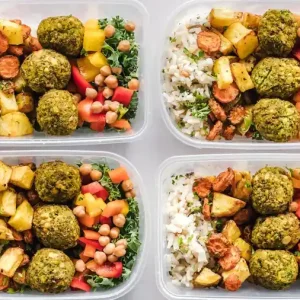
Last updated: November 19, 2026
Quick Answer: one cooking session can become 3 different meals when you keep the base plain, store components separately, and change the final assembly. One cook once use twice workflow can turn one low histamine prep session into several different meals without repeating the same plate. How to Reuse One Cooking Session for Multiple Low Histamine Meals works best when you build reusable base parts, then branch them with different herbs, sauces, and serving formats. The steps below show how to keep the food varied, simple, and low on effort.
Key Takeaways
- Cook one batch with plain protein, cooked rice, roasted vegetables, fresh herbs, and simple sauces in mind.
- Change the meal by changing the format: bowl, plate, stuffed veg, soup, or salad-style assembly.
- Keep the same base, but rotate flavor cues like dill, parsley, chives, and garlic-free herb blends.
- Use one cooling, storing, and reheating routine so the food stays usable for the next meal.
- The plan is often easier when it starts boring and stays flexible at the table.
Start with one base that can branch into three meals
Picture this: you’re standing in your kitchen after one prep block, and you want the food to become three different meals without extra cooking later. The base answer is to make one starch, one protein, and one vegetable set, then split them into 3 meal paths.
Use a sheet pan, one pot, and one storage container per component. Cook plain rice in a pot, roast vegetables on a sheet pan, and make a plain protein in the oven or skillet. That gives you a base that can become a rice bowl, a warm plate, or a quick lunch salad-style bowl with no new cooking session.
The base ingredient plan
- Pot: Cook a neutral grain such as rice or another tolerated starch.
- Sheet pan: Roast 2 to 3 vegetables that hold up well for 2 to 4 days in the fridge.
- Skillet or oven: Cook one plain protein with only the seasonings you know work.
- Small bowl: Hold chopped fresh herbs for the final finish.
- Jar or cup: Keep one simple sauce separate until serving.
This method works because each part can move into a new meal shape without rebuilding the whole recipe. A bowl can become a plate, and a plate can become soup if you add broth later.
What to keep plain on purpose
Keep the first round plain enough that it can go in several directions. That means no strong heat, no heavy acid, and no sauce mixed into the whole batch. One bland tray is easier to rescue than one over-seasoned one.
- Rice or another simple starch
- Plain protein
- Roasted vegetables
- Fresh herbs
- Simple sauce on the side
That list looks modest.
How do I turn one prep session into different meals?
You turn one prep session into different meals by changing the assembly logic, not the core food. The same rice, protein, and vegetables can taste new when you switch the sauce, add a herb, or change the shape of the plate.
Think in one base, three endings. A warm rice bowl with cucumber and herbs feels different from a plate with roasted veg and protein, even when the core ingredients match. A broth bowl does the same job if you want something looser and lighter.
The 3-branch method
- Bowl: Add rice, protein, vegetables, and a spoon of sauce.
- Plate: Serve protein beside vegetables, then add a starch on the side.
- Soup-style bowl: Add broth to warmed rice and protein, then top with herbs.
Each branch uses the same cooking session, but the final meal does not feel repeated. The plate gives you chewing and space. The bowl gives you speed. The soup-style version feels new without another full cook.
A simple branching example
If you cook rice, chicken, and zucchini on Sunday, you can make:
- Monday: rice bowl with parsley and olive oil
- Tuesday: plated chicken with zucchini and rice
- Wednesday: broth bowl with shredded chicken and rice
That is one session doing three jobs. The food changes because the format changes.
Build components that stay useful for 2 to 4 days
Picture this: you open the fridge on a Tuesday night and everything still has a job. That happens when you choose components that keep their shape for 2 to 4 days and store them separately.
The useful parts are cooked rice, plain protein, roasted vegetables, fresh herbs, and simple sauces. The trap is trying to cook everything as one mixed dish. Mixed dishes collapse fast because the sauce wets the rice, softens the vegetables, and blurs the flavor.
Store each part in its own container
Use separate containers for each item. A 2-cup container for rice, a medium container for protein, and a shallow box for vegetables keeps moisture under control.
- Rice: cool fast, then store
- Protein: slice after cooling if needed
- Vegetables: keep dry and uncovered until fully cool
- Herbs: wrap in a paper towel
- Sauce: keep in a small jar
This setup keeps the parts easy to grab. It also makes the next meal faster because you’re assembling, not cooking again.
Use one sauce system, not five sauces
One sauce can cover several meals if you use it as a finish, not a soak. Think of olive oil with herbs, a mild salt dressing, or another simple low histamine friendly option you already tolerate.
A sauce for the whole week is a mistake if it is too sharp, too acidic, or too thin. Keep it simple and small. The goal is a 2-minute finish, not a new recipe.
What to skip in the first session
Skip wet, fragile add-ins in the main batch. They shorten the life of the food and make leftovers feel flat.
- No mixed salad greens in the batch
- No sauce poured over everything
- No delicate garnish cooked into the meal
- No highly browned edges if they taste bitter on day 2
The food should be ready to reassemble, not locked in.
Which parts should be cooked plain, and which should be flavored later?
Cook the core plain and flavor the finish later. That gives you the most reuse from one session because the same food can match different herb and sauce combinations.
This matters most with protein and rice. A plain chicken thigh, turkey, or tofu alternative you tolerate can shift from parsley-olive oil one day to dill-chive another day. Rice does the same job as a base, while roasted vegetables pick up the final flavor from the top, not from the pan.
Put flavor in the last 30 seconds
Use the final 30 seconds of assembly for herbs, oil, and salt if needed. That is the moment when the meal can become new without any extra cooking.
- Parsley makes a plate taste brighter
- Dill makes a bowl feel colder and lighter
- Chives cut through heaviness
- Basil works if you tolerate it
- Olive oil gives the finish a softer feel
The truth is, low histamine meals can get repetitive fast if the first cook is too heavily seasoned. A plain base avoids that. Then each meal gets its own finish.
Keep one branch more neutral than the others
Not every meal needs a strong flavor shift. One serving should stay almost plain so you have an easy fallback on a tired day.
That neutral option matters when your appetite is low or your tolerance is off. It is the meal you can eat without thinking. The others can be more styled.
How to avoid eating the same meal twice
You avoid eating the same meal twice by changing the shape, temperature, and top layer. That is often enough to make the same food feel new.
A cold rice bowl, a hot plate, and a broth bowl all start from the same prep session. The difference is the way you serve them. A fresh herb finish, a different vegetable order, or a new sauce spooned on top changes the experience without changing the base.
Use 4 easy variation moves
- Change the shape: bowl, plate, wrap, or soup bowl.
- Change the temperature: warm one meal, room temperature another.
- Change the garnish: parsley, dill, chives, or basil.
- Change the sauce amount: a teaspoon one day, a light drizzle the next.
Those four moves create variety from one container stack.
Rotate the order of the components
The first meal can be rice first, protein second, vegetables on top. The next can be vegetables first, protein in the middle, rice on the side. That tiny shift changes the bite pattern.
- Same rice, different top layer
- Same protein, different cut
- Same vegetables, different arrangement
Small changes matter more than people think. Repetition lives in the pattern, not just the ingredients.
Add one fresh item at serving
If you want the meal to feel new, add one fresh item at the end. A few cucumber slices, a handful of herbs, or a little extra olive oil can make leftovers feel intentional.
Fresh does not mean fancy. It means the meal has one part that was not sitting in the fridge with the rest.
The most common mistakes that make leftovers taste flat
The most common mistakes are mixing everything too early, over-seasoning the whole batch, and storing the food wet. Those three errors make the next meal dull or mushy.
A mixed pan seems efficient, but it removes your options. A sauce on everything can turn rice soggy in 24 hours. And wet vegetables lose their bite fast, which makes the whole meal feel old before it is unsafe.
Fix the problem before it starts
- Store sauce separately
- Cool components before sealing them
- Keep herbs dry until serving
- Don’t overcook vegetables in the first session
- Cut protein after it cools, not before
If the vegetables are already soft, there is no rescue move that brings them back. Better to roast them just enough that they still have shape on day 2.
Choose foods that tolerate reuse
Some foods are poor candidates for this system because they fall apart fast or taste dull on reheating. Tender greens, watery vegetables, and heavily dressed items usually do worse than rice, plain protein, and roasted veg.
That is why this method leans on sturdy components. It is not about making every ingredient fit. It is about choosing the ones that survive a second meal.
A one-session workflow you can repeat every week
Picture this: you block out one hour, cook the same three base parts, and know the fridge will feed you in different ways for the next few days. That is the actual goal of a reuse system.
A repeatable workflow beats a clever one. If the process is too fussy, you won’t keep using it. The most reliable version is plain, short, and easy to repeat every 7 days.
The weekly sequence
- Choose: pick one starch, one protein, and 2 vegetables.
- Cook: make each part plain enough to branch later.
- Cool: let the food stop steaming before storage.
- Store: keep each component separate.
- Assemble: build a different meal shape each day.
That order keeps the system simple. It also keeps the prep session from turning into a second job.
Keep a tiny rotation list
Write down three meal endings you know you’ll eat:
- Bowl with herbs
- Plate with sauce
- Soup-style bowl
Now you have a rotation without a new recipe hunt. That is the whole point.
For more structure across the week, the hub on [low histamine meal prep and cooking systems] is the right next stop.
When this method is not the best fit
This system is not a good fit for meals that depend on crisp toppings, delicate greens, or a lot of last-minute acidity. It is also a poor fit if you want every meal to taste fully different with no repeat ingredients.
If that is your goal, one prep session will feel too narrow. This method is built for efficiency, not for disguise.
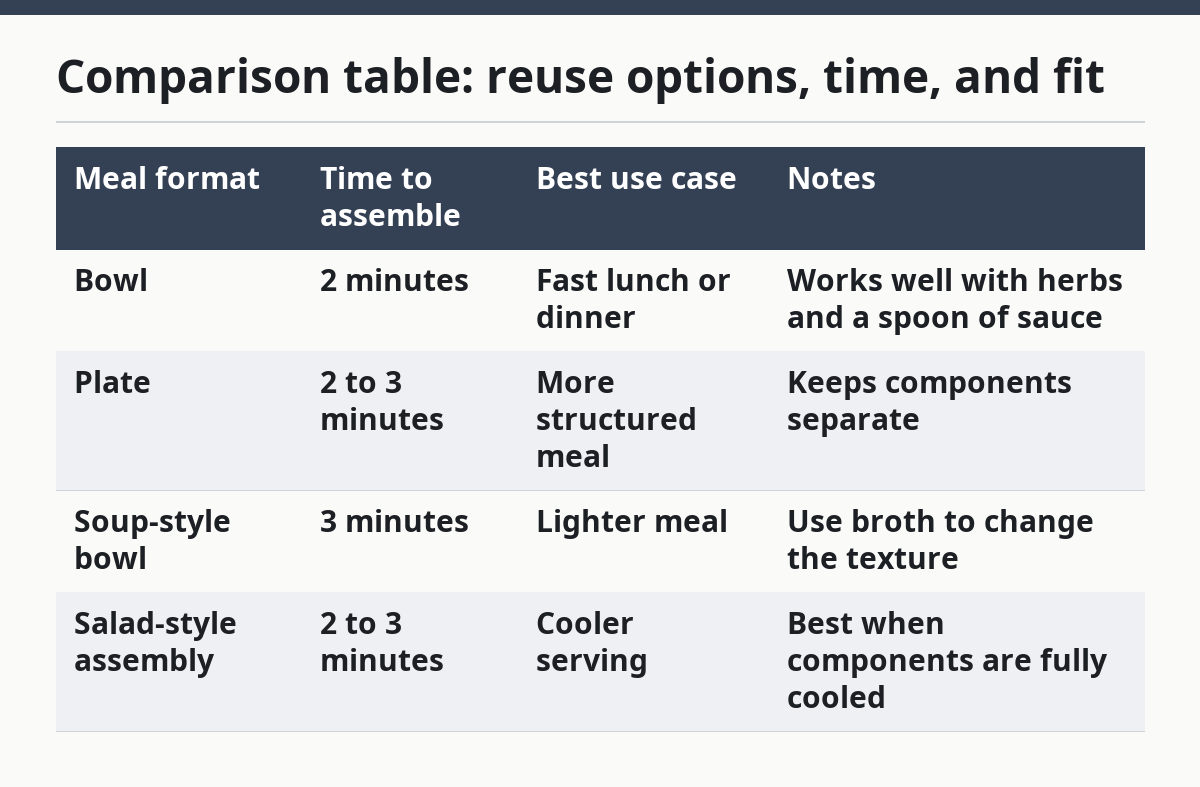
Comparison table: reuse options, time, and fit
| Meal format | Time to assemble | Best use case | Notes |
|---|---|---|---|
| Bowl | 2 minutes | Fast lunch or dinner | Works well with herbs and a spoon of sauce |
| Plate | 2 to 3 minutes | More structured meal | Keeps components separate |
| Soup-style bowl | 3 minutes | Lighter meal | Use broth to change the texture |
| Salad-style assembly | 2 to 3 minutes | Cooler serving | Best when components are fully cooled |
How to Reuse One Cooking Session for Multiple Low Histamine Meals: quick spec
| Item | Simple target | Notes |
|---|---|---|
| Base parts | 3 | Starch, protein, vegetables |
| Refrigerator window | 2 to 4 days | Store each component separately |
| Final finish time | 30 seconds | Add herbs, oil, and salt at the end |
| Sauce approach | 1 sauce | Keep it on the side |
| Weekly repetition | 7 days | Repeat the same workflow |
Can one prep session make different meals?
Yes. One prep session can make different meals when the ingredients are cooked as separate parts and assembled in different ways. The same rice, protein, and vegetables can become a bowl, a plate, or a broth meal with only a few final changes.
That flexibility comes from keeping the base plain. Once the food is stored separately, the final meal is shaped at the table, not in the pan.
What ingredients can be reused safely across meals?
The most reusable ingredients are cooked rice, plain protein, roasted vegetables, fresh herbs, and simple sauces kept on the side. These parts hold up well when they are stored separately and used within a short fridge window.
The less reusable items are wet greens, heavily dressed foods, and delicate toppings. They lose quality quickly and make the next meal feel tired.
How do I avoid eating the same meal twice?
You avoid that by changing the form, the top layer, and the serving temperature. A bowl today can be a plate tomorrow, and a soup-style meal the day after that.
The trick is to keep one part fresh at serving, even if it is only herbs or a small spoon of sauce. That small change is often enough to make leftovers feel like a new meal instead of a repeat.
FAQ
How many meals can one cooking session make?
One cooking session can usually make 3 meals when you build a starch, a protein, and a vegetable set and then change the final assembly.
What is the easiest base to reuse?
Plain rice is usually the easiest base to reuse because it moves cleanly into bowls, plates, and soup-style meals.
How long can the components stay useful?
The components are most useful for 2 to 4 days when they are cooled quickly and stored separately.
What should I add at the end?
Add herbs, a little oil, or a small amount of sauce at the end so the meal tastes fresh without a full recook.
Is this method good for every meal?
No. It works best when you want efficient reuse, not when you need crisp toppings, delicate greens, or a totally different meal each time.
Sources
- Academy of Nutrition and Dietetics — general food safety and meal prep guidance
- FoodSafety.gov — safe cooling, storage, and reheating basics
Drafted with AI; not yet reviewed by a person.